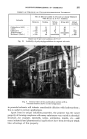
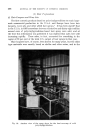
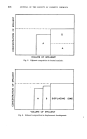
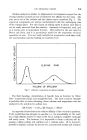
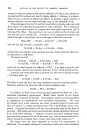
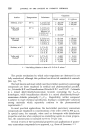
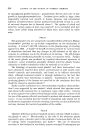
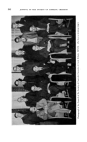
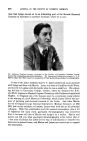
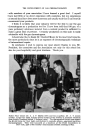
THE DEVELOPMENT OF GAS CHROMATOGRAPHY 275 with members of your association I have learned a great deal. I myself have had little or no direct experience with cosmetics, but my experiences at second-hand have been more numerous and usually such that I can heartily recommend your products. I think it is likely that your industry will be the first to use the gas chromatogram as a production tool for I have been told that 100 gm. of a pure perfumery substance isolated from a natural product is sufficient to make a great deal of perfume. Certainly production on this scale is easily attainable with the gas chromatogram. I should also like to thank Dr. Stanford Moore for his most kind remarks, the more particularly since he is an exponent of chromatographic technique of international repute. In conclusion I wish to express my most sincere thanks to you, Mr. President, the committee and the Association not only for this award but also for your hospitality and great kindness. Thank you. Nobel Prize winner Dr. A. J. P. Martin (left) and his co-author, Dr. A. T. James (centre), accept the Third Annual Special Award of the Society of Cosmetic Chemists from Society President Sabbat J. Strianse (right). The distinguished British team shared the $1,000 prize for their basic contribution to cosmetic science---gas-liquid partition chromatography. They were honoured at a luncheon at the Hotel Commodore in New York, part of the Society's semi-annual scientific meeting in May.

276 JOURNAL OF THE SOCIETY OF COSMETIC CHEMISTS
Purchased for the exclusive use of nofirst nolast (unknown)
From: SCC Media Library & Resource Center (library.scconline.org)