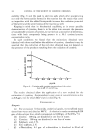
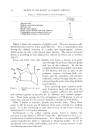
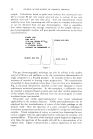
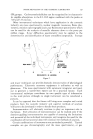
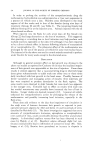
3O8 JOURNAL OF THE SOCIETY OF COSMETIC CHEMISTS between cysteine itself and sodium nitroprussiate (4). Hazeloop based his method on the colored reaction between cysteine and o-benzoquinone in chloroform solution (5) Sch6berl based his on the reduction of phos- photungstic acid followed by the colorimetric determination of the blue compound obtained (6). The Hellerman (7) method must be plxced among the iodometric cysteine is treated with an excess of o-iodosobenzoic acid, yielding cystine and iodobenzoic acid the excess of the former being titrated iodometrically. Barnstein's method can be listed among the gasometric procedures: cysteine is oxidized to cystine by means of a solution of I• in KI. The excess of I• is determined by measuring the released Ne after I2 has reacted with hydrazine (8). The amperometric methods using Hg +•, Cu • and Ag 4 salts were studied by Kolthoff (9•11) and are among the newest electrical developments. It appeared to us, having carried out the study of these existing methods, that if our fbrmerly reported method for the determination of mercapto derivatives was applicable to the estimation of cysteine it could be of a greater simplicity and sensitivity. TH• Basins OF TH• M•'rHOD In previous papers (12, 13) we reported that it is possible to determine colorimetrically some oxidizing agents taking advantage of the fact that they transform o-dianisidine into quinonic compounds which possess a strong bluish-green color, this color turning red upon acidification. Later on we made use of this ferricyanide o-dianisidine system for the indirect colorimetric estimation of organic and inorganic reducing agents. We have thus studied the determination of Sn +=, As +a, S=Oa -2, S=O• -• and H=O= (14, 15) and of many mercapto derivatives (1). o 250• O / N o,o0 X EO0 300 400 500 •00700 8 0 900 I000 Figure 1.•Absorption spectrum in presence of cystine at pH 1.5 and at pH 3.

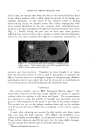
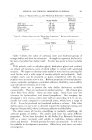
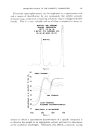
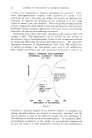
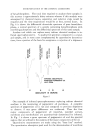
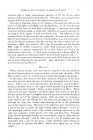
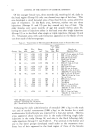
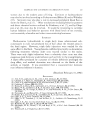
INDIRECT C()I,()RIMETRIC ESTIMATION Ol CYSTEINE 309 o 600 l o X 400- -õ .::_ 200- ,,e-- ,i I I I I 2 3, 4 t I 5 Figure 2. Variation of the extinction with pH at 470 mft cystine being present. To make our method applicable to cysteine we had to study first the best conditions to ensure its oxidation with ferricyanide. It was found that the reaction takes place quantitatively in an alkaline medium (pH 10-11). Further we studied the absorption spectrum of the red color obtained at pH 1-2 when 0-dianisidine reacts with an excess of ferricyanic•e, and after reacting with cysteine our conclusion was that the presence of the products of oxidation does not modify the spectrum (Fig. 1). The same procedure carried out at pH 4 gave evidence that in the portion of the spectrum considered the extinction of the red color is always greater than the extinction of the bluish-green one. We examined the pH influence on the red color obtained (Fig. 2), its 500 0 0 400 X ..• 300 •zoo, ioo I I • I I I • 5 I0 20 3,0 40 50 120 150 rnJrt. Figure &--Variation with time of the extinction at pH 1.5 and 470 mu.
Purchased for the exclusive use of nofirst nolast (unknown)
From: SCC Media Library & Resource Center (library.scconline.org)