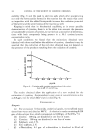
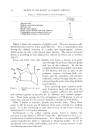
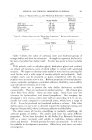
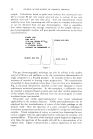
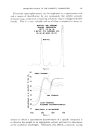
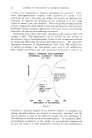
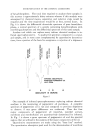
310 JOURNAL OF THE SOCIETY OF COSMETIC CHEMISTS stability (Fig. 3) and the need to add zinc salts which after precipitating not only the ferrocyanide formed in the reaction but the traces that come as impurities with the added ferricyanide increase the oxidation potential of the latter and the sensitiveness of the reaction as well. Keeping in mind that in biochemical equilibria, as in every possible determination of cysteine, there is to be taken into account the presence of considerable amounts of cystine, we carried out a second lot of determina- tions with both compounds being present in a 50:1 cystine/cysteine concentration ratio. In such conditions we found that the extinctions obtained were identical with those read before the addition of cystine therefore it may be asserted that the extinction of the red color obtained does not depend on the presence of the products resulting from the oxidation of cysteine. 400 0 0 0 •00 = 200 '"0 • •oo o I I I I I 0.2 0.4 0.6 0.8 1.0 1.2 p.p.m. Figure 4.--Variation with cysteine concentration of the extinc- tion at pH 1.5 and 470 mia. The results obtained allow the application of a new method for the estimation of cysteine the procedure is easy even at concentrations as low as 0.8 •gm./ml. for which Beer's law is valid (Fig. 4). EXPERIMENTAl, Reagents (a) Use potassium ferricyanide, analytical grade, recrystallized many times from water and dried at 100øC. A solution is made containing 0.310 gin. of this salt per liter, which corresponds to 0.200 gin. of Fe(CN)•-a/1. (b) Cystine. 100 rag. are dissolved in one liter of water. (c) Cysteine. 100 rag. are dissolved in one liter of water. (d) Sulphuric acid, 2 N. (e) Zinc sulphate, 2 N. (f) o-Dianisidine 0.5 gin. of o-dianisidine is dissolved in 50 ml. of

INDIRECT COOLRIMETRIC ESTIMATION OF CYSTEINE 311 acetone and the solution is made up to 100 ml. with distilled water. The solution thus obtained shows a slight coloration but can be used without further purification. /lpparatus The extinctions were measured with a Beckman DU spectrophotometer provided with a photomultiplier. The cell used had a 10 mm. light path and the slit width chosen was the one giving the maximum sensitivity. The pH values indicated in the text were taken with a Beckman G. apparatus. Procedure 1 mi. of ferricyanide solution is measured into a 100 mi. volumetric flask 20 mi. of distilled water are added, followed by the solution of cysteine to be determined. To ensure a complete reaction between cysteine and ferricyanide, the mixture was allowed to stand for five to ten minutes. Then 0.5 mi. of ZnSO4 solution and finally 0.5 mi. of (freshly prepared) aqueous solution of 0-dianisidine is added and the volume is made up to 100 mi. with distilled water. Readings are taken at 470 mt• after ten and thirty minutes standing. When a series of assays are made adding 10 mi. of the cystine solution simultaneously with the cysteine solution the results obtained for the extinctions are identical with those previously obtained. CONCLUSION 1. A new indirect colorimetric method for determination of cysteine is presented the method is based on the reducing action of cysteine on an excess of ferricyanide ion after which this excess is estimated using 0-diani- sidine. 2. For the cysteine concentrations considered, no perceptible variations of extinction values of the obtained colors have been observed even when large amounts of cystine were present reaching as much as 50 times cys- teine concentrations. 3. Extinction values remain constant during the interval of five to thirty minutes after the 0-dianisidine reagent has been added. 4. Beer's law remains valid up to minimal cysteine concentrations of 0.6 tzgm./ml. corresponding to a 1:1,700,000 dilution limit. A new indirect colorimetric method for cysteine determination is de- scribed. The method depends on the oxidation of cysteine in alkaline solution using a known excess of ferricyanide, the latter being determined by the extinction at 470 m• of the colored solution produced by adding 0-dianisidine to the mixture previously acidified at pH 1.5-2. The
Purchased for the exclusive use of nofirst nolast (unknown)
From: SCC Media Library & Resource Center (library.scconline.org)