ALOPECIA AND CUTANEOUS UI.CERATION IN RATS 335 women due to the modern pace of living. Cortisone or hydrocortisone may also be involved according to Fukuyama and Baker (8) and toWhiteley (15). Serotonin may also play a role in decreased peripheral blood flow as shown by Demis, el al. (5). Other mechanisms including behavior patterns and direct chemical actions outlined by Friedman, et al. (7), and by Chap- pel, el aL (2), may also be involved. It would be interesting to correlate human baldness and behavior patterns with blood levels of sex steroids, corticosteroids, adrenaline an d other vasoconstricting hormones. SUMMARY Methoxamine hydrochloride in single daily doses administered sub- cutaneously to male rats produced loss of hair about the treated areas in the head region. However, triple daily injections were needed for the same effect in the flank. Young females exhibited practically no denudation following treatment whereas older ones reacted similar to the males. There were only slight indications from a relatively short term test that exogenous male hormone would enhance such activity in the young females. A depot effect produced by a peanut oil vehicle definitely prolonged the drug effect, and marked ulceration was observed on the flanks of the animals so treated. It was postulated that a vasoconstrictor hormone may influence baldness in humans. (Received February 17, 1961) REFERENCES (1) Abel, R. R., and Lewis, G. M., At.M. At. Atrch. DermatoL, 81, 34 (1960). (2) Chappel, C. I., Rona, G., and Gaudry, R., Endocrinology, 65, 208 (1959). (3) Close, A. S., and Frackelton, W. H., 14Zisconsin Med. •., 57, 127 (1958). (4) Cockrein, F., Nature, 183, 614 (1959). (5) Demis, D. J., Davis, M. J., and Lawler, J. C., •. fnvest. Dermatol., 34, 43 (1960). (6) Dippy, W. E., and Dorney, E. R., •. Atm. Med. Atssoc., 170, 1647 (1959). (7) Friedman, M., St. George, S., Byers, S. O., and Rosenman, R. H., •. Clin. fnvest., 39, 758 (1960). (8) Fukuyama, K., and Baker, B. L., ]. Invest. Dermatol., :tl, 327 (1958). (9) Haddy, F. J., Estensen, R. D., and Gilbert, R. P., •. Lab. Clin. Med., 54, 821 (1959). (10) Light, A. E., •. Invest. Dermatol., 1:t, 53 (1949). (11) l,ight, A. E., Tornaben, J. A., and de Beer, E. J., Atntibiotics & Chemotherapy, 2, 63 (1952). (12) Light, A. E., Proc. Sci. Sect. Toilet Goods Atssoc., No. 22, 10 (1954). (13) Reinhold, M., Brit. Med. •7-, March 19, 846 (1960). (14) Suizberger, M. B., Witten, V. H., and Kopf, A. W., At.M.d. Atrch. Dermatol., 81, 556 (1960). (15) Whiteley, H. J., •7- Endocrinol., 17, 167 (1958).

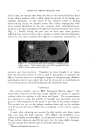
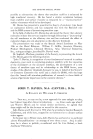
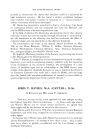
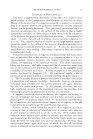
THE SEVENTH SPECIAL AWARD May 12, 1961 Hotel Biltmore, New York City DR. J. T. D.•v•Es, M.A. (Cantab.), D.Sc., Professor and Head of the Department of Chemical Engineering, University of Birmingham, England, was awarded the annual Special Award for 1961, in recognition of his fundamental research in the field of surface chemistry. He has studied the interfacial viscosity of monolayers and has developed a viscometer to measure accurately the viscosities of monolayers at the oil-water inter- face. By accurate measurement of interfacial viscosity it has been .. Dr. John T. Davies (left) Head Depart. Chemical Engineering, University of Bir- mingham, England, receiving Special Award from Dr. Sophie L. Plechner, President of the Society of Cosmetic Chemists. 336
Purchased for the exclusive use of nofirst nolast (unknown)
From: SCC Media Library & Resource Center (library.scconline.org)