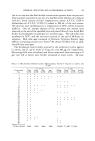
TOXICOLOGICAL PROPERTIES OF SEVERAL COMMERCIALLY AVAILABLE SURFACTANTS By K. J. OLsoN, P•.D., R. W. DUPREE, B. S., E. T. PLOMEP., B.S., and V. K. RowE, M.S.* Presented May 8, 1962, New York City SURFACTANTS are used in formulations varying in purpose from in- dustrial floor cleaners, to compositions for cleaning the most delicate nat- ural or synthetic fibers, to cosmetics. When one is considering a surfactant for a new formulation or for any purpose, he has a myriad of commercially available products from which to choose. It is of primary importance, of course, that he select a product that will do a good job from a functional point of view. Since there may be a num- ber of acceptable products in this regard he may wish to consider the one which will offer him the greatest margin of safety from the standpoint of the health of his customers and employees. The matter of health and safety will be influenced to a great extent by the application for which his formulation is intended. If his product is a cosmetic, for example, it is likely that his prime concern will be that of safety. The tests herein reported were designed to provide pertinent information about the effects on the skin and eyes and about the toxicity by acute in- gestion of several commercially available surfactants. Aqueous dilutions of 1 per cent, 5 per cent and 25 per cent were chosen for study to represent the range of concentration employed in most formulations. SOURCE AND FEEDING OF ANIMALS The albino rats used for the acute oral feeding studies were females ranging in weight from 135 to 180 g. and were raised in this laboratory of stock originally obtained from the Wistar Institute of Anatomy and Biology in 1938. They were maintained on Famo Laboratory Ration. The animals used for eye and skin studies were albino rabbits of hetero- geneous stock raised in this laboratory and fed Famo Rabbit Starter and Breeder Pellets. * The Dow Chemical Co., Biochemical Research Laboratory, Midland, Mich. 469

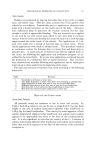
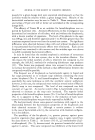
470 JOURNAL OF THE SOCIETY OF COSMETIC CHEMISTS LABORATORY METHODS Atcule Oral Toxicity Toxicity when ingested in single doses was evaluated by feeding the mate- rial as 10 per cent aqueous solutions or emulsions to unfasted rats by in- tubadon. Groups of five animals each were fed doses ranging in geometric progression from 0.252 to 7.95 g./kg. body weight. Mortality was estab- lished over a two week post-feeding period. L.D.•0 values were calculated by the Well Modification of the Method of Thompson.* Eye Studies The eyes of all rabbits used in this study were established as being free of corneal injury by selecting those showing no reaction to a 5 per cent aqueous solution of fluorescein disodium salt twenty-four hours prior to use. Two drops of surfactant to be tested were applied to each eye of the rabbit. Within 30 seconds one eye was washed for two minutes with flowing tap water. The other eye was left unwashed. Both eyes were evaluated for immediate effects and again after one hour, twenty-four hours, forty-eight hours and one week for conjunctival and corneal injury and for internal effects such as iritis and lenticular damage. Fluorescein was employed in all cases as an aid in assessing corneal injury. Three animals were used for each concentration studied (25 per cent, 5 per cent and 1 per cent aqueous emulsions or solutions). The type and intensity of reaction were rated according to the following index code: Reaction Pain Evaluation Index (Objective Observations) (Reactions by Animal) 1 No effect. 2 Very slight effect, disappearing within twenty-four hours. May consist of appreciable pain initially and some con- junctival irritation. No corneal injury. 3 Slight effect, disappearing within a week. May consist of appreciable conjunctival irritation and pain but no corneal or internal injury. 4 Moderate effect, consisting of superficial corneal injury which clears within a week. Probably no internal effects on eye. No loss of vision expected. Conjunctival irrita- tion may be severe. 5 Severe effect, consisting of serious corneal injury from which recovery will be prolonged. Some impairment of vision may be expected. Internal injury may be ob- served. Conjunctival irritation may or may not be severe. 6 Very severe effect, consisting of total loss of vision due to serious injury to the cornea or internal structure of the eye. Conjunctival irritation may or may not be severe. No response. No more than a few blinks. Normal in a minute or so. Blinks and tries to open eye. Reflexes close eye. Holds eye shut and puts pressure on lids. May rub eye with paw. Holds eye shut vigor- ously. May squeal. Holds eye shut vigor- ously. May squeal, claw at eye, jump and try to escape. * Weil, C. S., Biometrics, 8, 343 (1952).
Purchased for the exclusive use of nofirst nolast (unknown)
From: SCC Media Library & Resource Center (library.scconline.org)