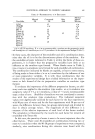
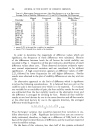
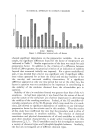
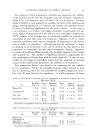
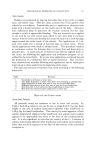
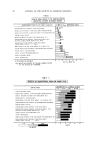
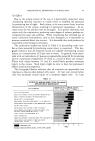
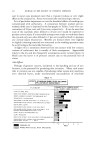
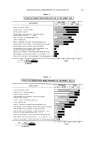
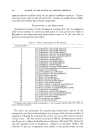
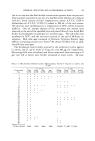
TOXICOLOGICAL PROPERTIES OF SURFACTANTS 471 Skin Studies Rabbits were prepared by shaving the bellies free of hair with a straight razor and barber soap. After five days, animals free of hair growth were selected as test subjects. Immediately prior to application, abrasions were made with a sharp instrument on the caudal area of the belly. Abrasions were sufficiently deep to penetrate the stratum corneum but not deep enough to result in appreciable bleeding. The test materials were applied to one inch by one inch cotton pads which in turn were held in intimate contact with the intact and abraded skin areas by means of a cloth bandage taped around the entire trunk of the animal. Ten applications of 5 mi. each were made over a period of fourteen days to intact areas. Three similar applications were made to abraded areas. This procedure resulted in continuous contact for fourteen days to intact skin and three days to abraded skin. A small amount of material was likewise applied daily to the intact ear following the application and evaluation program as de- scribed for the intact belly. In no case were applications continued beyond the production of a substantial burn or eschar formation. Skin reactions were observed and recorded following each application and at subsequent intervals up to three weeks from the beginning of the study. The type and intensity of reactions were rated according to the following index code: Index Reactions Essentially no irritation to intact skin. Very slight hyperemia on intact skin, likely more irritating to abraded skin. Slight hyperemia on intact skin, may or may not burn abraded skin. Moderate hyperemia on intact skin, may or may not burn abraded skin. Burn from two to four twenty-four hour applications to intact skin. Burn from one twenty-four-hour application to intact skin. RESULTS AND CONCLUSIONS Atcute Oral Toxicity All materials tested are moderate to low in acute oral toxicity. In Table 1 the L.D.50 values in rats can be seen to range from 0.71 g./kg. body weight in the case of sodium dodecylated diphenyl ether disulfonate to 3.30 g./kg. for lauryl imidazoline. The toxicity by acute ingestion of both sodium dodecylated diphenyl ether disulfonate and sodium lauryl sulfate appears to be appreciably less when in the form of the triethanolamine salt. It is also significant to note that the toxicity of the 1: 1 mixture of sodium dodecylated diphenyl ether disulfonate and sodium lauryl sulfate is lower than would be expected on the basis of the toxicity of the individual components.

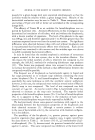
472 JOURNAL OF THE SOCIETY OF COSMETIC CHEMISTS TABLE ACUTE ORAL TOXICITY OF SURFACTANTS I WHEN FED TO RATS IN SINGLE DOSES SURFACTANTS {FED AT IO% CONC. IN WATERI SODIUM DODECYLATE 01PHENYL ETHER 01SULFONATE 0OOECYLATEO 01PHENYL ETHER 01SULFONATE MAGNESIUM SALT DODECYLATED DIPHENYL ETHER DISULFONATE TRIETHANOLAMINE SALT SOOIUM LAURYL SULFATE DODECYL BENZENE SULFONATE TRIETHANOLAMINE SALT SODIUM DODECYLATED DIPHENYL ETHER DISULFONATE 25 % POLYVINYL OXAZOLIDINONE METHYLATED .8.3 % SODIUM DODECYLATED DIPHENYL ETHER DISULFONATE SODIUM LAURYL SULFATE- I:l RATIO NONYLPHENYL ETHYLENE OXIDE ADDUCT (9-10 MOLES E.O ) SODIUM DODECYLATED DIPHENYL ETHER MONOCHLORO SULFONATE SODIUM DJOCTYL SULFOSUCCINATE LAURYL SULFATE TRIETHANOLAMINE SALT LAURIC OIETHANOL AMIOE LAURYL IMIOAZOLINE * NO RANGE CALCULABLE LD5oVALUE CALCULATED BY THE WElL MODIFICATION OF THE METHOD OF THOMPSON i m i L D,50 F??:C•7J• '•i:L•I R A NG E NRC '• NRC m NRC m NRC i i i i i I i 0 i • 3 4 5 6 7 GR./KG BODY WT. TABLE I I EFFECTS OF SURFACTANTS UPON THE RABBIT EYE J SURFACTANTS LAURIC OIETHANOL AMIOE OOOECYLATED OlPHENYL ETHER OlSULFONATE MAGNESIUM SALT DODECYL BENZENE SULFONATE TRIETHANOLAMINE SALT SODIUM DIOCTYL SULFOSUCCINATE NONYLPHENDL ETHYLENE OXIDE ADDUCT (9-1D MOLES E.D. ) SODIUM DODECYLATED DIPHENYL ETHER MONOCHLORO SULFONATE SODIUM LAURYL SULFATE SOOIUM OOOECYLATEO OIPHENYL ETHER OlSULFONATE SODIUM OOOECYLATEO OIPHENYL ETHER OISULFONATE •5% PDLYVINYL OXAZOLIDINDNE METHYLATED B,3 % LAURYL SULFATE TRIETHANOLAMINE SALT LAURYL IMIDAZOLINE DODECYLATED DIPHENYL ETHER DISULFONATE TRIETHANOLAMINE SALT SODIUM DDDECYLATED DIPHENYL ETHER DISULFDNATE SODIUM LAURYL SULFATE -- I . I RATIO l% 5% 25% IN WATER CONJUNCTIVITIS ( ORNEAL INJURY V. SL. j SLIGHT I Moo. J SEVERE m i 2 3 4 5 INDEX
Purchased for the exclusive use of nofirst nolast (unknown)
From: SCC Media Library & Resource Center (library.scconline.org)