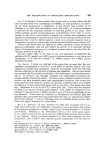
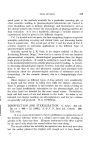
THE PRESERVATION OF OPHTHALMIC PREPARATIONS 387 (39) Lawrence, C. A. Am. y. Ophthalmol. 39 385 (1955). (40) Ginsburg, M. and Robson, J. M. Brit. y. Ophthalmol. 33 574 (1949). (41) Runti, C. Boll. Chim. Farm. 99 286 (1960). (42) Buschke, W. y. Cellular and Comp. Physiol. 33 145 (1949). (43) Anderson, K. F., Lillie, S. and Crompton, D. O. Pharm. y. 193 165 (1964). (44) Swan, K. C. Am. J. Ophthalmol. 27 1118 (1944). (45) Hughson, D. T. and Styron, N. C. Am. y. Ophthalmol. 32 102 (1949). (46) Bell, R. P. Am. y. Ophthalmol. 34 1321 (1951). (47) Wiggins, R. L. Am. y. Ophthalmol. 35 83 (1952). (48) Jeffs, P. L. Austral. y. tharm. (30 March 1959). (49) Jeffs. P. L. Pharm. Digest 28 242 (May 1964). (50) Anderson, R. A. Pharm. y. 193 148 (1964). (51) Wiseman, D. Personal Communication. (52) Croshaw, B., Groves, M. J. and Lessel, B. y. Pharm. Pharmacol. Suppl. 16 127T (1964). (53) Davey, B. B. and Turner, M. y. Appl. Bacteriol. 24 78 (1961). (54) Schradie, J. and Miller, O. H. y. Am. Pharm. Assoc. Pract. Pharm. Ed. 20 197 (1959). (55) Lowbury, E. J. L. Brit. y. Ind. Med. 8 22 (1951). (56) Jawetz, E. and Gunnison, J. B. tharmacol. Rev. $ 175 (1953). (57) Garrett, E. R. Antiblot. Chemotherapy 8 8 (1958). (58) Hugo, W. B. and Foster, J. H. S. y. Pharm. Pharmacol. 15 79 (1963). (59) MacGregor, D. R. and Elliker, P. R. Can. y. Microbiol. 4 499 (1958). (60) Brown, M. R. W. and Richards, R. M. E. y.'Pharm. Pharmacol. Suppl. 16 41T (1964). (61) Brown, M. R. W. and Richards, R. M. E. J. Pharm. tharmacol. Suppl. 16 51T (1964). Introduction by Dr. M. R. W. Brown I would like to draw attention very briefly to some of the more important elements. The ideal preservative should be effective against a wide range of organisms, must not be irritant, or in any way harmful to eye tissues, must be compatible with other medicaments and should withstand sterilization, preferably by a heat method, with- out production of harmful degradation products. Furthermore, careful distinction must be made between materials used for continuous application to intact eyes, and the solutions used on damaged eyes or during surgery. The latter solution should be sterile and should not contain preservatives. Since this paper was submitted, we have been made aware of the recent work of Abrams (62) related to mercurialentis. He found that mercurialentis was slow to develop and no instance was found in glaucoma patients using myotics containing P.M.N. for less than three years. He furthermore stated, "as far as is known the appearance (mercurialentis) is not associated with any visual impairment and seems to be quite innocuous." There is scientific evidence to support the use of the following preservatives in appropriate instances: Benzalkonium chloride, phenylmercuric nitrate, thiomersal, chlorbutol, chlorocresol. At present there appears to be no scientifically based evidence to completely preclude their use under the controlled conditions of an ophthalmic formulation. Reports from Australian workers indicate decomposition of chlorhexidine on autoclaving, and the production of degradation products the freedom of which from toxicity has not been fully established and this would suggest caution regarding heat sterilization of preparations containing this compound. The employment of these substances must be subject to normal considerations of formulation and compatibility and, of course, to correct clinical usage. There (62) Abrams, J. D. Trans. Ophthalm. Soc. 83 263 (1963).

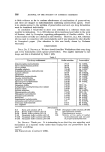
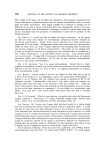
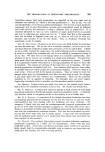
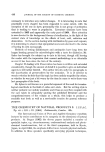
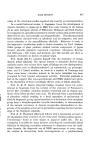
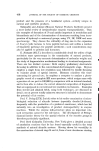
JOURNAL OF THE SOCIETY OF COSMETIC CHEMISTS is little evidence so far to confirm effectiveness of combinations of preservatives, and there are dangers in indiscriminately combining antimicrobial agents. There is no simple answer to the problem of preservation and each eye drop formulation must be considered individually. In conclusion I would like to draw your attention to a reference which may possibly be misleading. In p. 008 reference (6) is mentioned and refers to the work of Roemer, cited by Crompton, regarding pathogenicity of Bacillus subtilis. It is in fact stated correctly as a citation in the reference. However, in p. 010, reference (6) was used in connection with mercurialentis and it was intended to refer directly to Crompton's paper. (Our attention to this was kindly drawn by Professor Neuwald.) DISCUSSION PROF. DR. F. NEUWALD: We have heard from Mrs. Wedderburn that every drug and every formulation needs special preservation. This applies especially to eye drops, and this is illustrated by Table I (63). Table I Eye-drop medicament Buffer solution Preservative Ethylmorphine hydrochloride Silver diacetyltannin protein Silver protein Atropine sulphate 2-Benzylimidazoline hydrochloride Calcium chloride Carbamide Cinchocaine hydrochloride Cocaine hydrochloride Ephedrine hydrochloride Homatropine hydrobromide P Mercuric oxycyanide P Potassium iodide P 2- (Naphthyl-l-methyl)imidazoline nitrate P Sodium iodide P P 5.3 B 6.8 B 6.8 P 6.45 P 6.85 B 6.8 B 6.8 P 6.05 P 6.05 P 6.05 6.45 6.85 6.85 6.85 6.85 Sodium salicylate Physostigmine salicylate Pilocarpine hydrochloride Procaine hydrochloride Resorcinol Scopolamine hydrobromide Adrenaline acid tartrate solution Tetracaine hydrochloride Zinc sulphate B 6.8 P 6.05 P 6.85 P 6.05 P 6.05 P 6.45 B5 P 5.3 B6.3 Bz 0.02% Ph 0.002% Ph 0.002% Bz 0.02% HB 0.1% Ph 0.002% Ph 0.002% Bz 0.02% Bz 0.02% Bz 0.02% Bz 0.02% -- HB 0.1% HB0.1% HB0.1% Ph 0.002% HB0.1% Bz 0.02% Bz 0.02% Bz 0.02% Bz 0.02% Ph 0.002% Bz 0.02% Ph 0.002% 21 bbreviations B $ Boric acid solution pH 5 P 6.85 Phosphate buffer solution pH 6.85 B 6.3 Borate buffer solution pH 6.3 Bz Benzalkonium chloride B 6.8 Borate buffer solution pH 6.8 Ph Phenylmercuric acetate P 5.3 Phosphate buffer solution pH 5.3 HB Mixture of two parts of methyl P 6.05 Phosphate buffer solution pH 6.08 hydroxybenzoate and one part P 6.45 Phosphate buffer solution pH 6.45 of propyl hydroxybenzoate DR. BROWN: Thank you. It is interesting to see that they are regarding each formulation as a separate entity rather than hoping that one preservative can be used for everything. (63) Osterreichisches A•zneibuch 9 (1960).
Purchased for the exclusive use of nofirst nolast (unknown)
From: SCC Media Library & Resource Center (library.scconline.org)