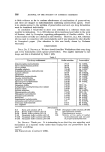
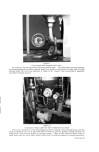
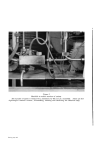
402 JOURNAL OF THE SOCIETY OF COSMETIC CHEMISTS contaminated, e.g. the gums acacia, karaya and tragacanth, and chalk, kaolin, rice starch and various pigments, often carry a very rich flora themselves. Dilute solutions of anionic and nonionic detergents, left in a plant between clean- and sterilizing can lead to very heavy contamination as micro-organisms, particularly the gram-negatives like Pseudomonads will grow quite readily in these solutions. I did mention the importance of having plant that is easy to dismantle, and can therefore easily be cleaned. Dismantling is therefore important, as is cleaning. The plant should be washed thoroughly using mechanical means if necessary, particularly with w/o emulsions, which are not easily rinsed and removed from the plant. Follow this by sterilization, and then by rinsing. These four procedures can very seldom be carried out in quick succession without a break. In my opinion it is important not to have a break after the cleaning process, because of the danger of having product residues diluted with anionic detergents that can easily and very quickly be metabolized by micro-organisms. If a break is necessary, it should be either after dismantling but before cleaning, and preferably after sterilization. In that event the sterilizing fluid is left in the plant during the idle time. One should take care that rinsing is not carried out with water from contaminated demineralized storage units. Either boiled, or very hot water which is unlikely to carry rich flora, should be used for this purpose. DISCUSSION MR. N.J. Vx• ABBg: I believe that the question of plant hygiene as discussed by you, is of great importance whether or not a finished product includes a pre- servative. For this reason, I should like to make one or two suggestions. In the first place, mains, distilled or demineralized water is a principal constituent of many products, but few companies, I believe, observe the same quality control over it that they apply to other raw materials. Bearing in mind the labyrinth of pipework through which water usually passes on its way to the production plant, and which may well result in contamination, I would strongly advocate the setting-up of internal bacteriological standards for water, and routine checks on this. Secondly, I feel that connections of plastic hose to metal pipework nozzles, as shown in Fig. $, offer a distinct contamination risk. A film of stagnant product is liable to remain between the plastic and the metal and this could easily serve as a reservoir of contamination for the bulk passing through. If joints of this type must be used, it is always prudent to fit a Jubilee clip around the plastic as close to the nozzle outlet as possible. TI•E LECTURER: I agree that daily bacteriological tests ought certainly to be carried out if one is suspicious of the water supply. Concerning the plastic pipe, I would not really think that the addition of a Jubilee clip would solve the problem. I would hope that the whole assembly would be taken apart and cleaned thoroughly, and not cleaned in situ. It is one of the advantages of using plastic pipe that one can take it off and discard it quite frequently, because it is not very expensive, and is very easy to replace. MR. G. SYKES: In terms of water supplies, I think that deionized water is the most dangerous product that has been introduced into the pharmaceutical industry in recent years, because if one runs a column continuously it appears to be all right. If, however, one stops the system overnight, and certainly over the weekend, an

HYGIENE IN MANUFACTURING PLANT AND EFFECT ON EMULSIONS 403 enormous bacterial population builds up, which, I know from experience, never gets rid of itself. It is true that one can use formaldehyde in order to disinfect the columns, but then there is the problem of getting rid of the formaldehyde, which I understand is even more difficult than getting rid of the bacteria. You say that the only certain method of destroying bacteria and fungal spores is by autoclaving. I would like to know if there are any fungal spores which will stand more than, say 100øC. THE LECTURER: I believe that there are fungal spores amongst some of the Penicillia which will resist heating to 100øC or more. MR. J. JEFFRIES: It is indeed very important to get rid of whatever one is using to clean up demineralized water, be it formaldehyde or chlorine, as all these compounds can play havoc, for example, with dyes in the finished product. We are in a difficult position in the problem of demineralized water versus distilled water because the former provides us with the only method of producing the volumes of water that we need in a comparatively short time, and there are many occasions when one can use thousands of gallons in a normal working day. One would never obtain this volume of water from a conventional still. MRS. H. BUTLER : I have had the misfortune to produce a food emulsion which is sold through chemists and where it is impossible to use a preservative. Unfor- tunately we got a yeast infection. I think that the only way to make sure that water is sterile is to boil it well for a quarter of an hour just before use. Do you agree with that ? I think that just rinsing is dangerous, because a water rinse which dissolves the water from your emulsion will leave a residue of oil on the surface, where spores can stay. So the rinsing must be combined with cleaning and we found that we had to pump chlorinated water round the system before making any product. Each batch had still to be tested for organisms. THE LECTURER: I sympathize with you for having a yeast infection in your plant. This is a very nasty thing to get rid of. On the other hand, I do not really think that just boiling your water will be sufficient, because you may well have con- taminants in the form of spore bearing organisms. This is one of the reasons why demineralized water is so good, and distilled water even better, provided your resin beds and the lines from your storage tanks to your actual manufacturing plant are kept scrupulously clean. MRS. I-I. BUTLER: We actually boiled the water phase a quarter of an hour. We then added the ingredients of the water phase, we boiled again, and pumped without it being open to the atmosphere the same with the oil phase. For the last four or five years we have been manufacturing under those conditions without any micro-organisms at all. We found that yeast was resistant even to hypochlorite, to heat, and we still had contamination after cooking the oil phase for a quarter of an hour. THE LECTURER: This is very interesting, but it is laborious, very expensive, and time-consuming.
Purchased for the exclusive use of nofirst nolast (unknown)
From: SCC Media Library & Resource Center (library.scconline.org)