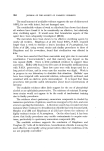
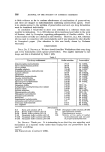
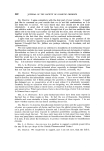
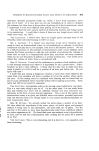
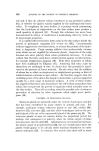
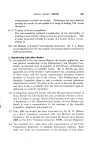
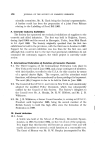
JOURNAL OF THE SOCIETY OF COSMETIC CHEMISTS is little evidence so far to confirm effectiveness of combinations of preservatives, and there are dangers in indiscriminately combining antimicrobial agents. There is no simple answer to the problem of preservation and each eye drop formulation must be considered individually. In conclusion I would like to draw your attention to a reference which may possibly be misleading. In p. 008 reference (6) is mentioned and refers to the work of Roemer, cited by Crompton, regarding pathogenicity of Bacillus subtilis. It is in fact stated correctly as a citation in the reference. However, in p. 010, reference (6) was used in connection with mercurialentis and it was intended to refer directly to Crompton's paper. (Our attention to this was kindly drawn by Professor Neuwald.) DISCUSSION PROF. DR. F. NEUWALD: We have heard from Mrs. Wedderburn that every drug and every formulation needs special preservation. This applies especially to eye drops, and this is illustrated by Table I (63). Table I Eye-drop medicament Buffer solution Preservative Ethylmorphine hydrochloride Silver diacetyltannin protein Silver protein Atropine sulphate 2-Benzylimidazoline hydrochloride Calcium chloride Carbamide Cinchocaine hydrochloride Cocaine hydrochloride Ephedrine hydrochloride Homatropine hydrobromide P Mercuric oxycyanide P Potassium iodide P 2- (Naphthyl-l-methyl)imidazoline nitrate P Sodium iodide P P 5.3 B 6.8 B 6.8 P 6.45 P 6.85 B 6.8 B 6.8 P 6.05 P 6.05 P 6.05 6.45 6.85 6.85 6.85 6.85 Sodium salicylate Physostigmine salicylate Pilocarpine hydrochloride Procaine hydrochloride Resorcinol Scopolamine hydrobromide Adrenaline acid tartrate solution Tetracaine hydrochloride Zinc sulphate B 6.8 P 6.05 P 6.85 P 6.05 P 6.05 P 6.45 B5 P 5.3 B6.3 Bz 0.02% Ph 0.002% Ph 0.002% Bz 0.02% HB 0.1% Ph 0.002% Ph 0.002% Bz 0.02% Bz 0.02% Bz 0.02% Bz 0.02% -- HB 0.1% HB0.1% HB0.1% Ph 0.002% HB0.1% Bz 0.02% Bz 0.02% Bz 0.02% Bz 0.02% Ph 0.002% Bz 0.02% Ph 0.002% 21 bbreviations B $ Boric acid solution pH 5 P 6.85 Phosphate buffer solution pH 6.85 B 6.3 Borate buffer solution pH 6.3 Bz Benzalkonium chloride B 6.8 Borate buffer solution pH 6.8 Ph Phenylmercuric acetate P 5.3 Phosphate buffer solution pH 5.3 HB Mixture of two parts of methyl P 6.05 Phosphate buffer solution pH 6.08 hydroxybenzoate and one part P 6.45 Phosphate buffer solution pH 6.45 of propyl hydroxybenzoate DR. BROWN: Thank you. It is interesting to see that they are regarding each formulation as a separate entity rather than hoping that one preservative can be used for everything. (63) Osterreichisches A•zneibuch 9 (1960).

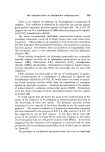
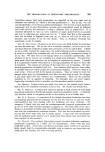
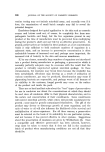
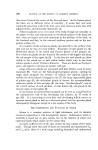
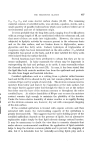
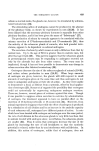
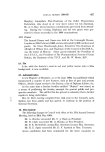
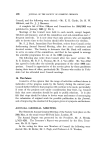
THE PRESERVATION OF OPHTHALMIC PREPARATIONS 389 DR. E. E. BOEnM: It has recently been pointed out by several authors (64-65) that a phydroxybenzoate concentration of 0.0343 •o, as recommended in the B.P.C. for eye drops preservation is insufficient. It has already been pointed out by Williams et al (65), that the addition of at least 0.08•o of phydroxybenzoates is necessary for the successful inhibition of microbial growth in eye drops. They further pointed out that phydroxybenzoate concentrations of the order as recom- mended by the B.P.C. were ineffective against less resistant micro-organisms and therefore it could hardly be expected that at these low concentrations of the phydroxy- benzoates they would be effective against a much more resistant organism such as Pseudomonas aeruginosa, which is also resistant against benzethonium chloride (67). We have also shown that the addition of 0.00 •o Nipasteril, another phydroxy- benzoate combination, does not only inhibit the growth of an especially resistant strain of Pseudomonas aeruginosa in a buffered aqueous solution, but also killed the organism between 5 and 24 hr. Recently Miiller (68), on the basis of his own experience, recommended the addition of 0.07 •o methyl and 0.03 •o propyl phydroxybenzoates to eye drops, and Montgomery et al (64) the addition of 0.003•o methyl and 0.023•o propyl phydroxybenzoates. DR. BROWN: I think you will find in the paper that we agree that the con- centration recommended in the B.P.C. is not likely to produce sterility with such organisms as Pseudomonas aeruginosa. However, I personally think that this field has been cluttered up with all sorts of opinions and assertions. One can pick almost any chemical and it is possible to find three or four references to workers recommend- ing it. If, however, one critically evaluates the experimental procedures the recommendation often lacks weight. We have to give particular emphasis to those workers who have precisely stated their experimental conditions, have stated how many cells they used, what the medium was, recovery conditions and have correlated the efficiency of their inactivating agents with in vivo tests. Few people have done this. Riegelman et al (1) in the U.S.A. have done this. Their work was followed by I(ohn et al with two excellent papers (24,25). I am unable to comment on your reference to the experience of Mailer because I have not had an opportunity to see this reference. I have seen the reference by Montgomery and Halsall (64), and although they recommend the hydroxybenzoates they give no experimental details about their findings. I am not criticising them for omitting details because their views were merely expressed in a short letter. MR. J. ¾.. JEFFRIES : In your summary you state that at present there is no single ideal preservative for ophthalmic preparations and in particular that strains of Pseudornones aeruginosa or closely related types become resistant to all known preservatives. Referring to the Achromabacter species, there would again appear to be no effective preservative and in any case differentiation between the two types is very difficult. Would you please indicate if, in fact, these organisms are very thermolabile, since I believe their optimum growth temperature is of the order of (64) Montgomery, M. F. and K. G. Halsall, Pharmaceut. J. 192 407 (1964). (65) Sabalitschka, Th., Pharmaz. Zt.•. 108 1723 (1963). (66) Williams, 1•. and Boehm, E. E. Lancet 2 790 (1963). (67) Pivnick, H. et al J. Pharmac. Sc. 52 883 (1963). (68) Miiller, F. Pharrnaz. Praxis 71 (1964).
Purchased for the exclusive use of nofirst nolast (unknown)
From: SCC Media Library & Resource Center (library.scconline.org)