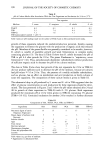
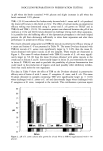
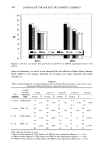
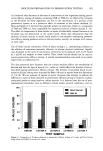
194 JOURNAL OF THE SOCIETY OF COSMETIC CHEMISTS Transferring test organisms to new growth media is one of the first steps in preparing for preservative efficacy testing. Antibiotic susceptibility testing is performed with broth cultures in early log phase of growth, such as 2-5 hr growth at 35øC in Tryptic Soy Broth (TSB) (9-11). Cosmetic preservative efficacy testing routinely is performed using overnight cultures of test organisms. Thus, the USP method requires growth of bacterial cultures on a solid agar medium at 30-35øC for 18-24 hr. Lower incubation temperatures and longer incubation times are recommended for yeasts and molds (1). The testing guidelines proposed by the CTFA suggest "that no less than one million cells per milliliter or gram be used as the challenge" (2). Specific instructions are not given for growth of the test organisms or the volume of inoculum to use in testing however, these guidelines state that harvested broth cultures or surface growth on a solid medium may be used for inoculating the product. The CTFA guideline for preser- vation testing of aqueous liquid and semi-liquid eye cosmetics stipulates that fresh cultures of bacteria should be used for challenging preservative systems and that broth cultures or surface growth on solid media may be used in testing (12). Different methods recommend the use of bacterial cultures grown for various combinations of 18-24 hr or 24 hr at 30-35øC, 32-35øC, 35-37øC, or 37øC (1-5,12). It is possible that different preservative efficacy test results obtained by laboratories reporting to use the same method and test organisms may, in fact, be due to differences in the manner in which test organisms were grown prior to testing or to the type of inocula used. The quantitative data from the linear regression method enabled us to determine the effect of culture conditions, including age and growth media, and the type of inoculum on preservative efficacy test results. The studies reported here demon- strate that the culture medium affects the metabolism of bacteria and that the type of inoculum affects the results obtained in preservative efficacy testing. Specifically, the use of broth inocula decreased the rates of inactivation of the test organisms, compared to the use of saline inocula prepared from surface growth on agar media. EXPERIMENTAL TEST ORGANISMS The test organisms used in this study were Staphylococcus aureus (FDA 209 strain), Pseu- domonas aeruginosa (ATCC 9027), Bacillus cereus (ATCC 11778), B. subtills ATCC 6633 (kindly furnished by Mr. Mark Entrup, Hill Top Biolabs, Inc.), Bacillus sp., and Escherichia coli (ATCC 8739). CULTURE CONDITIONS The test organisms were grown on solid agar media: Tryptic Soy Agar (TSA), TSA with 0.07% (vol/vol) lecithin and 0.5% (vol/vol) Tween 80 (TSALT), or Plate Count Agar (PCA) or in broth media: TSB, Tryptic Soy Broth w/o dextrose (glucose) [TSB(-G)], and TSB(-G) with 1-5% (wt/vol) glucose. The cultures were incubated aerobically for 24, 48, or 72 hr at 37øC. All culture media were obtained from Difco Laboratories, Detroit, MI.

INOCULUM PREPARATION IN PRESERVATION TESTING 195 TEST SAMPLES The test samples used in this study were hand and body lotions and a face cream. Lotion A contained water, glycerin, cetearyl alcohol, ceteareth-20, palm oil glyceride, glyceryl dilaurate, mineral oil, petrolatum, dimethicone, isopropyl palmitate, stearic acid, al- lantoin, and other ingredients. Lotion B contained water, sorbitol, stearic acid, glyceryl dilaurate, cetearyl alcohol, ceteareth-20, lard glyceride, stearamide MEA, hydroge- nated vegetable oil, isopropyl palmitate, glyceryl stearate, PEG-100 stearate, dimethi- cone, petrolatum, allantoin, and other ingredients. The preservative system in both lotions contained methylparaben, propylparaben and Quaternium-15. Lotion C con- tained water, mineral oil, dimethicone, palm oil glyceride, allantoin, other ingredients, and was preserved with phenoxyethanol, methylparaben, and propylparaben. Lotion D was similar to lotion C, but contained propylene glycol. Lotion E was similar to lotion B, and lotion F was similar to lotion A, except that it contained glyceryl monolaurate in place of glyceryl dilaurate. The face cream contained mineral oil, water, beeswax, mag- nesium aluminum silicate, sodium borate, fragrance, isopropyl myristate, and colors. TEST PROCEDURE For broth inocula, 0.1 ml of each broth culture was added directly to separate 50-mL test samples. Saline inocula were prepared by suspending a 1oopful of TSALT surface growth of each test organism in 5 mL of saline and adding 0.1 mL of each saline suspen- sion to separate 50-ml test samples (3). Samples were taken, APCs were performed at specified time intervals (0, 3, 5, and 24 hr) using Letheen Broth with 0.01% (vol/vol) Triton X-100 diluent and TSALT as the recovery system, and D-values were calculated as described previously (3). pH DETERMINATIONS The pH of the TSA, TSALT, and PCA in Petri dishes was determined after 24, 48, and 72 hr growth by the test organisms and in uninoculated (i.e., control) samples using a pH meter equipped with a flat-surface combination pH electrode. The electrode was moistened with a drop of demineralized water, and pH measurements were read directly after the electrode was placed on a sterile portion of the agar, approximately 1 cm from the region of growth. The pH determinations of TSB and TSB(-G) cultures were made as follows: A 3-mL sample was piperred into the barrel of a 10-mL syringe, to which was attached a sterile Sweeney-type filter with a 0.45 •m membrane. The plunger was inserted into the barrel, forcing the broth through the filter and into a small beaker. The pH measure- ments were taken on the filter-sterilized broth samples prepared in this manner. EFFECT OF CULTURE BROTH ON PRESERVATIVE EFFICACY TESTING The effect of bacteriological culture broth on preservative efficacy testing was deter- mined by adding 0.1 mL of filter-sterilized TSB to 50-mL samples of lotion A immedi- ately before inoculating with saline suspensions of the test organisms. The control samples were prepared by adding 0.1 mL of sterile demineralized water to samples of
Purchased for the exclusive use of nofirst nolast (unknown)
From: SCC Media Library & Resource Center (library.scconline.org)