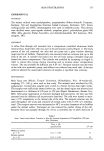
216 JOURNAL OF THE SOCIETY OF COSMETIC CHEMISTS Some of the general indications of emulsion instability are: 1. Inversion of emulsion type (e.g., oil-in-water emulsion changes to water-in-oil type emulsion or vice versa) 2. Coalescence of dispersed internal-phase droplets, globules, spheres, or particles 3. Phase separation characterized by liquid "bleed" or syneresis 4. Decrease in viscosity or loss of consistency resulting in softness or fluidity External factors such as packaging, storage time, temperature conditions, and shear forces may induce emulsion instability. Internal factors of cream composition related to variability of the excipients or raw materials and their source may also affect emulsion stability and cream consistency. Most commercially available cosmetic raw materials used in oil-in-water emulsion-type creams are not pure excipients, but mixtures of two or more components. Some are complex mixtures that may vary depending on the vendor source. Glyceryl monostea- rate is an excellent example of a commonly used cream excipient that exhibits a wide range of variability in its constituent composition, and also in its effect on the consis- tency and quality of the finished cream formulation (3). Glyceryl monostearate is a mixture of the monoglycerides of stearic and palmitic acids, together with variable quantities of di- and triglycerides. It usually contains not less than 90% of total fatty acid glycerides, of which at least 35% are monoglycerides (4). Small quantities of free stearic, palmitic and oleic acids, glycerol, water, and oleate,esters may also be present. Since glyceryl monostearate is used mainly as an emollient lipophilic thickening agent and stabilizer for oil-in-water and water-in-oil emulsion-type creams and lotions, vari- ability of this raw material can result in manufacturing problems. This report discusses some of the causes resulting in soft consistency and syneresis encountered during the scale-up phase of development for an oil-in-water emulsion cream product, when raw materials from multiple vendor sources were used. The main objectives of the present work were: 1. Investigate the cream formulation and its method of manufacture to determine the cause of the soft consistency and syneresis 2. Identify test methods to evaluate cream consistency and syneresis potential 3. Identify methods to test the raw materials to predict their propensity to cause soft cream consistency and syneresis 4. Recommend options to the manufacturing plants to overcome variable cream con- sistency and syneresis problems EXPERIMENTAL MATERIALS Glyceryl monostearate NF XII, cetyl alcohol NF, Syncrowax ERL-C (ethylene glycol ester of C18-36 wax fatty acids), Amerchol L-101 (mineral oil and lanolin alcohol), Glucam E-20 (methyl gluceth-20), Tween 60 (polysorbate 60 NF), propylene glycol U.S.P., sodium citrate U.S.P., edetate disodium U.S.P., sodium metabisulfite NF, aluminum hydroxide wet gel, dimethicone, and purified water U.S.P. were used as received. These materials were obtained from a variety of sources.

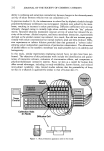
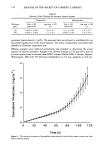
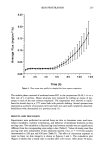
OIL-IN-WATER CREAM STABILITY 217 CREAM PREPARATION Glyceryl monostearate, cetyl alcohol, Syncrowax ERL-C, and Amerchol L-101 were heated to 80ø-85øC in a suitable container with mixing to produce the oil phase. In a separate 10-gallon Groen kettle equipped with an Arde-Barinco homogenizer set at 3000 rpm, edetate disodium, sodium citrate, and sodium metabisulfite were dissolved in a mixture of purified water, Glucam E-20, Tween 60, and propylene glycol heated to 80ø-85øC. A dispersion of aluminum hydroxide in purified water (previously homoge- nized) was added to the aqueous solution and the combined aqueous phase heated to 90ø-95øC. The oil phase heated to 90ø-95øC was added to the aqueous phase at 90ø-95øC. The combined mixture was homogenized for 30 minutes at 90ø-95øC. The batch was cooled to 70ø-75øC by passing cooling water through the jacket of the kettle. Dimethicone was added and the batch was further cooled to 54ø-56øC with continuous homogeniza- tion. Batch weight was adjusted with purified water at this temperature, followed by further cooling to 50 ø- 52øC with homogenization. At the onset of congealing, homog- enization was discontinued. Slow-speed Groen mixing was used to cool the cream to 44øC, whereupon mixing was discontinued. The cream was allowed to cool to 25ø-30øC by standing overnight. In order to allow the addition of the active drug to the batch, a portion of the propylene glycol was retained. In the placebo batches made as part of this study, a portion of the propylene glycol was also retained so as to simulate the manufacture of an active batch. This portion of the propylene glycol was added to the cream base at 25ø-30øC and mixed at slow speed for 30 minutes. In order to determine the reproducibility of the physical properties of a cream batch type, preparations were performed at least in duplicate. Full physical characterization was performed on each preparation, and the data reported reflect averages of these determinations. WIRE-MESH BLEED TEST A 30-g sample of cream was spread evenly with a spatula onto a rectangular stainless 1', steel 30-mesh wire screen (13 X 13") supported by a 1-oz clear-glass jar (height 15/8 ", base diameter 15/8 ", neck diameter 13") contained within a 4-oz clear-glass jar (height 2_v, base diameter 7_v, neck diameter 2"). During the transfer of the cream sample onto 2' --4' the screen, very little sheer, if any, was applied and no mixing was performed. The 4-oz jar was covered with a tight-fitting liner cap and stored at 20ø-25øC for observations of separated liquid until no further bleed was observed. Any separated liquid was collected at the bottom of the jars. This liquid was then removed and quantitated by weight. The reported percent bleed was obtained by dividing the mass of collected liquid by the total mass of the cream sample used for the test. Each reported data point represents an average of four individual determinations. UNIVERSAL CONE PENETROMETER FOR MEASUREMENT OF CREAM CONSISTENCY A universal grease cone made of brass with a steel stem and needle tip (wt. 102.5 g), affixed to the base of a metal rod, was initially held in a stationary position with needle tip just in contact with the surface of the cream sample, contained in an aluminum cup
Purchased for the exclusive use of nofirst nolast (unknown)
From: SCC Media Library & Resource Center (library.scconline.org)