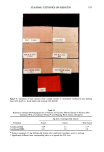
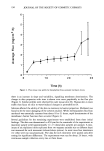
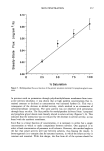
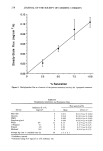
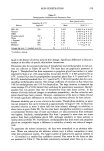
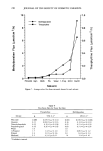
ABSTRACTS 245 rate-limiting. Release experiments may then pro- vide insight into the permeation process. SCIENTIFIC SESSION D (Concurrent) GENERAL PAPERS Inhibition of UVB-induced arachidonic acid release in vitro as a model for evaluation of anti-inflammatory ingredients K. Marenus, Ph.D., T. Mammone, S. Jadlos, D. Maes, and W. Smith, Estee Lauder Co., Research Park, 125 Pinelawn Road, Melville, NY 11747 The release of arachidonic acid from the cell mem- brane is the committing step to the prostaglandin cascade. Prostaglandins have been shown to mediate inflammation in vivo. We have investigated UVB- induced arachidonic acid release as a model of in- flammation. Prior to testing, materials were evalu- ated for cellular toxicity, and acceptable use levels were determined. Normal human keratinocytes were prelabeled for 24 hours with tritiated arachi- donic acid. These cells were then irradiated with 0, 400, 800, and 1200 mJ/cm 2 UVB. These doses caused a graded release of arachidonic acid and therefore can be used as a model for inflammation. Several agents were found to inhibit arachidonic acid release (Table). This in vitro model is useful for screening prospective ingredients. Table Average reduction Anti-inflammatory Conc. (across all doses) Ibuprofen 0.02 33 % Indomethacin 0. 325 26% Cortisone 0.05 24% Acetyl salicylate 0.03 2 ! % Effects of enhancer pretreatment in skin per- meation of erythromycin M. S. Kislalioglu, Ph.D., and A. Iyer, Department of Pharmaceutics, University of Rhode Island, Kingston, RI 02881-0809 In this study, the effects of propylene glycol (PG), oleic acid, and Azone pretreatments on the skin up- take and on the flux of erythromycin from saturated pH 8.9 borate buffer (BP) and isopropyl myristate (IPM) solutions were investigated. The left dorsal back skins of hairless mice having 2.5 cm 2 areas were treated with 10 pA of the enhancer. Right dorsal back sides were used as controls. The animals were sacrificed after an hour, and the pretreated skins and control sites were removed and placed in the Franz cells. Saturated erythromycin solutions (100 pA) were then spread on the skin pieces, and diffusion of •4C-labeled erythromycin was followed by liquid scintillation counting. PG treatment had no effect on the flux of erythromycin from BP and from IPM. It exerted no changes in skin concentra- tions. hzone pretreatment caused a more pro- nounced increase in erythromycin diffusion from IPM than from BP. Azone was the most potent en- hancer in increasing the flux of erythromycin. Phospholipid liposome/surfactant interactions as predictors of skin irritation Ursula K. Charaf and Gerald L. Hart, S. C. Johnson Wax, 1525 Howe Street, Racine, WI 53403 A sensitive method is described where large unila- mellar liposomes are used as a model membrane system to study and define surfactant-skin interac- tions. The relative tendency of surfactants or surfac- tant blends to form mixed micelies with liposome membrane components determines the aggressivity factor believed to be related to in vivo surfactant irri- tation responses. Single surfactants and surfactant mixtures were investigated, and their behavior to- ward liposome membranes was used to establish a mathematical index of surfactant aggressivity. Good correlation was established between this index and in vivo scores for the anionic surfactants and blends tested, as well for as some types of nonionics and mixed blends. This method has distinct advan- tages over traditional in vivo tests. It is expedient, inexpensive, sensitive, objective, and reproducible. Moreover, it does not use live animals and does not derive its components from tissues or organs. In vitro permeation of tolmetin through irra- diated and non-irradiated hairless mouse skin Jean P. Holland, R.Ph., and E. R. Lukenbach, Ph.D., Johnson &Johnson Baby Products Co., 199 Grandview Road, Skillman, NJ 08558, and J. L. Lichtin, M.D., and A. Sakr, Ph.D., University of Cincinnati, Cincinnati, OH Over exposure of the skin to ultraviolet radiation, sunburn, will result in redness, swelling, heat, and pain. Currently marketed sunburn treatment products are only palliative. The literature indicates that topical non-steroidal anti-inflammatory agents exhibit a potential to be a therapeutic treatment. This study explores the effect of ionization of a non- steroidal anti-inflammatory agent, tolmetin, on permeation and explores the effect of skin irradia- tion on in vitro permeation. Five solutions ranging from 0.99 to 99.30% ion- ized were applied to irradiated and non-irradiated albino hairless mouse skin in Franz diffusion cells.

246 JOURNAL OF THE SOCIETY OF COSMETIC CHEMISTS The irradiated membranes did not exhibit a signifi- cant increase in the amount of rolmerin permeating relative to the normal skin, nor did the tolmetin applied to irradiated skin have a greatly increased flUX. The highly ionized solutions permeated signifi- cantly less than the solutions with a lesser degree of ionization. The release and in vitro permeability studies of salicylic and benzoic acid from topical formula- tions A. Jain, A. Sakr, Ph.D., and J. L. Lichtin, Ph.D., University of Cincinnati, Cincinnati, OH, and Jonas C. T. Wang and S. Wisniewski, Johnson & Johnson Baby Products Co., Grandview Road, Skillman, NJ 08558 The objectives were to study the release and in vitro permeation profiles of salicyclic and benzoic acid from topical formulations, as a function of film thickness and vehicle. A combination of 0.5 % and 1% w/w off salicyclic and benzoic acid was incorpo- rated in cold cream U.S.P., polyethylene glycol ointment N.F., white petrolatum U.S.P., hydro- philic ointment U.S.P., alcoholic gel, and ethanol. A Spectra Mesh © fluorocarbon filter was used for the release studies, and abdominal sections of hair- less mouse skin and human cadaver skin were used for permeability studies. Finite doses of each for- mulation were applied at three different thick- nesses. The studies were conducted using Franz dif- fusion cells and Sorensen's phosphate buffer, pH 7.40, as the receptor medium. One hundred fifty microliters of receptor fluid was withdrawn with re- placement and analyzed by HPLC. The study re- sults suggested that depending on the thickness of the film applied, the overall delivery mechanism was formulation- and compound-dependent. It was observed that the permeation rate of drug delivery was highly dependent on the magnitude of parti- tioning and solubility. Vehicle influences on de- livery were observed where the solubilized drug fraction was low. SCIENTIFIC SESSION E ADVANCES IN SURFACE SCIENCE II The use of foams in cosmetics Sydney Ross, Department of Chemistry, Rensselaer Polytechnic Institute, Troy, NY 12180-3590 The chief use of forms in cosmetics is to supply a ready-made detergent foam for shaving. The pur- pose of the foam is to soften the hair and to lubri- cate the razor. The foaming agent is a combination of anionic and nonionic surface-active solutes. Shaving foam is stabilized by the presence of a plastic microfilm consisting of a gelled combination of solutes and water. Three-component systems of this chemical type have an L 1 or aqueous liquid crystal phase at certain overall concentrations of the components. The sur- face activity of the solute mixture is responsible for creating a film of different composition from the underlying isotropic solution this film, at appro- priate overall concentrations, has the composition of the L 1 phase, which is thus segregated by the fore- going mechanism, i.e., spontaneous adsorption of solute, in the form of a microlayer at the surface. Neither the L 1 phase nor the aqueous isotropic so- lution, when separate, form stable foams, but they do so when combined. The role of industrial re- search is to determine the appropriate composition for these effects to occur, based on foam stability as the ultimate indicator, in contrast to the academic approach, admittedly more laborious and, for the required application, less direct, in exploring phase-diagram behavior. Multipie-phase emulsions Dr. G. M. Eccleston, University of Strathclyde, Glasgow, U.K. Cosmetic and pharmaceutical emulsions, such as lo- tions and creams, are rarely simple oil-in-water or water-in-oil preparations. They are more likely to be complex colloidal systems containing several surfactants, amphiphiles, and other additives, and to be composed of additional phases (e.g., lameliar liquid crystalline or gel) to oil and water. These additional phases form in aqueous emulsions when the emulsifiers, in excess of those required to stabi- lize oil droplets, interact with continuous-phase water. Thus the phase behavior of the emulsifiers and their mixtures in water can provide valuable information about microstructures of emulsions prepared with them. In this paper, it will be shown how the behavior of many dermatological emulsions during manufacture, storage, and use (i.e., after application to the skin) can be related to their com- ponent phases. Polymer/surfactant interaction E. D. Goddard, Ph.D., Union Carbide Corpora- tion, Specialty Chemicals Division, Tarrytown, NY 10591 Interaction between water-soluble polymers and suffactants, which are common ingredients of cos- metic formulations, is a widespread phenomenon. While attraction is strongest when the two ingre- dients bear an opposite electrical charge, this con- dition is not a prerequisite for interaction. Guide-
Purchased for the exclusive use of nofirst nolast (unknown)
From: SCC Media Library & Resource Center (library.scconline.org)