240 JOURNAL OF COSMETIC SCIENCE preferable in order to guarantee the long-term absence of contamination from formula- tions (1). Among the preservatives used in the pharmaceutical and cosmetic fields, the methyl, ethyl, propyl, and butyl esters and their sodium salts (parabens, USP) are probably the most widely used molecules (2,3), being active against molds, yeasts and, to a lesser extent, bacteria (4). In addition, parabens exhibit antimicrobial activity over a wide pH range (between 4 and 8). The activity of the parabens increases with the increasing chain length of the alkyl moiety and could be potentiated by the use of combinations of parabens, since an additive effect occurs. In order to preserve topical preparations, parabens are normally used in the concentration range of 0.02-0.3% (5,6). Besides the desirable requisites for a preservative to be suitable for use in a topical formulation (i.e., a wide spectrum of activity, bactericidal rather than bacteriostatic activity, a wide pH range, and temperature and water solubility), an essential feature should be the absence of toxic, irritant, or sensitizing activity (6,7). Parabens are nonmutagenic, nonteratogenic, and noncarcinogenic (7). Nevertheless, parabens, analogously to most other preservatives, may be harmful to consumers because of their tendency to induce allergic contact dermatitis, especially when they are included in topical formulations (8,9). The history of contact dermatitis from parabens falls into two phases, corresponding to their use first as medicaments and later as preservatives. As medicaments, Bonnevie (10) first reported a case of contact dermatitis from ethyl paraben used as an antifungal agent in a concentration of 5%. As preservatives, Sarkany first reported a case of sensitization from parabens (11). Since these reports, various investigators have found so many in- stances of sensitization to parabens in various topical therapeutic agents that most pharmaceutical manufacturers have removed parabens from topical therapeutic agents and have replaced them with other preservatives (12-14). In 1973 Fisher (15) reported several puzzling aspects, the socalled "paraben paradox," which is that parabens in topical therapeutic agents occasionally sensitize, whereas parabens in cosmetics are "safe." The explanation of this seeming paradox is that cos- metics are usually applied to normal skin, whereas therapeutic agents are applied to inflamed, eczematous, excoriated, or otherwise damaged skin. However, a case of a patient with hypersensitivity to parabens in several cosmetic creams and several cases of immediate-type hypersensitivity to parabens have been reported (16-18). With regard to the sensitizing effects related to the topical administration of parabens, it is fundamental that an i, vitro method should be able to determine the extent of parabens diffusion from topical formulations. This paper describes (a) the production of four different topical formulations, namely, a water-in-oil emulsion, an oil-in-water emulsion, and two hydrophilic gels (Pemulen gel and Carbopol gel), containing a mixture of three common parabens (b) an analytical method based on liquid extraction and reversed-phase HPLC for the quantitative de- termination of MP, EP, and PP in semisolid formulations and (c) the use of an in vitro system based on a Franz cell to study the diffusion of the different parabens from the formulations.

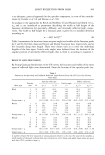
DIFFUSION OF PRESERVATIVES 241 EXPERIMENTAL MATERIALS Methylparaben (MP), ethylparaben (EP), and propylparaben (PP) were purchased from Fluka Chemie AG (Buchs, Switzerland). Pemulen © TR2 (acrylates/C10-30 alkyl acrylate crosspolymer) and Carbopol © 940 (Carbomer 940) were a generous gift of Biochim (Milan, Italy). All other materials and solvents of high purity grade were from Sigma Chemical Co. (St. Louis, MO). PRODUCTION OF TOPICAL DOSAGE FORMS Four different topical formulations were produced, namely a water-in-oil emulsion, an oil-in-water emulsion, and two hydrophilic gels (Pemulen gel and Carbopol gel), whose compositions are reported in Table I. After production, all the dosage forms here described were stored at 4øC until use, to minimize possible degradations. W/O emulsions. Briefly, for the preparation of the water phase, MP, EP, and PP were solubilized in boiling water. The oil-soluble components of the formulation were fused and heated to about 70øC. Production of the W/O emulsion was performed by slow addition of the aqueous phase to the oil phase under vigorous stirring by a turbine mixer. The emulsion obtained was then cooled down at room temperature. O/W emulsions. As for the preparation of the W/O emulsion, MP, EP, and PP were solubilized in boiling water. The oil-soluble components of the formulation were fused and heated to about 70øC. Production of the O/W emulsion was performed, slowly adding the oil phase to the aqueous phase under vigorous stirring by a turbine mixer. The emulsion was then cooled at room temperature. Hydrophilic gels. The production procedure was the same for both gels. MP, EP, and PP were solubilized in boiling water. For the preparation of the hydrophilic gel, the acry- lates/C10-30 alkyl acrylate crosspolymer (Pemulen © TR2) or the carboxyvinyl polymer carbomer (Carbopol © 940) was added to the solution obtained and left to swell at room temperature to obtain a homogenous and liquified mixture. After an overnight incuba- tion, triethanolamine was added to neutralize the solution. QUANTITATIVE DETERMINATION OF PRESERVATIVES Preservatives extraction from formulations. A liquid procedure was performed in order to extract parabens from formulations. Briefly, 20 ml of a mixture constituted of tetrahy- drofurane (THF)/water 90:10 v/v was added to 1 g of topical formulation and stirred for 30 min at room temperature. The solution obtained was vortexed and sonicated at 25øC for 2 min in a bath-type sonicator, Branson 2200 (Branson Ultrasonics Co., Danbury, CT) and centrifuged (Centrifuge Hareus Sepatech GmbH, Germany) at 6000 rpm for 10 min. Extracted samples (5 ial) were injected onto an HPLC column for the quantitative analysis. HPLC analysis. A high-performance liquid chromatographic method was employed for the quali-quantitative analysis of preservatives. The analyses were performed with a Bruker apparatus (Bremer, FRG) consisting of three plungers, an alternative pump, a
Purchased for the exclusive use of nofirst nolast (unknown)
From: SCC Media Library & Resource Center (library.scconline.org)