230 JOURNAL OF COSMETIC SCIENCE sion of MMPs in UV-irradiated fibroblasts is known to be initiated by singlet oxygen (6), alpha-melanocyte stimulating hormone produced by keratinocytes (7), or by the activation of cell surface growth factor and cytokine receptor, which mimics the actions of receptor ligands (8,9). Recently, Fisher et al. (10) showed that MMP expression is mainly regulated by members of the mitogen-activated protein (MAP) kinase family such as extracellular signal-regulated kinase (ERK), c-Jun amino-terminal kinase (JNK), and p38, each of which forms a signaling pathway. In some types of cells, the expression of MMP is mediated by nitric oxide (NO) (11,12). NO is a multifunctional messenger molecule generated from L-arginine by enzymes such as inducible nitric oxide synthase (iNOS), and it can activate guanylate cyclase, stimulating the production of intracellular cGMP and activation of cGMP-dependent protein kinase. The production and diffusion of NO in triggering the melanogenesis of melanocytes by the UV-irradiated keratino- cytes is well documented (13), but relatively little is known about the effect of NO on the production of MMP by the epidermal fibroblasts, which are also under the influence of cytokines released from keratinocytes. In this work, we examined the effect of NO and iNOS inhibitors on the production of MMP-1 and MMP-2 by UV-irradiated human derreal fibroblasts (HDF). We found that treatment of HDF with an NO donor, sodium nitroprusside (SNP), enhanced the expression of MMP-1 and -2 and that treatment with iNOS inhibitors such as aminoguanidine (AG) and baicalein (BAC) resulted in a decrease in MMP production. Taken together, we concluded that the production of MMP-1 and -2 by UV-irradiated HDF is regulated through the signaling pathway involving NO, and that it can be downregulated using iNOS inhibitors such as AG, BAC, and the extract of Scutellaria root containing large amounts of iNOS inhibitors. MATERIALS AND METHODS REAGENTS Sodium nitroprusside (SNP) (14,15), aminoguanidine (AG), nitro-L-arginine methyl ester (NAME), nitro-L-arginine (NAL), baicalein (BAC), and 8-Br-cGMP, anti-mouse IgG for the secondary antibody, were purchased from Sigma Chemical Co. (St. Louis, MO). Anti-MMP-1 antibody (Ab-5), anti-MMP-2 antibody (Ab-3), and anti-mouse IgG conjugated with alkaline phosphatase were obtained from Cal-Biochem. Scutellaria root extract was obtained from Bioland. CULTURE OF HUMAN DERMAL FIBROBLASTS HDFs from newborn foreskin were acquired from Korea Cancer Center Hospital. HDFs were maintained in Dulbecco's Modified Eagle's Medium (DMEM) with 10% FBS and kept in a humidified 5% CO 2 atmosphere were 37øC. HDFs from passages 6 to 10 were used in the experiments. UV IRRADIATION AND NO DETECTION HDFs (1.5 x 10⁵/well) were seeded into 350 plates and cultured overnight. Prior to UV irradiation, the cells were washed twice with phosphate-buffered saline (PBS). The cells were irradiated from a distance of 15 cm by a UV source (UVA simulator, Jhonsam,

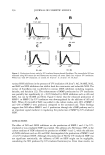
INHIBITION OF MATRIX METALLOPROTEINASES 231 Seoul) emitting wavelengths in the range of 340-450 nm. The radiation intensity was measured using a UV radiometer (EKO, Japan). The culture medium, DMEM, con- taining no serum, was added and incubated for 12 hours. The concentration of MMP-1 and -2 in the culture media was determined as described below. For the determination of NO in the cell body, cells were pretreated with nitric oxide sensor dye (1 pg/ml) (Clontech ApoAlert © nitric oxide/Annexin V dual sensor kit) and incubated for 30 minutes. The cells were UV-irradiated and incubated with the medium for 24 hours. Cells were washed twice with PBS and collected using trypsin-EDTA. The collection was centrifuged at 15,000 rpm for five minutes, and the supernatant was retained. This procedure was repeated twice. The pellet was resuspended with PBS. To analyze cells stained with NO sensor dye, a fluorescence-activated cell sorter (FACStarplus, Becton Dickinson) was used. ZYMOGRAPHY Zymography in sodium dodecyl sulphate-polyacrylamide gel electrophoresis (SDS- PAGE) containing 0.15% gelatin was performed according to the method of Demeule eta/. (16). The samples were mixed with SDS sample buffer in the absence of reducing agent, incubated at 37øC for 20 minutes, and electrophoresed on 10% polyacrylamide gels at 4øC. After electrophoresis, the gels were washed in 2.5% Triton X-100 for one hour to remove SDS and incubated for 12 hours at 37øC in 50 mM Tris-HC1, pH 7.6 0.15 NaC1 10 mM CaCI2 and 0.02% NAN3, and then stained with 0.1% Coomassie Brilliant Blue R250. DETERMINATION OF MMP-1 AND -2 BY ELISA The expression of MMP-1 and -2 was assayed by enzyme-linked immnosorbent assay (ELISA). HDFs (8 x 10³/well) were seeded into 96-well plates and cultured overnight. The culture media were replaced with DMEM containing SNP and/or AG. After incu- bation for 12 hours, the supernatants were transferred into a 96-well plate, and the coating buffer (Sa2CO 3 1.59%, NaHCO 3 2.93%, NaN 3 0.20%, MgCI 2 1.02%, pH 9.6) was added 1:1 (v/v) and incubated for 12 hours. The supernatants were removed and the coated well was washed with PBS-T three times, followed by blocking with 5% skim milk in PBS for one hour at 37øC. After washing three times with PBS containing 0.05% Tween 20 (PBST), 50 pl of 1/1000 diluted primary antibody, Ab-5 or Ab-3, in PBST was added into each well and incubated for 40 minutes. After washing the wells with PBST three times, 50 pl of 1/1000 diluted secondary Ab and anti-mouse IgG conjugated with alkaline phosphatase in PBST was added and incubated for 40 minutes. After washing five times with PBST, 100 pl of 1 mg/ml pNPP (p-nitrophenyl phos- phate) in diethanolamine buffer was added. The optical density was measured at 405 nm after 30 minutes. The cytotoxicity of the supplemented chemicals was measured by a 3-(4,5-cimethylthiazol-2-yl)-2,5-diphenyl tetrazolium bromide (MTT) assay. RT-PCR-ELISA Total RNA was extracted from cultured cells using the Promega RNAgent © total RNA isolation system. PCR amplification was carried out using 5' biotinylated primers
Purchased for the exclusive use of nofirst nolast (unknown)
From: SCC Media Library & Resource Center (library.scconline.org)