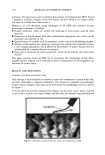
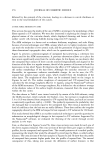
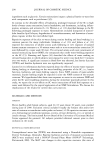
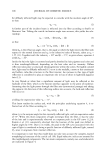
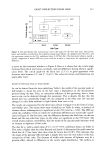
252 JOURNAL OF COSMETIC SCIENCE deodorant products. However, in spite of numerous safety studies, it is not universally accepted as a deodorant ingredient. Deofix TM represents a new approach to deodorancy. A non-halogenated, non-phenolic compound, it controls microbial growth by limiting the bioavailability of first transition series elements that are essential for microbiological replication and by inhibiting oxi- dative processes on the skin. MATERIALS DeofixTM is an amino phosphonate, N,N',N"-tris(dihydroxyphosphorylmethyl)-l,4,7- triazacyclononane. It's formula is shown in Figure ! (4). DeofixT• is an extremely strong and highly specific chelating agent for first transition series elements such as iron, zinc, manganese, and copper. As an example, it has a thermodynamic equilibrium constant with iron of 10 -30 and with zinc of 10 -25, but a much higher Keq with calcium (10-6). The complex formed between DeofixT• and iron is at least 103 times more stable than that of the iron complex of deferoxamine and 109 times more stable than that of the iron complex of EDTA (5). Triclosan, (2,4,4'-trichloro-2'-hydroxydiphenyl ether), is a synthetic, nonionic antibac- terial agent developed by Ciba Geigy in the late 1960s (6,7). It is active against a wide range of gram-positive and gram-negative bacteria and particularly against microorgan- isms commonly found in the axilla. Its mode of action is believed to involve perturbation of the cytoplasmic membrane (8). DEODORANCY STUDIES Deodorancy studies were performed by Hill Top Research, Inc. (Miamiville, OH) using OH NOH o Figure 1. The chemical structure of Deofix TM, N,N',N"-tris(dihydroxyphosphorylmethyl)-l,4,7- triazacyclononane.

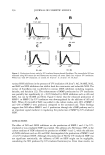
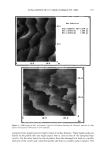
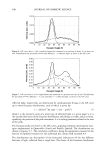
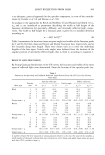
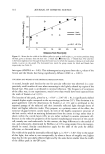
USE OF DEOFIX TM IN DEODORANT PRODUCTS 253 their standard protocol for evaluating deodorancy (9). A round-robin study was per- formed in which Deofix TM and Triclosan were each compared to a placebo treatment and also compared directly to each other. The normal use concentration for Triclosan in underarm deodorants is 0.15-0.30% (3). To represent the high end of the normal use concentration, 0.3% was chosen for testing. Based on preliminary uncontrolled labora- tory studies, 1.0% Deofix TM was chosen for testing (economic considerations did not allow for a more rigorous clinical dose-response study). Deofix TM was applied as a 1% solution in 50% ethanol/water. Since Deofix TM solutions are very acidic (it is a triphosphonic acid), the solution was adjusted to pH 5.5 with NaOH to avoid irritation. Triclosan was applied as a 0.3% solution in 50% ethanol/ water, and the placebo treatment was 50% ethanol/water. Axillary malodor evaluations were performed at 8, 12, 24, and 48 hours after the third daily application of the materials. Panel sizes consisted of 15 subjects on each panel. Summaries of the results are presented in Figures 2, 3, and 4. Results show that: 1. Deofix TM (1%) was found to be significantly better than the placebo treatment at reducing axillary malodor at 8, 12, 24, and 48 hours after the third day of application. (Figure 2). 2. Deofix TM (1%) was found to be directionally better than Triclosan (0.3%) at all measurement times and significantly better than Triclosan at reducing axillary malodor at 8 and 24 hours after the third day of application. (Figure 3). 3. The magnitude of axillary malodor difference between Deofix TM and the placebo- treated axilla became greater with time over the 48 hours of the study. This difference was greater than that observed in the Triclosan-treated axilla vs the placebo-treated axilla. These results indicate that the Deofix TM treatment is more effective than Triclosan treatment over 48 hours. (Figures 2, 4). ANTIMICROBIAL STUDIES The ability of Deofix TM to inhibit microbial growth by measuring minimum inhibitory concentrations (MIC) varies according to the microbial growth media employed. In large part this is related to the content and nature of first transition series elements contained in the growth media. Media containing large quantities of first transition series elements show evidence of "interference" with the activity of Deofix TM. Typical growth media used in our experiments were RPMI, 10% Muller-Hinton in RPMI, and 2% brain heart infusion in RPMI. Representative MICs for Deofix TM against a gram-positive organism, Staphylococc•s a•re•s, were in the range of 31-250 lag/ml for a gram-negative organism, Eschericchia co/i, the MIC range was 31-500 lag/ml and for a yeast, Candida albicans, the MIC range was 1-15 pg/ml. The Deofix TM chelator complex with Fe(III) showed essentially no antimicrobial properties. These observations are consistent with the mode of action of Deofix TM in lowering the concentration of first transition series elements to levels below that which is essential for microbial replication. A high concentration of any of these elements in a growth media would correspondingly require high concentrations of the chelator to complex with them.
Purchased for the exclusive use of nofirst nolast (unknown)
From: SCC Media Library & Resource Center (library.scconline.org)