HAIR STRAND TEST 265 sodium chloride, trideceth-2 carboxamide MEA, citric acid, sodium benzoate, PEG-200 hydrogenated glyceryl palmate, sodium salicylate, and polyquaternium-10). STRUCTURE OF THE TRIAL Sterile glass Petri dishes (3 cm in diameter) were filled with 4 ml of selective agar for pathogenic fungi (SPF Merck, Darmstadt, FRG). Cold-sterilized olive oil was inocu- lated with the different Malassezia strains, which were cultured for four days on SPF overlaid earlier with olive oil, and adjusted to an inoculation density of 5 x 10³ CFU/!al according to McGinley et al. (17) using a Neubauer chamber (18). Two-hundred mi- croliters of this suspension were piperted into the prepared Petri dishes so as to cover an area of about one square centimeter (-106 CFU/cm2). A model to imitate hair washing procedure was developed as follows: From each vol- unteer, hair strands approximately 5 cm in length were incubated with one of the five test substances at 30øC for 5 min in sterile Petri dishes. The hairs were then transferred to a sieve with filter paper, rinsed for 1 min in running water (30øC), and dried at room temperature. By means of sterile scissors, 1-cm pieces were cut from the dried hair and distributed in the center of the different test dishes. To approximate natural scalp conditions, 200 hairs/cm 2 were inoculated. Growth of Malassezia yeasts as compared with a positive control (200-1al inoculation suspension without addition of hair) was evaluated as follows: + = growth, (+) = weak growth, and 0 = no growth after incubation at 30øC. Two hundred microliters of pure olive oil on SPF with addition of hair was used as a negative control. The trials were performed two times. STATISTICAL ANALYSIS The trial was a single-blind, vehicle-controlled in vitro study. The individual test for- mulations were compared in pairs by means of the McNemar test at a local level of 5 %. RESULTS Different results were obtained with regard to test formulations, test hairs, and test strains. M. sympodialis showed faster growth in the control, so that a first evaluation was already possible after four days. As growth of M. globosa is known to be significantly slower (3), the dishes could not be evaluated until the fifteenth day. The results are shown in Table I. Repeated testing revealed no differences. Hair strands incubated in pure olive oil on SPF showed no growth at any time. Individual evaluations for M. sympodialis after four-day incubation are shown in Table II. They were nearly identical for test substances B, C, and E. All ten hair specimens that had been treated with these preparations showed growth ofM. sympodialis after four days. In some of them, growth was only observed in the marginal region, i.e., in an area where there was no direct contact with the inoculated hairs. With increasing incubation time, however, homogenous growth was observed. The results of paired comparisons of test formulations A/D and B/C/E are summarized in Table III. The difference between formulations A and D was found to be insignificant. All other paired comparisons of formulations A and D showed statistically relevant differences--after four days, prepa-

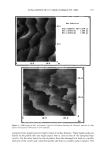
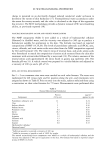
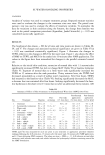
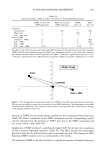
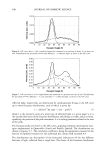
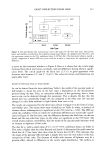
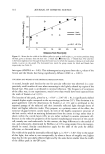
266 JOURNAL OF COSMETIC SCIENCE Table I Growth of M. sympodialis and M. globosa in Different Test Preparations After Varying Incubation Times Frequency of growth (of n = 10) with M. sympodialis/incubation time (days) M. globosa/incubation time (days) Code Substance 4 11 15 18 A Antidandruff shampoo 3 7 1 B Shampoo base + 2% polidocanol 10 10 7 7 C Shampoo base + 0.5% octopirox 10 10 8 9 D Shampoo base + 1% climbazole 4 5 1 E Shampoo base 10 10 8 8 Because of slower growth, M. globosa could not be evaluated prior to day 15. Table II Results of Hair Strand Test for M. sympodialis After Four Days Hair from volunteer Shampoo A Shampoo B Shampoo C Shampoo D Shampoo E 1 + (margin) + + + + 2 0 + + 0 + (margin) 3 0 + + 0 + 4 0 + + 0 + 5 + + + 0 + 6 0 + (margin) + (margin) 0 + (margin) 7 0 + + 0 + 8 0 + + + + 9 + + + + + 10 0 + + + + Growth/total number 3/10 10/10 10/10 4/10 10/10 Margin = growth only at the margin of the suspension inoculate where there is no hair. rations A and D were significantly better than B, C, and E. It was not possible to calculatep-values for paired comparisons of test formulations with identical results in the hair strand test. For these comparisons, the McNemar test results are shown in Tables IV and V. It should also be noted that the same p-values occur for different comparisons (e.g., 0.016 or 0.031). This phenomenon results from the small number of cases and the discrete character of distribution. After ll-day incubation, the test results remained unchanged for preparations B, C, and E. The number of specimens showing growth increased to seven with A and five with D (see Table I). Therefore, the McNemar test failed to reveal statistically significant differences among the five test substances after eleven days of incubation. Results of the hair strand test for M. globosa after 18 days are shown in Table III and Figures 1 and 2. As observed with M. sympodialis, preparations A and D had a significant growth-inhibiting effect. Only in one case each was growth of M. globosa observed. The McNemar test results are shown in Table V. No significant differences were found among preparations B, C, and E. Test formulations A and D were significantly better than preparations B, C, and E. After 18 days, the hair strand test revealed the same result for test preparations A, B, D, and E. The number of specimens showing growth with
Purchased for the exclusive use of nofirst nolast (unknown)
From: SCC Media Library & Resource Center (library.scconline.org)