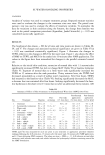
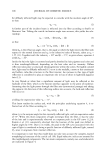
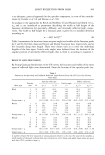
HAIR STRAND TEST 267 Table III Results of Hair Strand Test for M. globosa After 18 Days Hair from volunteer Shampoo A Shampoo B Shampoo C Shampoo D Shampoo E 1 0 + + 0 + 2 0 + + 0 + 3 0 (+) + 0 + 4 0 + 0 0 + 5 + + + 0 + 6 0 0 + (margin) 0 0 7 0 + + 0 + 8 0 + + 0 + 9 0 0 + + + 10 0 0 + 0 0 Growth/total number 1 / 10 7 / 10 9/10 1 / 10 8/10 Table IV Results of McNemar Test for M. sympodialis After Four Days (p-Values) Formulation B C D E A 0.016 0.016 1.000 0.016 B -- -- 0.031 -- C -- -- 0.031 -- D -- -- 0.031 Table V Results of McNemar Test for M. globosa After 18 Days (p-Values) Formulation B C D E A 0.031 0.008 1.000 0.016 B -- 0.625 0.070 1.000 C -- -- 0.008 1.000 D -- -- 0.016 preparation C increased from eight to nine (see Table I). The McNemar test results after 18 days were identical to those obtained after 15 days. DISCUSSION By means of the hair strand test, a new in vitro test system adapted to natural conditions in terms of inoculate, hair density, and application, it was shown that hair shampoos/ substances have different antifungal effectiveness against Malassezia yeasts, which are thought to be primarily involved in the pathogenesis of dandruff (pityriasis simplex capillitii) (5,6,10). The test was unusual in that antifungal activity was not determined directly, but indirectly after incubation of hair samples in various test preparations to assess the bioavailability of the antifungal agents and a possible depot effect. Olive oil overlaid on SPF was used instead of Dixon's agar or Leemings's medium to provide a lipophilic environment resembling the sebum-rich milieu near the scalp surface. The

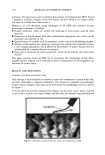
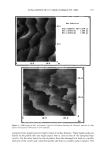
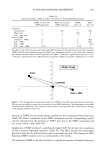
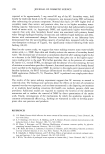
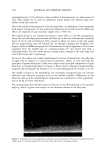
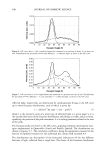
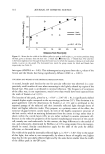
268 JOURNAL OF COSMETIC SCIENCE I 3 5 9 $1]alnpO,vt C 66 18 d' Figure 1. Growth ofM. globosa CBS 7966 after 18-day incubation hair from ten volunteers pre-incubated in shampoo base (E) (growth 8/10 Co = control). miniaturized test system developed from preliminary studies was easy to perform and clear. The rate of contamination was low (1 of 240 samples contaminated with molds), and no growth of Malassezia was seen with the hair strands incubated in pure olive oil. In a few cases, evaluation was problematic because of "marginal" growth, i.e., slow growth in a part of the Petri dish that was not in direct contact with the incubated hairs. However, with increasing incubation time, complete growth occurred. In a blinded manner, shampoos were tested for growth of M. globosa and M. sympodialis, species that are frequently observed on the scalp. The antidandruff shampoo (preparation A com- bination of all active agents) and the shampoo base with 1% climbazole (preparation D) were the most effective and significantly superior to shampoo base alone, while the latter was not different from the other test formulations. The strain of M. globosa, which showed slower growth than the strain ofM. sympodialis (3), was somewhat more sensitive. In the case of M. globosa, the shampoo base was also effective to a certain extent, but it was not possible to distinguish between the base and the addition of polidocanol and octopirox. Climbazole-containing preparations appear to have a predominantly fungistatic effect on M. sympodialis, which levels off with the longer incubation time of 15 days (particularly observed with antidandruff shampoo). However, as the user will probably have washed his/her hair in the meantime, this might be neglectable in practice. Such an effect is not demonstrable with M. globosa. Synergistic effects of climbazole and other components of the antidandruff shampoo (polidocanol, octopirox) were not demonstrated in the present trial. The lacking effec- tiveness of octopirox, also as a single substance, in this test model may result from the
Purchased for the exclusive use of nofirst nolast (unknown)
From: SCC Media Library & Resource Center (library.scconline.org)