290 JOURNAL OF COSMETIC SCIENCE ingredients such as glycerin. Certain moisturizers impart a physical barrier to water loss with components such as petrolatum (4,5). In contrast to the desirable effects of hydration, prolonged exposure of the SC to high levels of water causes maceration, barrier breakdown, and dermatoses, including inflam- mation, irritation, and urticaria (6-11). Warner et al. (12) described damage to the SC following prolonged exposure to water. Abnormalities included disruption of intercel- lular lamellar lipid bilayers, degradation of corneodesmosomes, and formation of amor- phous regions within the intercellular lipid. Repetitive exposure of the skin to water during routine bathing and hand washing is a common practice for many individuals. Imokawa et al. (13) and Jukura et al. (14) reported the extraction of soluble amino acids following i, vitro exposure of isolated human stratum corneum to a 30-minute water soak or to an acetone/ether extraction (30 min) followed by a water soak (30 min). The extracted amino acids were constituents of natural moisturizing factor (NMF), the compounds that confer water-holding properties to the SC (15). Ramsing and Agner (16) described the effects of water soaking on irritated human skin in which subjects were exposed to water twice daily for 15 minutes over two weeks. A significant increase in blood flow was observed, but barrier function (TEWL) and baseline hydration were not significantly impacted. Limited i, vivo information has been reported about the effects of routine water exposure during bathing or showering on the water-handling properties of the SC, i.e., barrier function, hydration, and water-holding capacity. Since NMF consists of water-soluble materials, routine bathing might be expected to alter the NMF content of the stratum corneum. We hypothesized that short-term exposure to water i, vivo removes NMF and alters the SC water-handling properties during the immediate post-bath period. In this study, we report the i, vivo effects on SC water interactions of brief skin exposure to a water soak followed by the topical application of an NMF formulation. We discuss the implications of the results for current skin care practices. MATERIALS AND METHODS SUUJF•CTS Eleven healthy adult female subjects, aged 22-53 years (mean 30 years), were enrolled during June of 2000. Exclusion criteria included visually dry forearm skin and/or low rates of moisture accumulation under probe occlusion (0.28 capacitive reactance units/ sec), dermatological conditions (psoriasis, eczema, irritant dermatitis, etc.), or steroid or insulin therapy. The Institutional Review Board of the University of Cincinnati Medical Center approved the protocol. All subjects provided informed consent prior to their inclusion in the study. BIOPHYSICAL INSTRUMENTATION Transepidermal water loss (TEWL) was determined using a DermaLab evaporimeter (Cortex Technology, Denmark). Baseline hydration and rate of moisture accumulation (MAT) were measured with a NOVA © Dermal Phase Meter (NOVA © Technology, Portsmouth, NH). The MAT uses changes in skin capacitive reactance (the ratio of

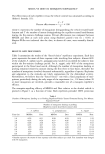
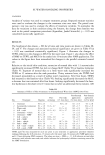
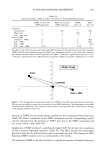
SC WATER-HANDLING PROPERTIES 291 charge to potential on an electrically charged isolated conductor) under occlusion to determine the extent of skin hydration (17). Transepidermal water accumulates under the sensor for twenty seconds, and the value is calculated as the slope of the regression line (cru/sec). The MAT methodology provides a dynamic measure of SC water-handling ability, as previously reported (18). NATURAL MOISTURIZING FACTOR AND VEHICLE FORMULATIONS The NMF components (Table I) were added to a vehicle of hydroxyethyl cellulose (Natrosol) in distilled water, and the viscosity was adjusted to 300 cps to produce a formulation suitable for application to the skin. The formula was based on reported compositions of NMF (14,19,20). The levels of pyrrolidone carboxylic acid (PCA), urea, citrate, chloride, and total amino acids were taken from the NMF composition reported by Cler and Fourtanier (19). The relative ratios of neutral, basic, and acidic amino acids were formulated to match the composition of amino acids extracted from the skin after treatment with acetone/ether followed by a water soak (14). The relative amounts of the neutral amino acids approximated the ratios found in guinea pig epidermis (20). The formula pH was 5.6. A vehicle control was prepared in a similar fashion and adjusted to a viscosity of 300 cps and a pH of 5.6. SITES AND INITIAL MEASUREMENTS Six 2 x 2-cm treatment sites areas were marked on each volar forearm. The areas were randomized for left versus right and for position along the arm, and treatments were assigned as shown in Table II. Prior to entry into the study, subjects refrained from using a moisturizer on their volar forearms for 72 hours. Measurements were performed after Table I Natural Moisturizing Formulation Percent ITIg/ClTI 2 Component (% by wt) applied to site Pyrrolidone carboxylic acid 12 0.24 Urea 7 0.14 Sodium chloride 5 0.10 Sodium lactate 5 0.10 Potassium citrate 0.5 0.01 Serine 18.2 0.36 Glycine 9.1 0.18 Arganine 3.2 0.064 Glutzunic acid 2.3 0.04 Tyrosine 0.5 0.01 Alanine 6.6 0.13 Hydroxyethyl cellulose • Deionized water 2 1 Sufficient quantity to provide a viscosity of 300 cps. 2 Added as necessary to provide a total of 100% by weight. The natural moisturizing factor components were added to a vehicle of hydroxyethyl cellulose and the viscosity was adjusted to 300 cps for application to the skin. The formula was based on reported compo- sitions of NMF (14,19,20).
Purchased for the exclusive use of nofirst nolast (unknown)
From: SCC Media Library & Resource Center (library.scconline.org)