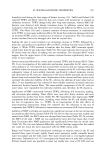
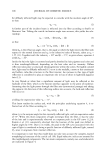
292 JOURNAL OF COSMETIC SCIENCE Table II Skin Treatments Site Arm A Site Arm B 1 Untreated 7 Soak 2 Untreated + vehicle 8 Soak + vehicle 3 Untreated + NMF 9 Soak + NMF 4 Acetone/ether extraction (A/E) 10 A/E + soak 5 A/E + vehicle 11 A/E + soak + vehicle 6 A/E + NMF 12 A/E + soak + NMF The twelve 2 x 2-cm treatment sites were randomized for lefk vs right and for position along the arm. Both arms were extracted with acetone/ether as shown. One arm was then soaked in water for ten minutes. The other arm served as the control. Following the soak procedure, the NMF formulation was applied to the specified sites. Soak indicates water soak, and vehicle indicates the hydroxyethyl cellulose-containing control for the NMF formulation. equilibration to environmental conditions (temperature 21 o + 1øC and relative humidity 31 + 5%) for 30 minutes. Baseline skin measurements of TEWL, skin hydration, and MAT were made for each of the twelve treatment sites (time = 0 min). ACETONE/ETHER EXTRACTION Three sites on each forearm (six total) were treated with a 1:1 mixture of acetone/ether (A/E) to remove surface lipids and intercellular lipids from the outer SC layers. The acetone/ether extraction procedure was expected to remove only very small quantities of water-soluble materials from the skin (21). The sites were exposed to A/E for five minutes using a glass extraction cup to hold the solvent. The areas were then wiped repeatedly with cotton pads dipped in the A/E mixture. This process was continued until the TEWL reading increased to approximately 2 x the baseline value. Following extrac- tion, the biophysical measurements were repeated for each of the six sites. SOAKING Once the A/E extraction was complete, one forearm was soaked in fresh water (tem- perature 40 ø + 1.4øC) for ten minutes and blotted dry. The sites on the other (unsoaked) forearm served as control sites. Fifteen minutes after soaking, the biophysical measure- ments were repeated for all 12 sites, including the untreated control site. NMF AND VEHICLE TREATMENT The NMF formulation was applied (2 mg/cm 2) to four sites immediately following the post-soak measurements: untreated (no extraction, no soak), A/E-treated, soaked, and A/E plus soak. The vehicle control (2 mg/cm 2) was applied to another set of sites (untreated, A/E-treated, soaked, A/E plus soak). The biophysical measurements were made 30 minutes after application for all 12 sites (Table II), including the untreated control site. The test areas were left undisturbed for 3.5 hours. The subjects returned to the test facility and the measurements were made following the 30-minute equilibra- tion.

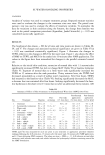
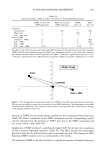
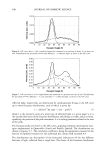
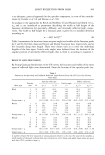
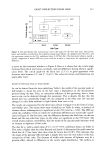
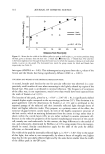
SC WATER-HANDLING PROPERTIES 293 STATISTICS Analysis of variance was used to compare treatment groups. Repeated measure statistics were used to evaluate the changes in the treatment sites over time. The paired com- parison t-test was used to evaluate the effects of treatment variables. To normalize the data for variations in skin condition along the forearm, the change from baseline was used in the paired comparison procedures (SigmaStat, Jandel Scientific). p 0.05 was considered statistically significant. RESULTS The biophysical data (mean, + SE) for all sites and time points are shown in Tables III, IV, and V. The changes and associated statistical significance are given in Table VI (p 0.05 was considered statistically significant). Figure 1 illustrates the changes in TEWL relative to the changes in MAT for the water soak. Figure 1 also shows the effect of NMF on TEWL and MAT for the soaked site 30 minutes after NMF application. The values in the figure have been normalized for changes in the parallel untreated control site. Relative to the initial skin condition, extraction of normal skin with 1:1 acetone/ether significantly increased TEWL but did not change MAT (Table VI) or baseline hydration (Table V). Exposure of normal skin to a fresh water soak significantly increased the TEWL at 15 minutes after the soak procedure. Thirty minutes later, the TEWL had decreased, presumably as a result of surface water evaporation. After four hours, TEWL had returned to the baseline value (Table VI). Soaking significantly decreased the MAT, a decrease that was sustained after four hours. Soaking significantly decreased the base- line hydration in the short term (15 min), but not after an additional thirty minutes. A/E Table III Summary of Effects of Skin Treatments on Transepidermal Water Loss (TEWL) Over Time Post-formula Post-formula Post- Post-soak application application Site Treatment Baseline extraction (15 min after) (30 min after) (4.5 hr after) 1 Untreated 9.8 + 2.5 9.8 + 2.0 8.1 + 1.9 9.5 + 2.8 2 Acetone/ether extraction 9.1 + 1.9 11.6 + 2.7 -- 8.5 + 1.7 10.4 + 1.9 3 Water soak 9.8 4- 2.0 11.2 4- 2.1 8.3 4- 2.2 9.6 + 2.1 4 A/E + soak 9.3 + 3.0 12.2 4- 4.3 12.5 + 2.7 9.4 + 2.5 10.5 4- 3.5 5 Untreated + vehicle 9.1 4- 2.4 -- -- 7.7 4- 2.2 8.7 4- 2.4 6 Untreated + NMF 8.9 4- 2.4 -- 6.9 -+ 2.3 7.9 4- 2.4 7 A/E + vehicle 8.7 + 1.9 10.9 4- 2.9 -- 8.4 4- 2.3 9.9 4- 2.2 8 A/E + NMF 9.1 + 2.2 10.9 + 3.2 -- 7.7 + 2.1 9.0 4- 2.3 9 Soak + vehicle 9.4 + 2.1 -- 10.7 4- 2.0 7.9 + 1.7 8.8 4- 1.8 10 Soak + NMF 9.0 + 1.6 -- 10.5 4- 2.0 6.5 + 1.7 7.7 4- 2.2 11 A/E + soak + vehicle 8.8 4- 2.5 11.0 4- 3.1 12.1 + 2.2 9.0 + 2.2 10.2 + 2.5 12 A/E + soak + NMF 9.1 + 2.5 14.8 + 7.1 12.2 + 2.3 8.0 4- 2.4 9.2 4- 2.9 TEWL (g/m2/hr) was measured for each site prior to any treatment or application procedure (baseline reading), following the A/E extraction, 15 minutes after the water soak, 30 minutes after NMF application, and 4.5 hours following NMF treatment. The values are mean + SEM, n = 11. A/E indicates acetone/ether extraction, soak indicates water soak, and vehicle indicates the hydroxyethyl cellulose-containing control for the NMF formulation.
Purchased for the exclusive use of nofirst nolast (unknown)
From: SCC Media Library & Resource Center (library.scconline.org)