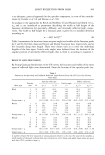
296 JOURNAL OF COSMETIC SCIENCE for the untreated and the A/E-extracted-plus-water-soaked sites at thirty minutes (Table V). For the soaked site, NMF application increased hydration directionally (p = 0.07). NMF addition had no effect on the A/E-extracted site. DISCUSSION The human stratum corneum is a thin, flexible, mechanically tough membrane that is essential for cutaneous protection against environmental insults and loss of body water in a dry, terrestrial environment. The SC barrier properties are conferred by intercellular lipids arranged as lameliar sheets surrounding corneocytes tightly linked by desmosomal connections (22-24). The flexibility and water-holding properties of the SC are, in large part, attributable to hygroscopic, water-soluble compounds, collectively known as NMF (15,25). The primary constituents are high concentrations of amino acids, including derivatives such as pyrrolidone carboxylic acid and urocanic acid, that are found in the stratum corneum (26,27). NMF is generated in part by proteolysis of the SC protein filaggrin, which occurs under conditions of optimal water activity, i.e., in a relative humidity range of 70% to 95% (2). Interference with either the composition or structure of the lameliar lipids or the production or accumulation of NMF can, presumably, disturb the water balance of the stratum corneum. Disruption of the intercellular lamellae can occur as a result of treatment with solvents and with water itself (12,28). In this study, we examined the effects of a common perturbation, exposure to water via soaking, on the SC permeability barrier and water-handling properties. We used a solvent system to extract the hydro- phobic surface residue and SC lipids from the upper layers. Acetone/ether extraction has been shown to remove lipids without removing the water-soluble components (13). Extraction of the intercellular SC lipids was expected to increase access to the soluble components within the upper stratum corneum during the soaking phase. We antici- pated that the combination of solvent extraction (barrier damage) followed by water exposure would model the effects of surfactant-water interactions with the SC and determine the relative contributions of changes in lipids and changes arising from removal of water-soluble materials. To test the hypothesis that water-soluble compo- nents significantly impact SC water-handling properties, we applied an NMF compo- sition back to soaked or extracted skin sites and evaluated the water-handling properties using measurements of TEWL and hydration. Acetone/ether extraction significantly increased TEWL for five hours (Table VI), sug- gesting that recovery from lipid depletion was not immediate. The finding that solvent treatment did not significantly change MAT is consistent with reports that very small amounts of water-soluble components are removed with acetone/ether extraction (21). The MAT methodology has been used as a surrogate for TEWL in animal models (29,30) and cell culture systems (29), and for assessing the development of barrier function in premature human infants (31). In situations of extreme barrier compromise, e.g., tape stripping or premature birth, increased MAT paralleled an increase in TEWL (31,32). Decreased MAT has been observed to indicate barrier development or recovery (29,30,32). In this study, barrier compromise by A/E extraction, while producing a statistically significant increase in TEWL, was small and did not significantly alter MAT. We have observed that MAT decreases in dry scaly skin (e.g., due to low relative

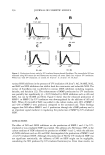
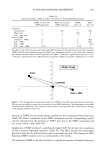
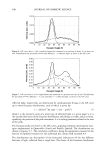
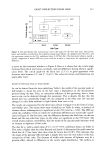
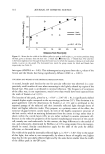
SC WATER-HANDLING PROPERTIES 297 humidity) and during the later stages of barrier recovery (33). Treffel and Gabard (18) reported TEWL and MAT values for skin sites treated with moisturizer or exposed to surfactant irritation. TEWL changed only after long-term exposure, whereas MAT dif- ferences were detected with shorter treatment times. In addition, control skin sites evaluated in both July and November were statistically different for MAT, but not for TEWL. Van Neste (34) used a dynamic measure of water movement in combination with TEWL to investigate surfactant effects. He found that surfactant-damaged skin had an increased TEWL and an increased rate of moisture accumulation. The two measure- ments correlated better for damaged skin than for normal skin. Soaking the skin in water resulted in an immediate increase in TEWL, followed by a reduction, and produced a significant effect on MAT, yielding very low values (Table VI, Figure 1). While TEWL returned to baseline after five hours, MAT remained signifi- cantly lower than the pre-soak value (Table VI). This result indicates that recovery of the SC barrier from the effects of soaking was not immediate. The decreased MAT values suggest that the upper layers of the stratum corneum became significantly drier as a result of water exposure. Solvent extraction followed by a water soak increased TEWL and decreased MAT (Table VI). In an investigation of the molecular mechanisms responsible for SC elastic prop- erties, Jukura et al. (14) reported that acetone/ether extraction did not change molecular mobility within the stratum corneum. However, treatment of the SC with water and the subsequent release of water-soluble materials significantly reduced molecular motion and eliminated the SC elasticity. Depletion of the water-soluble materials also decreased bound water and increased free water. Replacement of the neutral and basic amino acids increased the molecular mobility of the SC, whereas the addition of water alone had no effect. It was hypothesized that removal of water-soluble materials increased molecular interaction between keratin fibers. The water-soluble components of the SC, and not water alone, were responsible for molecular mobility and, therefore, for SC elasticity. Application of NMF consistently lowered TEWL, following A/E extraction, soaking, and extraction-plus-soaking. These effects were seen after thirty minutes and were maintained for another four hours (Table VI). We hypothesize that hygroscopic NMF components bind associated water, including water within the SC, and thereby reduce the rate of evaporative loss, i.e., TEWL. In an investigation of the skin effects of urea-containing moisturizers, Serup (35) reported that the reduction in the rate of evaporative loss (TEWL) indicated an improvement or restoration of SC barrier function. Addition of NMF to all skin sites resulted in a significant increase in the rate of moisture accumulation after thirty minutes (Table VI). For the site that was extracted, soaked, and treated with NMF, the MAT value was elevated four hours later (Table VI). In contrast, the MAT of the soak + NMF site was significantly lower after four hours than it had been 30 minutes after NMF application and significantly lower than the initial value (Table VI). The two sites behaved differently, and the findings suggest that the soaked site could not retain the water associated with the NMF amino acids. Bulgin and Vinson (36) used calorimetric techniques to examine water in the SC and reported three types of water: tightly bound water (primary), readily releasable bound water (secondary) and free bulk water. Free water existed only in very highly hydrated skin states. Takenouchi et al. (37) investigated the bound water in scaly skin conditions. Primary bound water was specified as water not readily lost, even at 0% RH, and was
Purchased for the exclusive use of nofirst nolast (unknown)
From: SCC Media Library & Resource Center (library.scconline.org)