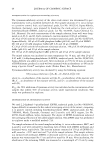
2007 ANNUAL SCIENTIFIC MEETING CONTROLLING HAIR CONDITIONING WITH ACTIVE DELIVERV l'OLVMERS Eric Leroy, C Mabille, A.F. Leron and J. Saintecatherine Rhodia, Inc., 8 Cedar Brook Drive, Cranbury, NJ 08512-7500, USA Background: 103 Shampoo formulations have experienced different composition evolutions over the last decades, from a simple cleansing and foaming base with poor hair conditioning level, to a fairly sophisticated system containing a variety of surfactants combined with one or more conditioning polymers and a silicone agent. Conditioning polymers are usually of cationic nature, and the most commonly used are derived from the chemical modification of polysaccharides such as guar and cellulose [1]. These polymers are essentially used for their reversible surface modification properties that allow for an improvement of the hair wet-combability and its wet-feel after shampooing. To provide such conditioning benefits, these polymers have to be deposited on the hair surface. One widely accepted mechanism to achieve that is the so-called "flocculation" or "coacervation" of a polymer-surfactant complex upon dilution of the shampoo [2] when applied onto wet hair. Because of their size and their hydrophobicity, polymer floes deposit and stick on the hair, and resist to some extend to the rinsing step. At some point in the cosmetic science advances, these objects have been regarded as potential vehicles to deliver particles dispersed in the shampoo formulations on hair, especially silicone droplets and anti-dandruff agents. Over the last years, the importance of the polymer cationic charge density and molecular weight to maximise the deposition of dimethicone oil has been emphasised. Similarly, it has been shown how the droplet size can significantly impact the deposition efficiency from a given polymer-surfactant system, and thus the necessity to properly design the silicone emulsion in the shampoo. Levers to maximise the deposition of silicone oil on hair are fairly well understood, but the difference in behaviour between a virgin hair and a damaged hair is not. Providing some insight to help in answering this question is the object of this presentation, and corresponds to the present unmet needs that consumers are facing: over deposition of conditioning material on undamaged parts of hair, whilst low deposition level on heavily damaged areas. Experimental: Table I hereunder gives an overview of the conditioning polymers tested in this study, their INCi name and a brief description of their chemical nature. Reference Backbone tvne INCi name GuarHM Guar GuarHPTC GuarLM Guar GuarHPTC GuarHH Guar GuarHPTC P -IOLH Cellulose Polvauatemium-10 P -IOHH Cellulose Polvauatemium-10 P -67 HH Cellulose Polyauatemium-67 p1 -6 Svnthetic Polyquatemium-6 p -7 Synthetic Polyquatemium-7 P -74 Synthetic Polyquatemium-74 . . Table J: overview of condtttonmg polymers evaluated Molecular wei2ht Net chal'f!e density High Medium Low Medium High High Hi2h High Low Hi2h Hi2h Hi2h Medium High High High High High Shampoos A to J are simple bases containing 14% of SLES (2EO), 2% of CAPB, 1 % of dimethicone emulsion (which droplet size is of approximately 0,7µm) and 0,2% of a conditioning polymer presented in table 1 above. Formulation pH is adjusted to around 5,0 with citric acid. Virgin medium brown Caucasian hair (referred hereafter as VIRGIN) and regular bleached Caucasian hair (referred hereafter as DAMAGED). Hair tresses used for this study have been purchased to International Hair Importers and Products Inc. Red-dye test: 3 tresses of approximately 2,5g each are pre-treated with a SLES solution, and shampooed with 0,4g of conditioning material for 60 seconds. Tresses are rinsed for 60 seconds under tap water of controlled flow rate and temperature. Tresses are immersed for 3 minutes in a red dye solution, and then left for drying. Dye adsorbed onto the hair surface is then extracted and dosed with UV spectrophotometer at a wavelength of 528 nm. Dye concentration in mg/I is obtained, and final result is expressed as a concentration of dye per mg of hair. Silicone deposition test: 2 tresses of approximately 4,5g each are pre-treated with a SLES solution, and shampooed with 0,45g of conditioning solution for 45 seconds. Tresses ace rinsed for 30 seconds under tap water of controlled flow rate and temperature. Tresses are left for drying over night in a climatic room. Dimethicone deposited on hair is extracted with tetrahydrofuran (THF) solvent, and the quantity of dimethicone in THF is further dosed by Gas Permeation Chromatography (GPC). Final result is expressed in ppm of dimethicone per mg of hair. Results and conclusion: Keratin has an amphoteric nature and an isoelectric point of approximately pH=4. Hence, in the conditions of use of 2- in-l shampoos, surface of healthy hair is negatively charged [3], and we have measured a zeta potential of -15mV at pH=6. In addition, undamaged hair is strongly hydrophobic, featuring an angle of contact of approximately 90° (4].

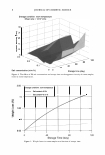
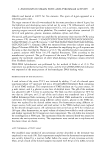
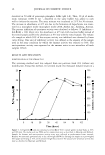
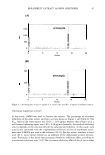
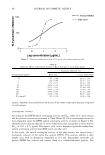
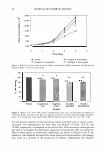
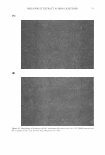
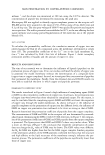
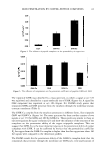
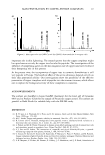
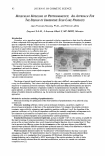
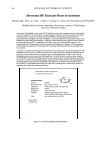
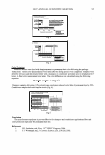
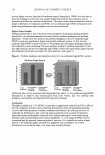
104 JOURNAL OF COSMETIC SCIENCE When hair is oxidised, it undergoes a significant physico-chemical modification of its surface state: disulfide and peptide linkages breakdown and some of the outer cuticles are removed. As displayed in picture 1, damaged hair surface is rough and not as smooth as virgin hair. As a result of oxidation, surface is much more hydrophilic than virgin hair: the angle of contact drops to approximately 30°. Zeta potential measurements show that oxidation of hair has modified its surface charge, shifting to a globally neutral charge. Finally, our red-dye testing show that the density of cationic sites on the surface of oxidised hair has significantly increased r:__�__::..,_;.,. __ ._ ____ compared to healthy hair which displays less adsorption of the anionic red-dye. l?k1Ja:Ll: damaged hair surface Deposition of Guar HM on virgin hair can be significantly increased in presence of electrolytes. A similar trend sums to be true for damaged hair as well, but surely at a much lower level. This finding emphasises how the surface properties of damaged hair influence the behaviour of polymer floes. -0.DOIO Depo..lon Df Guar HM f0,4'9') on Vlfffl'" and DAMAGED NI'° Figure I: Deposition of Guar HM (0,4%) on virgin and damaged hair as a function of salt Similarly to Guar HM, all conditioning polymers tested display a larger amount deposited on virgin hair than on damaged hair (see in figure 2). Interestingly, only polysaccharides of high charge density and PQ-74 present a positive result for damaaed hair. This probably is the indication that a minimum amount of cationic charges is necessary so that some remains on hair after the rinsing step. Deposition of dimethicone oil on virgin hair is achieved with all polymers tested but there are great differences in terms of efficiency. On that respect, it appears that high molecular weight cationic guar and PQ-74 are of greater interest compared to cellulose polymers and synthetic polymers (see in figure 3). 0,120 Poly ar dePMl9e" on VlftOI and DMAOED hair f]g;y[:j_l: Polymer (0,2%) deposition on virgin and damaged hair I eoo 'I r -------�------1� l �1-------- l - :zao I··��-I � lll/ ,l /lll E]gy,rf_l: Dimethicone deposition on virgin and damaged hair Similarly to the deposition of polymer on damaged hair, dimethicone deposition on this hydrophilic surface is much more difficult and no clear trend on the polymer chemistry can be extracted. From the data displayed above, one can first conclude that a good deposition polymer for virgin hair is not necessarily effective on d aged hair. Additionally, it appears that PQ-74 polymer deposits dimethicone better than others on damaged hair, while having a very good profile for virgin hair as well. Rderepces: [l]: US Patent No. 3,472,840 (1969) [2]: ED. Goddard, RB. Hannan, "Cationic polymer/ anionic surfactant interactions", J. Colloid and lnterf. Sci., SS, 73-79, ( J 976) [3]: J. Jachowicz, M. Berthiaume, M. Garcia, "The effect of amphiprotic nature of human hair keratin on the adsorption of high charge density cationic polyelectrolytes", Colloid & Polymer Sci., 263, 847-858, (1985) (4]: Karnath YK, Dansizer CJ, Weigmann HD, J. Soc. Cosmet. Chem., 28, 273-284, (1977)
Purchased for the exclusive use of nofirst nolast (unknown)
From: SCC Media Library & Resource Center (library.scconline.org)