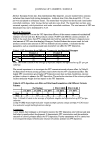
2007 ANNUAL SCIENTIFIC MEETING A NOVEL APPROACH TO DELIVER HIGHER ORDER BENEFITS TO PERSONAL CLEANSING APPLICATIONS By USING HVDROXVPROPVL METHVLCELLULOSE 101 Edward DiAntonio 1 , Xiaodong Zhang1, Ph.D., Jerry Conklin2 , Wing Li1 and Tatiana Drovetskaya1 1 The Dow Chemical Company, 171 River Road, Piscataway, NJ 08854 2 The Dow Chemical Company, 1691 N. Swede Road, Midland, Ml 48674 Objective: In today's personal cleansing market, providing higher order benefits such as mildness, improved fragrance, and better deposition of actives is a challenge for consumer product companies. Most hair and skin cleansing products contain 15-20% surfactant. It is generally accepted that cleansing only requires 5-7% surfactant. The additional surfactant is used to build formulation viscosity and generate desirable lather properties. However, this additional surfactant can be harsh to skin and hair, causing moisturization reduction and even damage. Additional surfactant will also inhibit deposition of beneficial agents. Simply reducing the surfactant level in a personal cleansing formulation will usually result in a dramatic drop in formulation viscosity and unacceptable product rheology. Foam volume will also suffer. Without good flash foaming and creamy lather, the formulation will not be aesthetically pleasing to the final user. Through the addition of 1-2% hydroxypropyl methylcellulose (HPMC) it is possible to significantly reduce from 30% to 60% of the total surfactant normally used in cleansing formulations yet still maintain acceptable viscosity and lather properties (flash foaming, volume, creaminess and density). Using the patent-pending low-surfactant high-HPMC technology, the formulator is able to provide unique properties such as improved mildness, improved perfume performance, improved color fading performance, better conditioning properties and increased deposition of active ingredients. Materials and Methods: Hydroxypropyl methylcellulose (HPMC) supplied by Amerchol Corporation (Bound Brook, NJ) was used in this study: (2% solution viscosity of 4000 cps, hydroxypropyl molar substitution of 0.23, methoxyl molar substitution of 1.9). Two surfactants supplied by Cognis were used in this study: Sodium laureth sulfate (SLES-2 - 26% solids) and Cocamidopropyl betaine (CAPB - 35% solids). A standard personal care fragrance (White Tea Mod 4 Fragrance, 02F/3156) from Fragrance Resources was used. Viscosity was measured using a Brookfield DV-11+ Programmable viscometer fitted with a small volume adapter. Perfume headspace and deposition were tested using gas chromatography. Results: Basic Performance A body wash formulation with typical surfactant level (15%) was prepared and tested. A SLES-2/CAPB ratio of 11 :4 was used. This formulation had acceptable rheology (4,000 cps) and good foam volume (30.6 ml). When the surfactant level was reduced from 15% to 7.5%, the viscosity was reduced to only 200 cps, which is not acceptable for personal cleansing applications. Foam volume was also noticeably lower than that of the control formulation due to lower surfactant level used in the system. When 1 % HPMC was incorporated into the low surfactant system (7.5% surfactant), a significant improvement in formul�tion viscosity was observed. In fact, the viscosity of the low-surfactant-high-HPMC formulation was 11,700 cps,

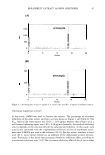
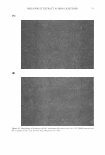
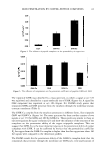
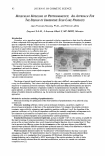
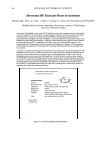
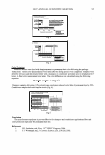
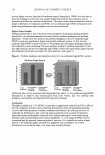
102 JOURNAL OF COSMETIC SCIENCE an even higher viscosity than the full-surfactant control formulation. HPMC was also able to boost the foaming to a level that was actually higher than both the full-surfactant control formulation and the low surfactant formulation. This study clearly demonstrated that with the proper combination of surfactant and HPMC, a low-surfactant-high-HPMC formulation with good foam performance and acceptable viscosity can be achieved. Higher Order Benefits Perfume performance is one of the most critical properties of personal cleansing products. Specifically, two perfume parameters are most relevant: perfume headspace and perfume deposition. As shown by GC analysis, the perfume headspace of the low-surfactant-high HPMC system was significantly higher than the full-surfactant system. In fact, the low surfactant-high-HPMC system with only 0.75% perfume provided higher headspace than the full-surfactant system containing 25% more perfume. Similarly, perfume deposited on Vitro skin after treating with the low-surfactant-high-HPMC system was significantly higher than the full-surfactant system that contained 25% more perfume. (see Figure 1) Figure 1. Perfume headspace and deposition study for Low-surfactant-high-HPMC systems. Perfume Head Space perfume 1 deposition (ppm) 1 Control Low-surfactant- Low-surfactant- 1 % perfume high-HPMC high-HPMC 1% perfume 0.75% perfume Control Low-surfactant- Low-surfactant- 1 % perfume high-HPMC hlgh-HPMC 1% perfume 0.75% perfume Additional data will be presented that demonstrate the ability of low-surfactant-high-HPMC formulations to improve skin moisturization from body washes, hair wet combing from shampoos, and salicylic acid deposition from anti-acne cleansers, Conclusion: Through the addition of 1-2% HPMC it is possible to significantly reduce from 30% to 60% of the total surfactant normally used in cleansing formulations while still generating desirable viscosity and lather properties (volume, creaminess and density). By reducing the level of surfactant the formulator is able to provide unique properties such as improved mildness, improved perfume performance, improved color fading performance, better conditioning properties and increased deposition of active ingredients. A 1-2% usage of HPMC may be considered high for personal cleansing products however, if it is possible to reduce a large portion of the surfactant and/or an expensive ingredient such as perfume, the overall formulation cost can be the same, or in some cases, actually reduced.
Purchased for the exclusive use of nofirst nolast (unknown)
From: SCC Media Library & Resource Center (library.scconline.org)