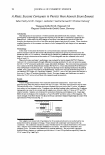
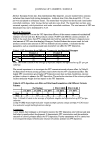
2 JOURNAL OF COSMETIC SCIENCE to the product without affecting stability and consistency. Phase separation is another problem observed in many samples of locally produced Dead Sea creams and mud masks. Many investigators have reported on the close relationship of emulsion rheology and stability relative to several structural parameters (1-5). Rheological techniques are pow erful tools to study the behavior of cosmetic emulsions. Changes in the rheological properties of cosmetic emulsions represent an important early warning of the impending failure of the product (3 ). Rheological measurements are now required in various pharmaceutical and cosmetic industries including, but not limited to (a) quality control, (b) storage stability under various weather and transportation conditions, (c) correlation with sensory assessment and consumer evaluation, (d) the effect of formulation on consistency, and (e) prediction of flow behavior under manufacturing or production environment conditions (e.g., pumping, mixing, milling, and packaging). Various cosmetic products have different rheological behaviors. For example, body creams require a high viscosity at rest in order to stay in the hands of the consumer while being taken out of the bottle, but on the other hand, a subsequent shear thinning behavior is required for the ease of spreading and applying the creams onto the skin (6). Modern Dead Sea cosmetics have been developed to meet the demands of new regula tions, technical opportunities, and today's consumer expectation for higher quality standards and proven performance. As an example of the application of this approach, Maor et al. (7) describe the development of new cosmetics formulations, based on "osmoter," a special Dead Sea mineral composition, and the evaluation of this formu lation effect on the depth of skin wrinkles by a controlled assay. In this study, body cream (a cosmetic emulsion model) containing Dead Sea salt was compounded using the conventional techniques in emulsion preparation. The addition of salt(s) to the emulsion resulted in a significant change in rheological behavior and stability. For this reason, rheological and stability measurements were used to evaluate the prepared cosmetic emulsion in order to find the optimum content of Dead Sea salt that can produce a stable cream with maximum viscosity. MATERIALS AND METHODS MATERIALS The components used in the cream formulation were divided into three groups: water phase, oil phase, and preservative. Oil-phase components were lanolin (pastel) consisting mainly of sterol (C27H45OH), petrolatum (white petroleum), paraffin oil, cetearyl al cohol (stied), sodium cetearyl sulphate (lan N), and glycerin stearate. The oil-phase components contribute to 24.1 % (wt%) of the total components used in the formulation of the body cream. The water-phase components were propylene glycol (PG), glycerin, Dead Sea salt, and RO water. The preservatives used were 5-chloro-2-methyl 4-iso thiazolin-3-one, 2-methyl 4-iso thiazolin-3-one, propyl paraben, and methyl paraben. Table I shows the percentages of the components used in the formulation of the body cream. The materials used for the body cream formulation were supplied by Ammon Dead Sea Co. (Amman, Jordan), which in turn were exported from Henkle Co. (Ger many). The Dead Sea salt consists mainly ofK+ (114500 mg/kg), Mg + 2 (81200 mg/kg),

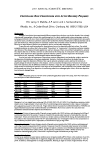
Raw material Paste 1 White petrolatum Paraffin oil Stied Lan N Propyl paraben Glyceriyl stearate Propylene glycol (PG) Methyl paraben Dead sea salt Glycerin Preservative RO water DEAD SEA SALTS IN COSMETIC EMULSION Table I Fomulation of the Body Cream Used in the Study wt% 4.0 4.0 4.0 4.0 4.0 0.1 4.0 4.0 0.2 3 0.0-0.25 7.0 0.2 Up to 100 Na+ (25600 mg/kg), Ca+ 2 (2000 mg/kg) and Cl- (382100 mg/kg). The complete chemical analysis of the DS salt used can be found in reference 8. CREAM PREPARATION The body cream was prepared by adding the oil-phase components and water-phase components at room temperature into two separate jacketed glass vessels. Hot water was circulated into the jackets of the vessels to attain the required temperatures. In order to dissolve all the water- and oil-phase components, the water phase was heated to 75 ° C, and the oil phase to 80°C under high-speed agitation. The mixing speed was 700 rpm for both the oil and the water phases. When the water and oil phases reached 75 ° C and 80°C respectively, the water phase was added to the oil phase and the resulting emulsion allowed to cool down to 40°C under slow-speed agitation (400 rpm). The preservative was added at approximately 40°C and the agitation was discontinued. The cream samples were stored in glass beakers at three temperatures: 8°C, room temperature, and 45°C. The rheological properties of the prepared creams were measured at different storage points during a four-month period. In addition to the conductivity measure ments of the cream samples, the stability of the prepared creams was investigated using a centrifuge after six weeks from the time of preparation. In order to investigate the reproducibility of the sample preparation, part of the samples was prepared in duplicate. METHODOLOGY Experiments were performed to study the rheology and stability of the body cream prepared in the laboratory. Rheological studies of the body cream included the study of the dependence of apparent viscosity on shear rate. DS salt concentrations varied from 0.0 to 0.25%. Salt-free cream was used as a control sample, and other samples containing DS salt were compared to this control.
Purchased for the exclusive use of nofirst nolast (unknown)
From: SCC Media Library & Resource Center (library.scconline.org)