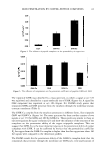
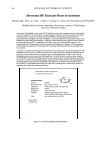
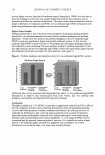
4 JOURNAL OF COSMETIC SCIENCE EQUIPMENT Rotational viscometer. All rheological measurements of the body cream samples were car ried out at 25°C using a concentric cylinder viscometer (Haake VT 500, SVl-system). The viscometer has an inner cylinder rotating in a stationary outer cylinder. The SVl system has a bob with a length of 61.4 mm and a radius of 10.1 mm, and it has a jacketed cup with a radius of 11. 5 5 mm. Body cream samples were placed in the temperature-controlled measurement viscometer and equilibrated to 25°C for ten min utes prior to performing the measurements. The rheological experiments were carried out in duplicate and the reproducibility was ±4% on average for selected samples. Centrifuge. All stability tests of the body cream samples were carried out using a con ventional centrifuge (Hettich Zentrigugen, Germany). Samples were subjected to an accelerated stability test using the centrifuge at 4000 rpm for 30 minutes six weeks from the day of preparation. Conductivity meter. Conductivity measurements of the cream samples were performed with an electrical conductivity meter (Euteoh, Cybercsan 1000, Singapore) at room temperature at different storage periods of four months. Stirrers. A three-bladed impeller was used to mix the oil phase of the cream during preparation (Heidloph, RZR, Germany). It was driven by a variable-speed motor (400- 1400 rpm). A two-bladed impeller (Stuart Scientific, SS2, U.K) set at 700 rpm was used for mixing the water phase during cream preparation. RESULTS AND DISCUSSION CENTRIFUGE TEST The first body cream stability test was carried out using a centrifuge. Samples were subjected to accelerated stability testing using a centrifuge at 4000 rpm for 30 minutes six weeks from the day of preparation. The aim of this test was to check for phase separation and to examine how homogenous the prepared cream was. Results indicated that all cream samples containing 0.25 wt% of DS salt or less were homogenous, and no change in the sample structure was observed. Samples containing more than 0.25 wt% of DS salt showed a phase separation pre- and post-centrifugation. For this reason, the rheological analysis was limited to the stable samples. RHEOLOGICAL PROPERTIES In this part of the investigation, the effect of added DS salt on the viscosity of the body cream samples was examined by adding different salt concentrations to the standard formula mentioned earlier in the Experimental section. The concentration of the DS salt varied from 0.0 to 0.25 wt%. Creams containing more than 0.25 wt% DS salt were completely unstable. The effect of DS salt concentration on the apparent viscosity of cream samples stored for one week at room temperature is shown in Figure 1. As can be seen in this figure, the effect of increasing the DS salt concentration from 0.0 to 0.25 wt% on the apparent viscosity can be divided into four regions. In the first region, a decrease in the apparent

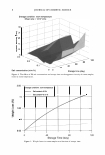
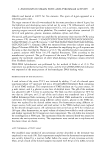
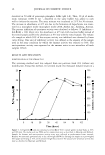
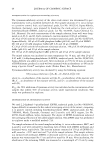
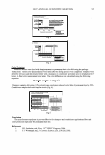
20 - ·en 10 ' a. a. 0 DEAD SEA SALTS IN COSMETIC EMULSION Period of storage = one week Storage condition : room temperature 0.00 0.05 0.10 0.15 Salt concentration (w/w % ) 0.20 5 20.65(1/s) 0.25 Figure 1. The effect of DS salt concentration on the apparent viscosity of cream samples stored for one week at room temperature and measured at three shear rates: ■ 7 .387 (11sec), • 20.65 (11sec), and -'. 40.32 (11sec). viscosity with increasing DS salt concentration from 0.0 to 0.05 wt% was observed, reaching the first minimum point at 0.05%. In the second region, the apparent viscosity increased with DS salt concentration to reach the first maximum in viscosity, which occurred at 0.07 wt% DS salt content. A sharp decrease in the apparent viscosity was then observed, reaching a minimum point at 0.08% DS salt concentration. A higher maximum point than that at 0.0 and 0.07 wt% in the apparent viscosity was reached at 0.15 wt% DS salt concentration. A decrease in the apparent viscosity was noticed in the fourth region when the DS salt concentration was increased from 0.15 to 0.25 wt%. Similar behavior was found for the samples subjected to different shear rates over the entire concentration range, as can be clearly seen in Figure 1. In order to be sure that the pervious variation of viscosity with salt concentration is real and not a reflection of experimental error, part of the samples was prepared in duplicate. As can be seen in Figure 2, the reproducibility of a sample preparation is very high where the maximum error in the apparent viscosity at a constant salt concentration is less than 4.0%. In addition, Figure 2 shows that experimental error did not affect the general trend of the apparent viscosity of cream samples with the salt concentration. Based on the function of sodium cetearyl sulfate (anionic emulsifier) used in this sys tem, the oil droplet surface will be surrounded by a negatively charged layer. This layer works as a bridge between the oil and water phases consequently, the electrostatic repulsion between oil droplets will prevent them from coalescence. Ionization to cations and anions occurs when the DS salt is added. The negatively charged ions (e.g., Cr)
Purchased for the exclusive use of nofirst nolast (unknown)
From: SCC Media Library & Resource Center (library.scconline.org)