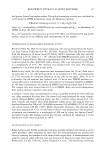
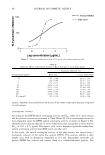
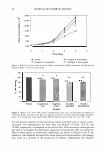
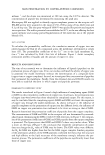
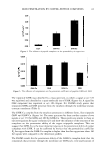
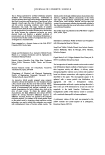
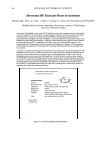
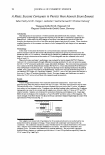
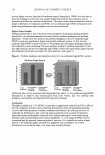
52 JOURNAL OF COSMETIC SCIENCE 30.00 "I""" 25.00 m 20.00 C "jjj 15.00 � u 10.00 C m 5.00 ::: 0.00 0 2 3 4 5 Time (day) --+- Control - 10 ug/ml A incius extract -6- 25 ug/ml A incius extract -x- 100 ug/ml A incius extract Figure 7. Effect of A. incisus ether extract on viability of melanocyte B16Fl melanoma cells. Each point represents mean ± S.D. of triplicate study. a • 120 100 80 60 40 20 0 Control * 10 ug/ml Kojic acid * 10 ug/mLA. incisus Sample 4.5 ug/ml Artocarpln ** 10 ug/ml Hydroqulnona Fi gur e 8. Effects of A. incisus ether extract, hydroquinone, kojic acid, and artocarpin on viability of melanocyte B16Fl melanoma cells. Data are expressed as percent of control, and each column represents mean ± S.D. of triplicate study. Significantly different from the control value: *p 0.5, **p 0.01. that the percent viability of cells after being treated with kojic acid, A. incisus extract, artocarpin, and hydroquinone for three days was 90.02%, 91.39%, 79.17%, and 79.26%, respectively, as compared to the control cells. The microscopic technique was also used to investigate the phenotypic appearance of melanocyte cells to confirm the effect of these agents on melanocyte morphology. As shown in Figures 8 and 9, the number of cells markedly decreased after being treated with hydroquinone. Cell damage may result in a decrease in the production of melanin. Additionally, the dendrite

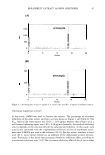
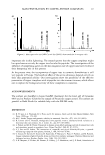
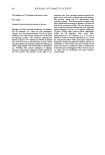
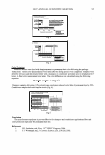
BREADFRUIT EXTRACT AS SKIN LIGHTENER 53 (A) (B) Figure 9. Morphology of melanocyte B16Fl melanoma cells treated with (A) 0.1% DMSO (control) and (B) 10 µg/ml of hydroquinone for three days. Magnification: 400x.
Purchased for the exclusive use of nofirst nolast (unknown)
From: SCC Media Library & Resource Center (library.scconline.org)