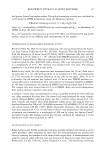
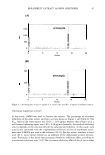
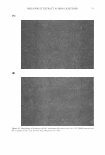
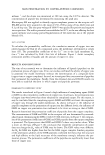
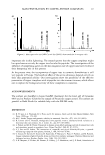
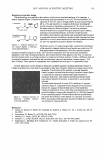
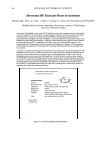
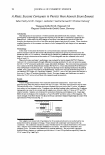
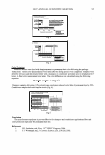
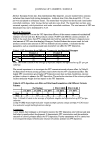
2007 ANNUAL SCIENTIFIC MEETING Figure 2 shows the proposed generic reaction route for attaching cinnamic acid moieties to isosorbide. 0 OH J:t:j + HO O COOH ,&' OMe OH DCD DMAP OMe Meo O oco � - ' � HO�coo� ('. 11 Figure 2 85 Preliminary characterization indicates that these compounds are hydrophilic, thermally stable compounds that are compatible with many polymer and cosmetic base materials. A typical UV spectrum is shown in Figure 3. Spectrum/Peak Report Date 11/3/05 Tisne 03:33:01 Page 1 of 1 Iaoaorbide Biaferulate O. 0063, in CH2Cl2 Method file : Intot111ation : untitled. Default Met.4od. Data File : C:\YIZBAN ... 1\ISDF1103.SD Created ll/3/05 J:29:21 Over la.id Spectra: l Name Peaks (mnl Abs IAD) Valleys {ma) Abs (AU) 325.0 296.0 236.0 Report 9enerated by : patelc 2.46010 2,304.70 2.24130 2S9.0 306.0 1.10030 2.19890 ••• End Spectrum/Peak Report ••• Figure 3 t.• 194-fl t� 1&21, -£"' 1'111& Signature: .........••....• It is expected that this family of compounds will effectively absorb both UV A and UVB and be suitable for both cosmetic and polymer applications. We have also developed technology for the controlled monoesterification of isosorbide, leaving the second unreacted hydroxyl as an active site for the addition of compatibilizing, plasticizing or other functionally active moieties. This isosorbide based chemistry then provides a template for "designer" UV stabilizers based on GRAS core material.

86 JOURNAL OF COSMETIC SCIENCE FRONTIERS OF SCIENCE AWARD LECTURE SPONSORED BY COSMETICS AND TOILETRIES® SIRTUINS, AGING AND DISEASES Leonard Guarente, Ph.D. Massachusetts Institute of Technology, Cambridge, MA 02139 Aging has been a subject of human fascination and vexation since the dawn of consciousness. While many theories about aging have emerged over the centuries, a systematic scientific study of the problem did not occur until very recently. Over the past decade or so, we have learned that a few critical genes seem to exert a disproportionate control over aging and life span in many organisms. Among these are the sirtuins, a group of related genes homologous to the yeast SIR2 and shown to possess an anti-aging function in a wide variety of organisms. In this review I will discuss sirtuin genes and how they might relate to aging and diseases of aging in people. I will begin with a general introduction into aging and diseases, including a discussion of the self-inflicted wound of metabolic syndrome induced by overeating. Metabolic syndrome will be contrasted with calorie restriction (CR) and all of the benefits attributable to that dietary regimen. Next, I will briefly review the role of sirtuins in organisms that range from yeast to mammals. Finally, I will discuss the feasibility of sirtuins as therapeutic targets that might offer new therapies for the major diseases of aging. Dietary influences over aging and diseases. It has been clear since the 1930s that CR diets extend the life spans of rats and mice in the laboratory (1). Since then, the benefits of this dietary regimen have been extended to yeast, fruit flies and, likely, primates (2). CR causes a variety of favorable metabolic adjustments, including improved glucose and lipid homeostasis that lower blood glucose and LDL-cholesterol (bad cholesterol), and raise insulin sensitivity and HDL-cholesterol (good cholesterol) (1). These changes alone presage benefits in fighting diseases. Indeed, when tested in rodent models for specific diseases, CR has shown benefit for cancer, cardiovascular disease, neurodegenerative diseases and diabetes (3, 4). In contrast, overeating results in opposite changes in laboratory rodents and humans, triggering obesity, glucose intolerance, diabetes and a predisposition to other diseases. All told, this metabolic syndrome is a new plague on the developed world and could roll back years of medical progress, unless a remedy is found. While it is perhaps not surprising that CR and metabolic syndrome are at opposite poles of the spectrum of human health, there is a very important conclusion to be drawn from this fact. Genes and pathways that are shown to be important in mediating the effects of CR may also be of benefit in treating the effects of metabolic syndrome. This does not mean, however, that a pill that mimics CR would relieve humans from worrying about maintaining a healthy life style. If we imagine a spectrum ranging from CR to metabolic syndrome, one can imagine that a drug that mimics CR would move an individual a fixed distance along that spectrum toward the CR, healthy end. Individual #1 already starting with a healthy life style (in the middle of the spectrum) would be moved into the range of robust health. Individual #2 starting with metabolic syndrome, however, while being moved down the spectrum and thereby experience some benefit, but would never arrive at the same position of robust health as individual #1. Thus, a CR mimic has the potential to provide some benefit to everyone, but will never dispense with the importance of healthy living. Genetics of aging and sirtuins. In a search for anti-aging genes in yeast, a gene termed SIR2 was identified (5). This gene extends the life span of yeast mother cells by mitigating an important cause of aging in this system - genomic instability in the repeated ribosomal DNA and the generation of toxic DNA circles (6). In the roundworm C.elegans, the SIR2 ortholog again emerged as a primary anti-aging gene (7). This finding is striking, because of the evolutionary distance between yeast and worms. Moreover, worm bodies consist entirely of non-dividing cells, so the aging of these animals appears to be mechanistically different from yeast, for example DNA circles do not accumulate in this case. In worms, the sir-2.1 gene works by activating the forkhead transcription factor DAF-16 (8). Normally, DAF-16 is activated to move from the cytoplasm to the nucleus by a reduction in signaling through the insulin/IGFl pathway (eg. in daf-2 mutants), resulting in an extension in the life span. However, SIR2 interacts w1..i.1 DAF-16 only when it has been activated to move into the nucleus by stress, such as heat and oxidative stress. uius, SIR2 genes can extend life span in yeast and worms by completely different mechanisms, and the mechanism in worms is different from and parallel to the insulin/IGFl pathway. SIR2 also extends life span in fruit flies by an unknown mechanism, and likely in higher organisms as well. In the latter case, examples of SIR2 activities in mammalian cells will be described below.
Purchased for the exclusive use of nofirst nolast (unknown)
From: SCC Media Library & Resource Center (library.scconline.org)