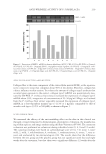
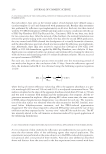
JOURNAL OF COSMETIC SCIENCE 214 released p-nitroaniline, which was hydrolyzed from the substrate, N-succinyl-Ala-Ala- Ala-p-nitroanilide, by elastase, was read with a maximum absorbance at 410 nm. In brief, 1.015 mM of N-succinyl-Ala-Ala-Ala-p-nitroanilide was prepared in a 0.1232 M Tris- HCl buffer (pH 8.0), and this solution (1300 μl) was added to the stock sample (100 μl). Each sample solution was diluted to fi nal concentrations of 100, 50, and 10 μg/ml. The solutions were vortexed and preincubated for 10 min at 25°C before 100 μl of the elastase (pancreatic, Type IV, E0258, Sigma, St. Louis, MO, 0.0375 unit/ml) was added. After vortexing, each solution was placed in a water bath for 10 min at 25°C, and the absor- bance was measured at 410 nm. CYTOTOXICITY ASSAY IN A MONOLAYER CULTURE Evaluation of cytotoxicity was performed by the 3-[4,5-dimethylthiazol]-2,5-diphe- nyltetrazolium bromide (MTT) assay. The human fi broblast cells were seeded in 24-well plates at a density of 1 × 10⁵ cells per well and cultured at 37°C in 5% CO2. After one day, a culture medium (Iscove’s modifi ed Dulbeco’s medium, IMDM) was replaced with a serum-free medium and the cells were incubated in a CO2 incubator at 37°C in the pres- ence of samples for 24 h, before being treated with 100 μl of 2.5 mg/ml MTT solution. The cells were then incubated at 37°C for an additional 4 h. The medium containing MTT was discarded, and MTT formazan that had been produced by the live cells was extracted with 1 ml of DMSO. The absorbance was read at 570 nm, with a reference wavelength of 650 nm. The cell viability was calculated as follows: Cell viability (%) = (OD570(sample)/OD570(control)) × 100 where OD570(sample) is the absorbance of the treated cells at 570 nm and OD570(control) is the absorbance of the negative control at 570 nm (non-treated cells). ASSAY OF MMP-1 EXPRESSION BY RT-PCR Human fi broblasts were cultured with IMDM + 10% FBS, 50 U/ml of penicillin, and 50 μg/ml of streptomycin at 37°C in 5% CO2 the medium was changed every two or three days. When the cells had reached confl uence, they were separated by treatment with a 0.25% trypsin–0.03% EDTA (ethylenediamine tetraacetic acid) solution. The cells were seeded into a 60-mm dish at a density of 1 × 10⁶ cells/dish and cultured for one day at 37°C in 5% CO2. The cultured cells were exposed to UVA (6 J/m2), and a fresh medium without FBS was added to the cells, which were then treated with samples for 24 h. Total RNA was isolated from the cells with TRIzol (Invitrogen, USA) according to the instruc- tions of the manufacturer. First-strand cDNA synthesis was performed by using random hexamers. The sequences of the primers were as follows: 5′-TGGGAGCAAACA- CATCTGA-3′ (sense) and 5′-ATCACTTCTCCCCGAATCGT-3′ (anti-sense) for MMP-1 5′-GAGACCTTCAACACCCCAGCC-3′ (sense) and 5′-GGCCATCTCTTGCTCGA- AGTC-3′ (anti-sense) for β-actin. MMP-1 RT-PCR reactions involved reverse transcrip- tion at 50°C for 30 min, denaturing at 96°C for 3 min, then 22 cycles of 94°C for 1 min, 48°C for 1 min, and 72°C for 1 min, and fi nally extension at 72°C for 10 min. The β-actin RT-PCR reactions involved reverse transcription at 50°C for 30 min, denaturing

ANTI-WRINKLE ACTIVITY OF P. STROBILACEA 215 at 96°C for 3 min, then 25 cycles of 94°C for 1 min, 62°C for 1 min, and 72°C for 1 min, and fi nally extension at 72°C for 10 min. The fi nal products were detected with 2% aga- rose gel. The gel was photographed, and the intensity of the stained PCR fragments was quantifi ed from the photographs by a densitometric analysis with Gel Doc 2000 (Bio- Rad Laboratories, Segrate, Milan, Italy). EGCG ((-)epigallocatechin-3-gallate) was used as a positive control. ASSAY OF TYPE I COLLAGEN MRNA BY RT-PCR The human fi broblast cells were seeded at a density of 1 × 10⁶ cells/dish in a 60-mm cell culture dish incubated for one day at 37°C in 5% CO2. The culture medium was replaced with a serum-free medium, and the samples were added to each dish. After 24 h culture, total RNA were isolated with TRIzol reagent and the isolated total RNA were measured at 260 nm. RT-PCR of type I collagen and β-actin were performed using an all-in-one RT-PCR kit (Superbio, Korea) with 1 μg of RNA. The sequences of the primers were as follows: 5′-CTGGCAAAGAAGGCCGCAAA-3′ (sense) and 5′-CTCACCACGATCA- CCACTCT-3′ (anti-sense) for type I collagen mRNA 5′-GAGACCTTCAACACCCC- AGCC-3′ (sense) and 5′-GGCCATCTCTTGCTCGAAGTC-3′ (anti-sense) for β-actin. Type I collagen mRNA RT-PCR reactions involved reverse transcription at 50°C for 30 min, denaturing at 96°C for 3 min, then 22 cycles of 94°C for 1 min, 62°C for 1 min, and 72°C for 1 min, and fi nally extension at 72°C for 10 min. The β-actin RT-PCR reac- tions involved reverse transcription at 50°C for 30 min, denaturing at 96°C for 3 min, then 25 cycles of 94°C for 1 min, 62°C for 1 min, and 72°C for 1 min, and fi nally exten- sion at 72°C for 10 min. The PCR products were identifi ed by electrophoresis on 2% agarose gel and EtBR (Ethidium bromide, Sigma) staining. The intensity of the stained PCR fragments was also quantifi ed from the photographs by a densitometric analysis with Gel Doc 2000 as above. ETHICS This study was conducted according to the guidelines laid down in the Declaration of Helsinki of 1975 as amended in 2000, and all procedures involving human subjects were approved by the Ellead Skin Research Center Institutional Review Board. The volunteers were clearly and precisely informed of the particular objectives and protocol of the study, and of the foreseeable risks involved in the in vivo clinical trial. Written informed consent was obtained from all subjects. IN VIVO CLINICAL TRIAL Twenty fi ve subjects (34∼49-year-old females in good general health) were recruited for this clinical study on a formulation containing P. strobilacea fruit extract (the test cream contained 0.2% P. strobilacea fruit extract and the placebo did not). This double-blind, placebo-controlled, left-right randomized clinical study was carried out during a 12- week period in order to assess the test and placebo formulations. We measured in this clinical test the effi cacy of the formulation in terms of its anti-wrinkling effect on the skin
Purchased for the exclusive use of nofirst nolast (unknown)
From: SCC Media Library & Resource Center (library.scconline.org)