JOURNAL OF COSMETIC SCIENCE 216 through a visual evaluation conducted by dermatologists, photometric evaluation, the manufacturing of skin replicas, and image analysis with a Skin-Visiometer SV 600 (Cour- age & Khazaka, Germany). A cutaneous examination of the crow’s feet area was con- ducted by two dermatologists via a double-blind method. Twenty-fi ve healthy volunteers with dry to very dry skin visited the Ellead Skin Research Center (Republic of Korea) at 0, 4, 8, and 12 weeks, and cutaneous readings were taken according to a photodamage score of 0 to 7 (0, none 1, none/mild 2, mild 3, mild/moderate 4, moderate 5, moder- ate/severe 6, severe 7, very severe) (18). We analyzed wrinkling on a monitor by using the 3-Dimensional Skin System program, measuring the number of wrinkle peaks and the depth of each wrinkle. The measuring principle of the Skin-Visiometer SV 600 is based on light transmission through a very thin replica comprising blue-dyed two-com- ponent silicone the light absorption of which is known. The roughness parameters inves- tigated were R1 (depth of roughness), R2 (maximum roughness), R3 (mean depth of roughness), R4 (smoothness depth), and R5 (arithmetic average roughness). STATISTICS In determining the signifi cance of the data, an independent t-test was used to confi rm whether the difference was statistically signifi cant (5%). MS EXCEL 2003 software was used for the statistical analysis. RESULTS AND DISCUSSION FREE-RADICAL SCAVENGING ACTIVITY It has been reported that free radicals induced by ultraviolet light or oxidative stress ac- celerate skin aging (19). Therefore, assays of free-radical scavenging capacity were carried out by the DPPH method. The free-radical scavenging capacity of P. strobilacea fruit extract and its fractions was measured at each concentration (1–10 μg/ml), the results being shown in Table I The free-radical scavenging capacity is expressed as SC50, the con- centration needed to reduce 50% of the DPPH radical. The crude P. strobilacea fruit extract and all the fractions except the hexane fractions (SC50 10 μg/ml) showed high free-radi- cal scavenging capacity (SC50 10 μg/ml). Among these, the EtOAc fraction and the BuOH fraction had the highest free-radical scavenging activity (the SC50 were 4.9 and 4.8 μg/ml, respectively) compared to BHT (di-t-butyl hydroxyl toluene SC50 = 25.4 μg/ml), which was used as a positive control. Ellagic acid especially showed good free-radical scav- enging capacity (SC50 = 2.5 μg/ml), while ellagic-4-O-xyropyranoside did not have DPPH radical scavenging activity. Ellagic acid and ellagic-4-O-xyropyranoside isolated from the n-BuOH fraction are known as effective components of P. strobilacea (12). Ellagic acid is comprised of four rings of poly phenol, commonly found as a precursor form of ellagic acid, ellagitannin. It is a vegetable phenol found in grapes, strawberries, pomegranates, strawberry trees, peanuts, and green tea and has antioxidant, antiviral, antimutation, and anti-tumor effects. A recent report showed that ellagic acid suppressed the growth of breast, gullet, skin, colon, prostate, and pancreatic cancer cells (13). Ellagic acid is a primary constituent of several tannin-bearing plants that produce the category of tannins known as gallotannins, which give rise to ellagic acid and gallic acid upon hydrolysis by water.

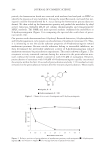
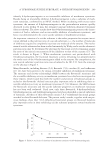
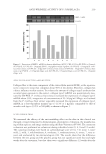
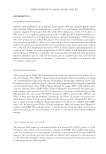
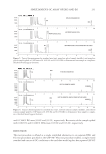
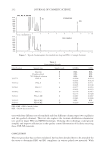
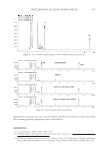
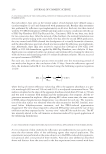
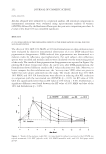
ANTI-WRINKLE ACTIVITY OF P. STROBILACEA 217 INHIBITION OF ELASTASE ACTIVITY Elastin is the main component of the elastic fi bers of the connective tissue and tendons. In the skin, the elastic fi bers, together with the collagenous fi bers, form a network under the epidermis. Elastase is able to attack all major connective tissue matrix proteins, in- cluding elastin, collagen, proteoglycans, and keratins. Because elastic fi ber is easily de- composed by elastase secretion and activation caused by exposure to UV light or ROS (reactive oxygen species), an approach that inhibits elastase activity could also be applied as a useful method to protect against skin aging (20). Table II shows the results of the inhibition of elastase activity. The n-BuOH fraction of P. strobilacea fruit extract showed the highest elastase inhibition activity (IC50 = 35.1 μg/ml). It was over two times higher in effect compared to oleanolic acid (IC50 = 83.8 μg/ml), which was used as a positive control. The P. strobilacea fruit extract also showed signifi cantly high DPPH radical scavenging activity, as mentioned above. Therefore, this result suggested that a P. strobilacea fruit extract would have potential as an anti-wrinkle agent for use in cosmetic products. CYTOTOXICITY ASSAY IN A MONOLAYER CULTURE In order to evaluate the cytotoxicity of the P. strobilacea fruit extract and ellagic acid in vitro, samples were prepared at various concentrations and used to treat human fi broblasts (ATCC, CRL-2076). The results of this evaluation are shown in Figure 1. The P. strobila- cea fruit extract showed no cytotoxicity compared to that of the positive control, up to the effective concentration for anti-wrinkle activity (less than 50 μg/ml). These fi ndings sug- gest that P. strobilacea fruit extract could be used as an effective and safe active ingredient without any associated cytotoxicity. INHIBITION OF MMP-1 mRNA EXPRESSION In order to evaluate the inhibition activity of the degradation of collagen fi bers in the skin, we investigated the reduction of MMP-1 expression by P. strobilacea fruit extract Table I Free-Radical Scavenging Activity of P. strobilacea Fruit Extract Sample Fraction DPPH radical scavenging activity (%) SC50b (μg/ml) 1 μg/ml 5 μg/ml 10 μg/ml P. strobilacea fruit extract 70% EtOH 10.9 50.1 82.2 5.0 Hexane fr. 2.9 7.8 23 10 EtOAc fr. 13.8 51.2 80.7 4.9 BuOH fr. 11.1 52.0 80.7 4.8 H2O fr. 11.4 48.4 78.6 6.1 Ellagic acid 34.7 81.3 87.8 2.5 BHT a 82.5 (100 μg/ml) 64.1 (50 μg/ml) 33.1 25.4 a BHT (di-t-butyl hydroxyl toluene). b SC50 indicates the concentration (μg/ml) at which the percentage inhibition of the DPPH radical scavenging activity was 50%.
Purchased for the exclusive use of nofirst nolast (unknown)
From: SCC Media Library & Resource Center (library.scconline.org)