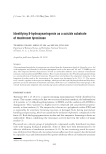
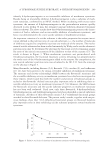
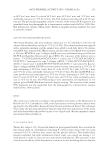
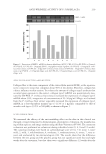
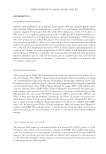
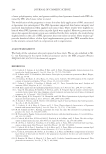
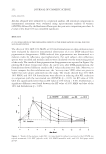
JOURNAL OF COSMETIC SCIENCE 228 RESULTS AND DISCUSSION METHOD DEVELOPMENT A project was initiated here to develop an assay to confi rm that USP glycerin, USP pro- pylene glycol, USP sorbitol solutions, and incoming polyethylene glycol and polyethyl- ene glycol monomethyl ethers (Figure 1) did not contain DEG or EG adulteration. Since setting up fi ve to six separate test procedures for these materials at QC would be diffi cult due to space and instrument requirements, the need for a single, straightforward assay existed. A review of the literature found a TLC procedure for DEG and EG suggested by the FDA as an alternative to the USP monograph test (4), but this required followup GCMS confi rmation and quantitation (5), and thus would not be amenable to QC use. Two papers described an assay for trace ethylene glycol in used motor oil by GC (6,7). The author saw the opportunity to develop a single test method that would require less op- erator time, be amenable to automated analysis, and provide reliable quantitation. This laboratory has expertise in assaying similar materials, including DEG and glycerin, at low levels by capillary GC, and it was decided to evaluate that technique to see if it was amenable to all four of the raw materials stated above. Materials like these, with –OH (hydroxyl) functionalities, form strong internal hydrogen bonding, which makes volatil- ization and gas chromatography challenging, especially for materials with multiple hy- droxyl groups such as those detailed above. Because of this, derivatization using reagents such as BSTFA (bis[trimethylsilyl]-trifl uoroacetamide) can be used to improve volatilization Figure 1.

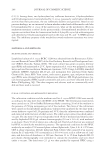
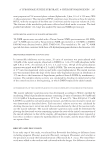
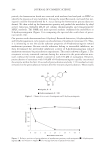
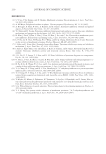
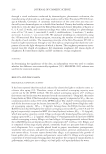
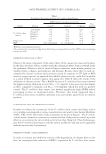
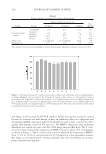
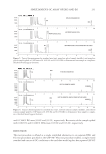
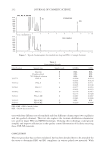
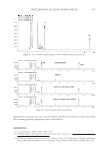
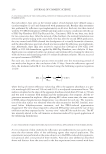
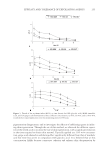
SIMULTANEOUS GC ASSAY OF DEG AND EG 229 and chromatography by reacting with active hydrogens of the hydroxyl groups even though an active hydrogen is replaced by a heavier trimethylsilyl group, the resulting derivative is usually more volatile and delivers sharper peaks due to the polarity of the molecule being decreased. For example, for glycerin (Figure 2), the following technique was employed. This technique was published by this author in 1987 for quantitation of glycerin in consumer products at both use levels and trace levels (8) and was considered for application to the issue of EG and DEG quantitation at low levels. Standards were prepared by dissolving DEG and EG in N,N-dimethylformamide solvent (DMF) and mixing with BSTFA reagent in autosampler vials samples were prepared similarly, as was a reagent blank. Since DMF and BSTFA reagent are not much more volatile than derivatized EG, the GC oven program was initiated at 90°C, held there for 4.0 minutes, and then programmed to remove the derivatized polyol components off the GC column prior to the next injection. Either the DMF-BSTFA reagent blank or a concentrated standard EG-DEG-BSTFA mix could be used to positively identify which peaks were EG and DEG. Routine external standard quantitation was used the assay was straightforward. RESULTS A sample of real-world USP grade glycerin, a sample of propylene glycol, a sample of USP 70% sorbitol, two suppliers’ samples of PEG-8, two suppliers’ samples of PEG-12, and three suppliers’ samples of PEG-6 methyl ether were assayed (Figs 3–7). All the samples assayed above would meet current USP-NF DEG and EG level requirements. The glycerin, propylene glycol, and sorbitol solution were below detection level (BDL). The results are detailed in Table I. Small artifact peaks in reagent blanks (and in standards and samples) when using BSTFA trimethylsilyl derivatization have been well-documented in the literature (13,14) but do not elute near the retention times of DEG or EG, and so these do not interfere with the assay one such artifact typically found is C5H7N2OF3. ACCURACY AND PRECISION System suitability calculations for the above had %RSDs of 0.10 and 1.24 for the EG retention times and peak areas, respectively, and a tailing factor of 0.99, all within cGMP Figure 2.
Purchased for the exclusive use of nofirst nolast (unknown)
From: SCC Media Library & Resource Center (library.scconline.org)