JOURNAL OF COSMETIC SCIENCE 238 were taken before 10 μl of the solutions was topically applied onto fi ve marked zones of the volar forearm: three zones for topical treatment (the three IWL liposome samples), one zone for the placebo solution (0.9% NaCl solution), and one untreated zone (control). The placebo and liposome solutions were randomly applied (10 μl) onto marked areas of 4 cm2 using an Exmire microsyringe (ITO Corp., Fuji, Japan). After 24 h (day 1), both biophysical parameters, TEWL and skin capacitance, were evaluated and then 10 μl of the solutions was applied again. The procedure was repeated once daily for two more days and the parameters were measured (days 2, 3, and 4). PROTECTION OF INTACT HUMAN SKIN AGAINST DETERGENT ACTION A test was performed to evaluate the protective effect of IWL liposomes applied to intact skin followed by sodium lauryl sulfate (SLS) exposure. The baseline measurements of TEWL and skin capacitance were taken, in this study, in the fi ve treated areas of the volar forearm of the volunteers submitted to the effi cacy study described above. The fi ve zones were then exposed to a 2% SLS aqueous solution for two hours (see SLS exposure), and the resultant irritation reaction was assessed 2.5 hours after SLS exposure by measuring TEWL and skin capacitance (22). SLS EXPOSURE SLS was chosen as a surfactant to provoke a chemical disruption of healthy skin since it is fre- quently present in detergent-based products of daily use such as household or body cleanser products. Ten microliters of an aqueous solution of 2% SLS was pipetted onto a layer of fi lter paper placed in each of several aluminium chambers (d=12 mm, large Finn chambers, Epitest Oy, Finland). The chambers were fi xed to the skin for two hours with adhesive tape. Upon removal of the patch, the skin was gently rinsed with water and allowed to dry. DATA TREATMENT The mean values were calculated and Dixon’s test was used to detect outliers, which were excluded from the data. The parameters were normalized, with each value divided by the baseline value. Parameter changes in the fi gures were simultaneously evaluated versus control and placebo values. ANOVA variance analysis was used to determine signifi cant differences between values obtained from different treatments (signifi cance level accepted: p 0.05) using the Statgraphics program. RESULTS AND DISCUSSION LIPID EXTRACTION AND ANALYSIS Raw Spanish Merino wool was extracted at the pilot plant scale in order to obtain a lipid extract rich in ceramides. Merino wool from Spain was used because its internal lipid composition resembles that found in the skin stratum corneum (23). The extraction was

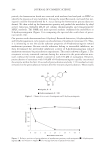
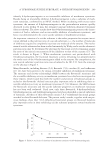
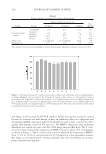
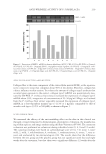
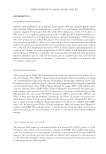
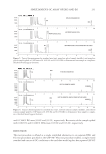
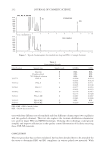
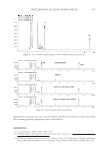
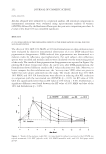
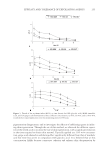
IWL LIPOSOMES AND SKIN BARRIER IMPROVEMENT 239 performed by OSE with pure methanol and by SFE with CO2, using 10% methanol or ethanol as polarity modifi ers, at the conditions described in the experimental procedure section (16,17). These solvents were chosen as extractors to avoid the use of chlorinated solvents, which were previously used at laboratory scale (23). Quantitative analysis of the three different lipid extracts was carried out by TLC-FID fol- lowing the methodology previously reported (16). The different lipid families were quan- tifi ed as sterol esters (ST-ES), free fatty acids (FFA), sterols (ST), ceramides and glycosilceramides (CER), and sterol sulfate (ST-SUL). The amount of these components analyzed, expressed in percentages of total lipid analyzed (% o.l.a.), is shown in Figure 1. Comparison of the three extracts obtained at the pilot plant scale showed little variation in the percentage of the three main lipid families (free fatty acids, sterols, and ceramides). However, it should be noted that the percentage of sterol sulfate for the extract obtained by OSE with pure methanol (about 10%) is much higher than the sterol sulfate content in the two other extracts obtained by SFE (about 1%). LIPOSOME CHARACTERISTICS AND STABILITY IWL extracted with chloroform/methanol azeotrope by Soxhlet extraction at laboratory scale, whose composition resembles that in the stratum corneum, have been demonstrated to be capable of forming liposomes with a stable bilayer structure (8,9). In the present work, liposomes were formed using the different IWL extracts obtained at the pilot plant scale by evaporating the organic solvent to dryness, hydrating with 0.9% NaCl solution, and by sonication as detailed in the Experimental section. Liposomes were easily formed with the IWL extract obtained by OSE with pure methanol. However, some lipids re- mained as aggregates in the fl ask when liposomes were formed with the IWL extracts obtained by SFE using 10% methanol or ethanol as modifi ers. These aggregates, analyzed by TLC-FID, were richer in free fatty acids and ceramides, whereas sterol and sterol sul- fate were practically absent. Figure 2 shows the lipid composition of liposomes really Figure 1. Amount of sterol esters (ST-ES), free fatty acids (FFA), sterols (ST), ceramides and glycosilcer- amides (CER), and sterol sulphate (ST-SUL) quantifi ed in the three different IWL extracts, expressed as percentages of the total lipid weight analyzed (% o.l.a).
Purchased for the exclusive use of nofirst nolast (unknown)
From: SCC Media Library & Resource Center (library.scconline.org)