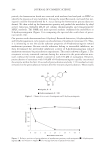
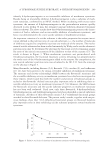
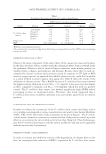
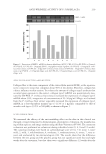
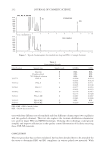
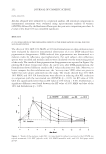
JOURNAL OF COSMETIC SCIENCE 240 formed with the three wool lipid extracts, expressed in percentages of total lipid analyzed (% o.l.a.) The increase in percentage of sterol in the two extracts obtained by SFE should be pointed out. As a consequence, percentages of free fatty acids and ceramides in these SFE extracts decreased. Therefore, the composition of liposomes prepared with IWL extracted by OSE became richer in polar lipids such as ceramides, glycosilceramides, and sterol sulfate. The ceramides alone are known to be insuffi cient for bilayer formation, perhaps because they are not ionized at physiological pH. However, free fatty acids and cholesteryl sulfate, which are also present in stratum corneum lipids, are ionized at physiological pH and their presence together with ceramides is necessary for bilayer formation (24). Therefore, the fact that the formation of liposomes with lipids extracted by SFE is more complicated than that of liposomes with lipids extracted by OSE may be due to the lower amount of sterol sulfate contained in lipids extracted by SFE (Figure 1). Besides, the composition of lipids extracted by OSE using pure methanol is very similar to that obtained with labo- ratory-scale Soxhlet extraction using chloroform/methanol azeotrope, which has been demonstrated to form stable liposomes (8,9). The vesicle size distribution and polydispersity index of liposomes were determined by dynamic light scattering in order to characterize these liposomes and to study their sta- bility for 14 days. The results are indicated in Table I. Figure 2. Amount of sterol esters (ST-ES), free fatty acids (FFA), sterols (ST), ceramides and glycosilcer- amides (CER), and sterol sulphate (ST-SUL) quantifi ed in the three different IWL liposome samples, ex- pressed as percentages of the total lipid weight analyzed (% o.l.a.). Table I Characteristics and Stability of Liposomes: Vesicular Diameter (d) and Polydispersity Index (P.I) Day 0 Day 7 Day 14 Extract d (nm) P.I. d (nm) P.I. d (nm) P.I. OSE MeOH 173.2 0.284 186.4 0.231 189.7 0.256 SFE MeOH 233.8 0.573 266.1 0.556 297.8 0.711 SFE EtOH 298.7 0.620 610.6 0.728 636.8 0.756

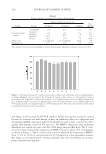
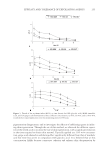
IWL LIPOSOMES AND SKIN BARRIER IMPROVEMENT 241 The characteristics of IWL liposomes were determined one hour after vesicle preparation (day 0). A smaller vesicle diameter and a lower polydispersity index were measured for liposomes formed with IWL extracted by OSE rather than by SFE. Moreover, higher val- ues of both parameters were detected for liposomes formed with extracts obtained by SFE using ethanol as a modifi er instead of methanol. The stability results show that liposomes prepared from lipids extracted with OSE using pure methanol are stable for 14 days because the vesicular diameter and polydispersity index are maintained throughout the study. However, an increase in the vesicular diame- ter was detected in liposomes formed with lipids extracted by SFE. This increase is more signifi cant when the lipids used were extracted with 10% ethanol (from 298.7 nm to 636.8 nm 14 days after their formation) than with 10% methanol (from 233.8 nm to 297.8 nm 14 days after their formation). This difference in behavior of liposomes prepared with IWL obtained by OSE using methanol and SFE using 10% methanol or ethanol as modifi ers may be due to the higher percentage of free fatty acids and sterol sulfate present in the IWL liposomes formed with lipids extracted by OSE using pure methanol (Figure 2). Moreover, the concentration of free fatty acids, sterols, and ceramides is more equimolar in OSE than in SFE liposome composition. It is well known that the intercellular lipid domain of the stratum corneum is composed of roughly equimolar concentrations of these components and that this equi- librium is fundamental for membrane-forming lipids (25). EFFICACY OF LIPOSOMES ON INTACT HUMAN SKIN A long-term study was performed on intact skin to determine the effi cacy of the three IWL liposome samples. Evaluation of TEWL and skin capacitance was performed 24 hours after daily application during the treatment period (days 1, 2, 3, and 4). Figures 3 and 4 show the variation in skin capacitance and TEWL, respectively. The results of skin capacitance measurement indicate that there is a trend of increased hydration for the three IWL liposome samples (Figure 3). This is more marked in the case of liposomes prepared with lipids extracted by OSE using methanol. The skin capacitance change is about 5% at the end of the treatment period despite not being statistically signifi cant. As for the TEWL parameter, the results show a consistent trend towards im- proving skin barrier integrity in the zones treated with the three IWL liposome samples (Figure 4). This parameter undergoes a signifi cant decrease of about 10% for almost all measurements during the treatment period. These fi ndings agree with the results ob- tained in earlier work (13,14), in which IWL liposomes, with a composition similar to that of stratum corneum lipids, when applied onto skin reinforce skin barrier integrity and increase its water-holding capacity. In Figures 3 and 4 it can be observed that the zones treated with the IWL liposome sample prepared with lipids extracted by OSE using pure methanol yield lower TEWL values and higher skin capacitance values than the IWL liposome samples formed with lipids obtained by SFE with methanol and even more with ethanol. This could be due to the different lipid composition and to the smaller size of the liposomes formed with lipids extracted by OSE using methanol. These smaller liposomes could, therefore, penetrate the stratum corneum more easily and could modify the lamellar bilayer on which the barrier function depends.
Purchased for the exclusive use of nofirst nolast (unknown)
From: SCC Media Library & Resource Center (library.scconline.org)