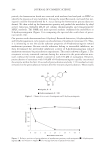
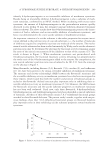
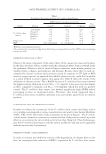
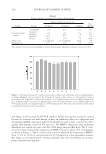
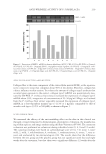
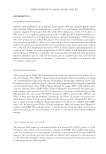
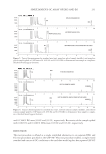
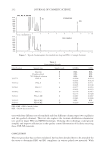
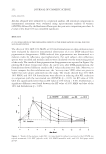
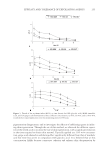
JOURNAL OF COSMETIC SCIENCE 242 PROTECTION OF INTACT HUMAN SKIN AGAINST DETERGENT ACTION In order to evaluate the protection of healthy human skin against detergent action, an irritant reaction was caused by SLS exposure after the application of IWL liposome sam- ples in the previous long-term study. Biophysical parameters were measured before and after SLS exposure to provide data on the possible reinforcement and protection of the lipid barrier due to exogenous lipid application. As for skin capacitance, the results do not show signifi cant differences in the zones treated with IWL liposome samples with respect to untreated and placebo-treated zones. However, Figure 4. Variation of TEWL after sample application during the treatment period (*p 0.05, calculated between samples and placebos). Changes were evaluated versus baseline and control values. Figure 3. Variation in skin capacitance after sample application during the treatment period (*p 0.05, calculated between samples and placebos). Changes were evaluated versus baseline and control values.

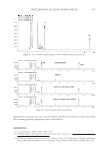
IWL LIPOSOMES AND SKIN BARRIER IMPROVEMENT 243 SLS exposure has a much greater effect on TEWL (Figure 5), which refl ects the skin bar- rier function. TEWL values decrease in the zones treated with the three IWL liposome samples with respect to control and placebo zones, which is indicative of the recovery of the skin barrier function. The variation in TEWL after SLS exposure in the zones treated with liposomes formed with IWL extracted by SFE is signifi cant, with a decrease of about 10% in TEWL. This effect could be attributed to the larger size of the liposomes pre- pared with lipids extracted by SFE. These liposomes could remain in the external layers of the stratum corneum, thereby preventing some of the damaging effects of the surfac- tant insult. Moreover, the larger amount of sterol present in liposomes formed with SFE extracts could induce a decrease in the fl uidity of the lipid bilayer (26), which could lead to decreased penetration of these liposomes in deeper skin layers. In summary, different lipid mixtures extracted from wool fi bers have been demonstrated to form stable liposomes. Their application onto skin increases skin hydration and im- proves skin barrier integrity. Therefore, wool lipid mixtures could provide a new ap- proach to treatments of skin pathologies characterized by structural alterations in the stratum corneum, resulting in a loss of barrier function (25). CONCLUSIONS IWL extracted by OSE using pure methanol were richer in sterol sulfate than IWL ex- tracted by SFE with 10% methanol or ethanol as modifi ers, whereas a similar percentage of the three main lipid families (free fatty acids, sterols, and ceramides) was analyzed in the three IWL extracts. Both the formation and the characteristics of the liposomes pre- pared were considerably infl uenced by the IWL composition. The lower amount of sterol sulfate contained in lipids extracted with SFE hinders the formation of liposomes. Lipo- somes prepared from IWL extracted by OSE were richer in polar lipids such as ceramides, glycosilceramides, and sterol sulfate. These liposomes presented a smaller vesicular size, Figure 5. Variation of TEWL after SLS exposure. The intact skin was previously treated with IWL liposomes (*p 0.05, calculated between samples and control and placebos). Changes were evaluated versus baseline values (SLS-treated skin).
Purchased for the exclusive use of nofirst nolast (unknown)
From: SCC Media Library & Resource Center (library.scconline.org)