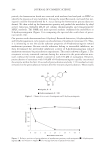
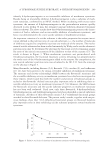
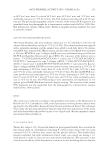
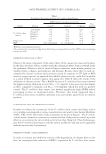
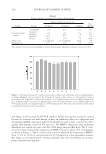
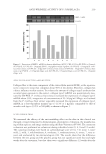
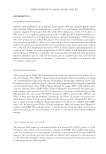
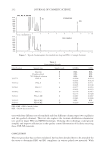
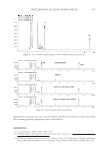
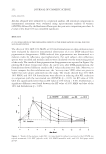
JOURNAL OF COSMETIC SCIENCE 254 As reported in Figure 4, topical application of the GLY formulation for four weeks in- duced a higher value of photosensitivity % than the MAN and GA formulations ( p 0.05), whereas the GA formulation induced a lower degree of skin erythema after UVB irradiation than the GLY and MAN formulations ( p 0.05). DISCUSSION Recently, many common alpha-hydroxy acids (AHAs) and combinations of them, such as mandelic acid, lactic acid, and natural acids present in fruits, wine, and milk have been extensively used as chemical peeling agents in cosmetic dermatological products. Known benefi cial effects of chemical exfoliation include improvement in several cutaneous dis- eases and conditions such as acne vulgaris, melasma, scarring, and photodamage. It was previously reported that to evaluate the effects of AHAs, it was essential to identify the type, the pH of the formulations, and above all the concentration employed (6). Thera- peutic/cosmetic peels required fairly high concentrations of AHAs (20–70%). However, the greatest impact of AHAs has been in skin-care and beauty products in which AHAs are employed at lower concentrations (4–10%). In the present study, we compared the effects of three organic acids employed at 10% w/w of concentration (glycolic acid, mandelic acid, and a blend of organic acids from grape juice) as exfoliating agents by topical application. To this purpose we used a new in vivo method of evaluation. For many decades, the fl uorescent dansyl chloride (DC) has been used as a marker on skin to assess stratum corneum turnover time and the exfoliation rate in vivo (21). However, the level of DC fl uorescence is often diffi cult to evaluate and the hazard of the dansyl chloride test is not negligible (22). Recently, dihydroxyacetone (DHA) has been intro- duced as a safe DC substitute. Since DHA can reach only the upper layers of the stratum granulosum, it is considered to be nontoxic. Although somewhat chemically distinct from melanins, the DHA-skin complex melanoids are very similar to melanins both spec- troscopically and physically (21,23). In this study, we introduce the use of the mela- nin index obtained by refl ectance spectrophotometric data to evaluate DHA-induced Figure 2. Mean area under curve (AUC) values (± SD) obtained by applying GLY (glycolic acid), MAN (mandelic acid), and GA (grape acids) formulations at three different concentrations (10%, 30% and 50% w/w) to skin sites of subjects admitted into the study. AUC values were directly related to the degree of skin erythema induced by topical application of the formulations. *p 0.05 (signifi cantly different) vs MAN and GA **p 0.05 (signifi cantly different) vs MAN ***p 0.05 (no signifi cantly different) vs MAN.

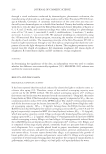
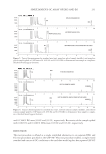
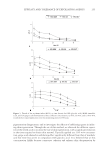
EFFICACY AND TOLERANCE OF EXFOLIATING AGENTS 255 pigmentation disappearance and to investigate the effi cacy of exfoliating agents in induc- ing skin regeneration. Through the use of this method, we observed the different capaci- ties of the tested acids to increase the rate of skin regeneration, with a signifi cant reduction in the time required to obtain skin renewal. Topically applied at a 10% w/w concentra- tion, grape acids showed an exfoliating effect signifi cantly different from that of mandelic acid but were less active in comparison with glycolic acid. It is believed that at this concentration AHAs decrease corneocyte cohesion and enhance skin desquamation by Figure 3. Trends of the erythema index (Δ.E.I.) vs time (hours) for GLY (glycolic acid), MAN (mandelic acid), and GA (grape acids) formulations at three different concentration, (a) 10%, (b) 30%, and (c) 50% w/w, recorded after topical application over the monitoring period of 50 hours.
Purchased for the exclusive use of nofirst nolast (unknown)
From: SCC Media Library & Resource Center (library.scconline.org)