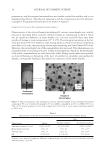
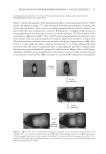
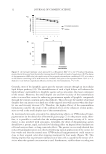
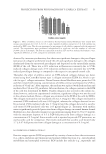
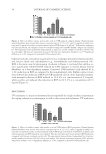
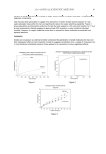
JOURNAL OF COSMETIC SCIENCE 26 tensile measures, such as Young’s modulus, were clearly greater in samples treated in the presence of the “wet” spray. The lack of any change in Young’s modulus on dry hair was in good agreement with similar studies in the literature (4). It now seems clear that the type of damage caused by heat treatments is different in wet versus dry hair. In dry hair, thermal treatments cause chemical damage and some struc- tural damage. However, in wet hair, thermal treatments cause the same chemical damage but considerably more structural damage, which causes signifi cant changes in the physi- cal properties of the hair. It is likely that the rapid evaporation of water from the hair is the main causal factor. The results of this study raise a number of important issues and opportunities in the area of heat styling: First, while our data confi rm that blends of insulating polymers can help protect hair from chemical damage, they also suggest that heat-protection sprays are best formu- lated with volatile carrier solvents, such as ethanol, rather than with water. As we have seen, dry hair will be less structurally damaged, and less weakened by the straightening irons. The idea of making “dry” heat-protection sprays has recently been patented (11). Second, this study suggests that straightening irons are best applied to blow-dried hair to minimize heat-styling damage. It is argued by some stylists that applying irons or tongs to wet hair gives a better straightening effect. Consumers also save time by not fi rst blow- drying their hair before straightening. These habits will, our data suggest, cause greater damage to the hair. Finally, it is now possible to buy straightening irons that are claimed to allow con- sumers to straighten wet, towel-dried hair (e.g. Remington Wet2Straight® straight- eners Vidal Sassoon Professional, Wet to Dry® hair straighteners). These appliances typically have steam vents to allow the rapid evaporation of water from the hair. More work needs to be done, our data suggest, to confi rm the safety of such appliances in terms of hair damage. Further work is clearly needed to investigate the effects of water on heat-styling damage. Electron microscopy studies of cross sections of heat-styled hair would iden- tify, with more clarity, the structural damage in hair ironed wet or dry. Differential scanning calorimetry could also be used to better characterize keratin changes (7). One would expect keratin denaturation to occur at lower temperatures in more damaged hair. Further work is also required to understand what the reactions are in heat-catalyzed tryp- tophan oxidation, particularly to understand the particular functions of water, oxygen, and free radicals in the reactions. Such studies might suggest new ways of chemically blocking protein damage. CONCLUSION This study has confi rmed that it is best to use straightening irons on dry hair to reduce structural damage. Furthermore, it is best to use a “dry” heat-protection spray to help keep damage to a minimum.

EFFECTS OF WATER ON HEAT-STYLING DAMAGE 27 ACKNOWLEDGMENTS The authors thank Mike Holmes and the team at the School of Chemistry, Manchester University, for providing access to the fl uorescence spectroscopy equipment. They also thank Sharon Martiny and the team at ISP for their advice on heat-protection technology. REFERENCES (1) PZ Cussons (UK) Ltd, Internal market research data (2009). (2) M. Gamez-Garcia, The cracking of human hair cuticles by cyclical thermal stresses, J.Cosmet. Sci., 49, 141–153 (1998). (3) C. R. Robbins, Chemical and Physical Behavior of Human Hair, 4th Ed. (Springer-Verlag, New York, 2002), pp 268–275. (4) S. B. Ruetsch and Y. K. Kamanth, Effects of thermal treatments with a curling iron on hair fi ber, J. Cosmet. Sci., 55, 13–27 (2004). (5) R. McMullen and J. Jachowicz, Thermal degradation of hair. 1. Effect of curling irons, J. Cosmet. Sci., 49, 223–224 (1998). (6) B. Schweid and G. Martino, How thermal protection is made possible with sodium polystyrene sul- fonate, S.O.F.W. Journal, 130, 36–40 (2004). (7) R. Rigoletto, J. Karolak, and D. Kolemel, Quantifi cation of fi ber fragmentation of hair through comb- ing as a measure of thermal protection, J. Cosmet. Sci., 60, 578–579 (2009). (8) P. Mirmirani, Cermanic fl at irons: Improper use leading to acquired trichorrhexis nodosa, J. Am. Acad. Dermatol., 62, 145–147 (2009). (9) R. McMullen and J. Jachowicz, Thermal degradation of hair. II. Effect of selected polymers and surfac- tants, J. Cosmet. Sci., 49, 245–256 (1998). (10) F. W. J. Teale and G. Weber, Ultraviolet fl uorescence of the aromatic amino acids, Biochem., 65, 476–482 (1957). (11) P. A. Cornwell and M. Whatmough, Heat protection spray. GB 0906962.6 (2009).
Purchased for the exclusive use of nofirst nolast (unknown)
From: SCC Media Library & Resource Center (library.scconline.org)