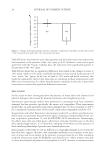
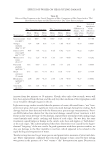
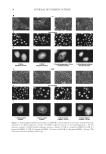
J. Cosmet. Sci., 62, 29–39 (January/February 2011) 29 Genotoxic potential evaluation of a cosmetic insoluble substance by the micronuclei assay N. DAYAN, V. SHAH, and T. MINKO, Lipo Chemicals Inc., 207 19th Ave., Paterson, NJ 07504 (N.D.), and Department of Pharmaceutics, Rutgers, The State University of New Jersey, 160 Frelinghuysen Rd, Piscataway, NJ 08854 (V.S., T.M.). Accepted for publication November 3, 2010. Synopsis An optical brightener (OB) powder (INCI: sodium silicoaluminate (and) glycidoxypropyl trimethyloxysi- lane/PEI-250 cross fl uorescent brightener 230 salt (and) polyvinylalcohol crosspolymer) that is used in cos- metic facial products was tested for its genotoxic potential using the micronuclei test (MNT). It is a solid dry powder with an average size of 5 microns that is insoluble but dispersible in water. This study describes the exposure of cell culture to positive controls with and without enzymatic activation and to the test compound in different concentrations. We evaluated three end points: microscopic observation and quantifi cation of micronuclei formation, and cell viability and proliferation. Both positive controls induced signifi cant changes that were observed under the microscope and quantifi ed. Based on its chemical nature, it was not anticipated that the test substance will degrade under the conditions of the experiments. However, the test is required to make sure that when solublized, impurities that may be present, even at trace levels, will not induce a geno- toxic effect. The test compound did not promote micronuclei formation or change the viability or prolifera- tion rate of cells. During this study we faced challenges such as solubilization and correlating viability data to genotoxicity data. These are described in the body of the paper. We believe that with the emergence of the 7th European amendment that bans animal testing, sharing these data and the study protocol serves as a key in building the understanding of the utilization of in vitro studies in the safety assessment of cosmetic ingredients INTRODUCTION With the emergence of the 7th amendment to the EU Directive, the cosmetic and personal care industry is banned from experimenting on animals. It is therefore utilizing, study- ing, and validating a variety of in vitro and ex vivo protocols. One of the more impor- tant end points in the evaluation of safety is the potential of a compound to become genotoxic. While this industry is known to produce relatively safe products, with the 7th amendment the perspective of safety has been broadened from acute, clearly perceivable, adverse effects such as irritation to the inclusion of the evaluation of long-term accumulating effects that can lead to a variety of chronic and deadly diseases such as infl ammation and cancer. Moreover, the focus on in vitro methodologies is expanding our knowledge in understanding
Purchased for the exclusive use of nofirst nolast (unknown)
From: SCC Media Library & Resource Center (library.scconline.org)