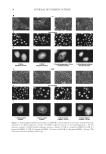
JOURNAL OF COSMETIC SCIENCE 30 biochemical pathways rather than focusing on clinical evaluation. Consequently, the cos- metic product manufacturer is focusing on in vitro studies to ensure safety and on study- ing their effects. Compounds that can change the genetic information of a living cell may lead to mutations. These can result in different type of toxic effects, ranging from cell death to the development of malignant tumors. While a variety of assays are currently in use in the area of regulatory genotoxicity, substantial in vivo testing is still required for the confi rmation of genotoxic predictions. A mutagenic (from Latin word for change) compound can change the genetic information of the cell and thus increase the frequency of mutations. The term “genotoxicity” is used broadly and refers to potentially harmful effects on genetic material that are not necessarily associated with mutagenicity. One test method recommended for the estimation of genotoxicity is known as the micro- nuclei assay. In the course of this study, mammalian cells are exposed to the test substance with and without metabolic activation. At predetermined time intervals after exposure, they are treated with a metaphase-arresting substance, harvested, stained, and observed under the microscope. Information is then collected both by observing the morphological changes and by determining them quantitatively as compared to the control. This paper reports the results of a study evaluating the genotoxicity potential of a pow- der, optical brightener (OB), used in cosmetic products. It describes the challenges of working with a powder in a cell culture, the study rationale, the subjective morphologi- cal changes, and the quantitative evaluation of the data generated. In addition, cell me- tabolism as an end point of viability, proliferation, and the relationships between viability and the genetic mutations of cells is discussed. MICRONUCLEI TEST The chromosome is a single coiled piece of DNA with associated proteins containing many genes, regulatory elements, and other nucleotide sequences. A chromatid is one among two identical copies of DNA making up the replicated chromosomes. Two identi- cal sister chromatids are joined by a region called the centromere. The term micronucleus describes the small nucleus that forms whenever a chromosome or a fragment of a chro- mosome is not incorporated into one of the daughter nuclei during cell division. Testing for micronucleus formation is used to screen for potential genotoxic compounds. There are two versions of this study: in vivo and in vitro. The in vivo test is using mouse bone marrow or mouse peripheral blood (1). The in vitro method was developed as a replace- ment for the in vivo method and was evaluated to be a reliable genotoxicity test, although more compounds should be tested to build an additional database (2). In that sense, we are hoping that data shared in this paper will enrich the existing database. This study was conducted as a modifi cation of the OECD (Organization for Economic Cooperation & Development) Guideline number 487 protocol that was adopted in De- cember of 2006 as a draft proposal: “In Vitro Micronucleus Test” (3). This test protocol was assessed by The European Centre for the Validation of Alternative Methods (ECVAM) that stated the following: “On the basis of a peer review of a weight of evidence retrospec- tive validation, the Committee endorses the conclusion that the MNT is a scientifi cally valid alternative to the in vitro chromosome aberration assay for genotoxicity testing” (4). According to the protocol, the objective is to identify compounds that cause structural chromosome aberrations in cultured mammalian cells. These aberrations may be of two

TEST FOR GENOTOXIC POTENTIAL BY MICRONUCLEI ASSAY 31 types, chromosome and chromatid. Since the majority of genotoxic compounds are mu- tagens, the aberrations are normally of the chromatid type, but the chromosome type may also occur. Mutations in chromosomes and events that are mutation related are the cause of numerous human genetic disorders such as cystic fi brosis, hemophilia, and sickle cell anemia (5). In addition, there is evidence that events causing modifi cations in oncogenes and tumor suppressor genes are involved in the induction of cancer. While this protocol requires cytochalasin B to block cytokinesis, the method utilized in this study does not require it because it uses CHO-K1 cells lines and the OECD Guideline number 487 protocol states that use of cytochalasin B is not necessary for cell lines if proof of cell pro- liferation is provided. The principle of this method is the exposure of a mammalian cell culture to a test sub- stance with and without metabolic activation (6). Metabolic activation is required to as- sess potential genotoxic effects in a case where enzymatic transformation occuring in vivo leads to a toxic metabolite. At predetermined time intervals, the cells are treated with a test substance, harvested, and stained, and metaphase cells are analyzed microscopically for micronuclei formation. MATERIALS AND METHODS MATERIALS The chemicals for the control group were purchased from Sigma Chemical Co. (St. Louis, MO). These include cyclophosphamide (CAS no. 50-18-0), ethyl methanesulfonate (CAS no. 62-50-0), and dimethyl sulfoxide (DMSO). The test substance, OB, was a product from Lipo Chemicals Inc. (Paterson, NJ). Nicotinamide adenine dinucleotide phosphate (NADP) was purchased from Fisher Scientifi c Co. (Suwannee, GA). Sodium phosphate buffer was obtained from Moltox (Boone, NC). Glucose 6 phosphate and Tween 20 were received from Sigma Aldrich (St Louis, MO), and 4′,6- diamidino-2-phenylindole dihy- drochloride (DAPI) was purchased from Sigma. PREPARATION OF CHEMICALS Cyclophosphamide (density: 1.479 g/cm3), and ethyl methanesulfonate (EMS) were used as positive controls to analyze the formation of micronuclei. One gram of cyclophospha- mide was dissolved in 100 ml of water to give a concentration of 10 mg/ml. Five micro- liters of this solution was added to a volumetric fl ask and water was added to give the required fi nal concentration of 10 μg/ml in the fl ask (2). An amount of 0.1 ml of EMS (density 1.15 g/cm3) was diluted to 1.0 ml with dimethyl sulfoxide (DMSO). A measured 17.5 μl of this solution was added to a 5-ml fl ask and DMSO was added to give a fi nal concentration of 400 μg/ml. (2). The OB powder was dispersed at 10 mg/ml in DMSO. An amount of 50 mg of this sus- pension was added to 5 ml of DMSO, subjected to ultrasonifi cation for 30 minutes, and centrifuged at 2000 rpm for 15 minutes. Volumes of 100 μl and 150 μl of the superna- tant were added to fl asks of 25 cm2 base surface area containing 5 ml of media, to give fi nal concentrations of 0.2 mg/ml and 0.3 mg/ml, respectively. These doses were selected
Purchased for the exclusive use of nofirst nolast (unknown)
From: SCC Media Library & Resource Center (library.scconline.org)