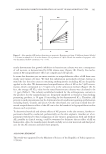
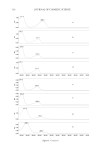
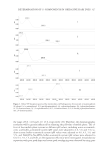
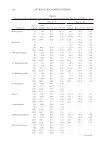
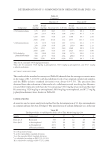
JOURNAL OF COSMETIC SCIENCE 318 these fl avonoids on melanin synthesis have been already evaluated (8,9). Hesperidin and naringenin have a chemical structure similar to hydroquinone and it was supposed that they can act as a substrate competitor for tyrosinase (26). Hesperidin showed to induce inhibition of tyrosinase activity in human primary melanocytes in a dose-dependent man- ner and to protect fi broblasts and collagen against oxidative and UVA-induced damages (8,27). Moreover, fl avonoids such as quercetin, kaempferol, and their derivates, typically contained in Capparis spinosa extract (25,28), showed to possess a strong tyrosinase inhibitory activity (23). Further investigation provided that the anti-melanogenic effect of quercetin and kaempferol was due to different mechanism of actions. Quercetin was able to decrease the intracellular tyrosinase activity not only by inhibition of enzyme ac- tivity but also by reduction of its protein expression (29), and kaempferol could act by copper chelation of tyrosinase enzyme as long as its 3-hydroxyl group was free (23). Similar activity was associated to hydroxycinnamic acid group, such as ferulic acid and caffeic acid, mainly contained in Oryza sativa extracts, by inactivation of tyrosinase effect (30,31). Finally, the skin protective action against UV light of olive leaf extract and its polyphenols, such as oleuropein and luteolin, was already known (22,24,32). In addition, one of the main drawbacks of skin-whitening agents, such as hydroquinone and kojic acid, is the skin-sensitizing effect to the sunlight exposure due to the repeated application of these substances. To simplify treatment regimen and reduce the risk of side effects, application of skin-whitening ingredients usually needs to avoid sun exposure and to use protective ingredients, such as sunscreens (32–36). The in vivo model used in this work can predict the skin photosensitizing effect induced by cosmetic ingredients after repeated topical applications (21). Results showed a safer activity of the natural mixture than hydroquinone and kojic acid. As previously reported in literature (11), we can sup- pose that polyphenols could act as cutaneous sunscreen and they can protect the skin against the radiation-induced infl ammation, oxidative stress, DNA damage, and other diseases induced by UV-light exposure. In conclusion, in this study we evaluated the anti-melanogenic effects and the safety of herbal extracts obtained from typical Mediterranean species such as Capparis spinosa, Cit- rus sinensis, Oryza sativa, and Olea europaea by in vitro and in vivo models. Further studies could be useful to better understand the mechanisms of action and the future application of these polyphenols as skin-whitening agents. REFERENCES (1) T. Hanamura, E. Uchida, and H. Aoki, Skin-lightening effect of a polyphenol extract from Acerola (Malpighia emarginata DC.) Fruit on UV-induced pigmentation, Biol. Pharm. Bull., 72, 3211–3218 (2008). (2) Y. J. Kim and T. Yokozama, Modulation of oxidative stress and melanogenesis by proanthocyanidins, Biol. Pharm. Bull., 32, 1155–1159 (2009). (3) U. Panich, K. Kongtaphan, T. Onkoksoong, K. Jaemsak, R. Phadungrakwittaya, A. Thaworn, P. Akarasereenont, and A. Wongkajornsilp, Modulation of antioxidant defense by Alpinia galangal and Curcuma aromatica extracts correlates with their inhibition of UVA-induced melanogenesis, Cell Biol. Toxicol., 26, 103–116 (2010). (4) K. H. Wang, R. D. Lin, F. L. Hsu, Y. H. Huang, H. C. Chang, C. Y. Huang, and M. H. Lee, Cosmetic applications of selected traditional Chinese herbal medicines, J. Ethnopharmacol., 106, 353–359 (2006). (5) G.R. Kanthraj, Skin-lightening agents: New chemical and plant extracts-ongoing search for the holy grail!, Indian J. Dermatol. Venereol. Leprol., 76, 3–6 (2010).

SKIN-WHITENING EFFECTS OF MEDITERRANEAN HERBAL EXTRACTS 319 (6) S. Momtaz, B. M. Mapunya, P. J. Houghton, C. Edgerly, A. Hussein, S. Naidoo, and N. Lall, Tyrosinase inhibition by extracts and constituents of Sideroxylon inerme L. stem bark, used in South Africa for skin lightening. J. Ethnopharmacol., 119, 507–512 (2008). (7) Y. M. Olumide, A. O. Akinkugbe, D. Altraide, T. Mohammed, N. Ahamefule, S. Ayanlowo, C. Onyekonwu, and N. Essen, Complications of chronic use of skin lightening cosmetics. Int. J. Dermatol., 47, 344–353 (2008). (8) W. Zhu and J. Gao, The use of botanical extracts as topical skin-lightening agents for the improvement of skin pigmentation disorders, J. Investig. Dermatol. Symp. Proc., 13, 20–24 (2008). (9) K. Itoh, N. Hirata, M. Masuda, S. Narito, K. Murata, K. Wakabayashi, and H. Matsuda, Inhibitory effects of Citrus hassaku extract and its fl avanone glycosides on melanogenesis, Biol. Pharm. Bull., 32, 410–415 (2009). (10) J. Yamakoshi, F. Otsuka, A. Sano, S. Tokutake, M. Saito, M. Kikuchi, and Y. Kubota, Lightening effect on ultraviolet-induced pigmentation of guinea pig skin by oral administration of a proanthocyanidin- rich extract from grape seeds, Pigment Cell Res., 16, 629–638 (2003). (11) J. A. Nichols and S. K. Katiyar, Skin photoprotection by natural polyphenols: Anti-infl ammatory, anti- oxidant and DNA repair mechanisms, Arch. Dermatol. Res., 302, 71–83 (2010). (12) F. Solano, S. Briganti, M. Picardo, G. Ghanem, Hypopigmenting agents: An update review on biologi- cal, chemical and clinical aspects, Pigment Cell Res., 19, 550–571 (2006). (13) S. J. Im, K. N. Kim, Y. G. Yun, J. C. Lee, Y. J. Mun, J. H. Kim, and W. H. Woo, Effect of Radix ginseng and Radix trichosanthis on the melanogenesis, Bio. Pharm. Bull., 26, 849–853 (2003). (14) J. D. Reber, D. L. Eggett, and T. L. Parker, Antioxidant capacity interactions and a chemical/structural model of phenolic compounds found in strawberries, Int. J. Food Sci. Nutr., 62 (5), 445–452 (2011). (15) W. J. Yang, D. P. Li, M. H. Li, Y. L. Chen, and P. Z. Zhang, Synergistic antioxidant activities of eight traditional Chinese herb pairs. Biol. Pharm. Bull., 32 (6), 1021–1026 (2009). (16) F. Bonina, C. Puglia, D. Ventura, R. Aquino, S. Tortora, A. Sacchi, A. Saija, A. Tomaiono, M. L. Pellegrino, and P. Caprariis, In vitro antioxidant and in vivo photoprotective effects of a lyophilized extract of Cap- paris spinosa L buds, J. Cosmet. Sci., 53 (6), 321–335 (2002). (17) O. H. Lee, B. Y. Lee, J. Lee, H. B. Lee, J. Y. Son, C. S. Park, K. Shetty, and Y. C. Kim, Assessment of phenolics-enriched extract and fractions of olive leaves and their antioxidant activities, Bioresour. Tech- nol., 100 (23), 6107–6113 (2009). (18) A. Saija, A. Tomaino, R. Lo Cascio, P. Rapisarda, and J. C. Dederen, In vitro antioxidant activity and in vivo photoprotective effect of a red orange extract, Int. J. Cosmet. Sci., 20 (6), 331–342 (1998). (19) S. Tina, K. Nakamura, T. Cui, and H. Kayahara, High-performed liquid cromatographic determination of phenolic compounds in rice, J. Chromatogr. A, 1063 (1–2), 121–128 (2005). (20) P. Stratil, B. Klejdus, and V. Kubán ˇ, Determination of total content of phenolic compounds and their antioxidant activity in vegetables-evaluation of spectrophotometric methods, J. Agric. Food Chem., 54, 607–616 (2006). (21) L. Rizza, G. Frasca, F. Bonina, and C. Puglia, Comparative in vivo study of the effi cacy and tolerance of exfoliating agents using refl ectance spectrophotometric methods, J. Cosmet. Sci., 61 (3), 247–258 (2010). (22) S. W. Choi, S. K. Lee, E. O. Kim, J. H. Oh, K. S. Yoon, N. Parris, K. B. Hicks, and R. A. Moreau, Antioxidant and antimelanogenic activity of polyamide conjugates from corn bran and related hydroxy- cinnamic acids, J. Agric. Food Chem., 55, 3920–3925 (2007). (23) I. Kubo, I. Kinst-Hori, Flavonols from saffron fl ower: tyrosinase inhibitory activity and inhibition mechanism, J. Agric. Food Chem., 47 (10), 4121–4125 (1999). (24) S. A. Mijatovic, G. S. Timotijevic, D. M. Miljkovic, J. M. Radovic, D. D. Maksimovic-Ivanic, D. P. Dekanski, and S. D. Stosic-Grujicic, Multiple antimelanoma potential of dry olive leaf extract, Int. J. Cancer, 128 (8), 1955–1965 (2011). (25) D. Trombetta, F. Occhiuto, D. Perri, C. Puglia, and N. A. Santagati, Antiallergic and antihistaminic effect of two extracts of Capparis spinosa L. fl owering buds, Phytother. Res., 19, 29–33 (2005). (26) J. Tiedtke, J. Morel, and O. Marks, Depigmentation factor. Biofl avonoids—A safe and effective skin lightener based on encapsulated citrus biofl avonoids, Cosmetochem., 2, 12–17 (2004). (27) A. R. Proteggente, S. Basu-Modak, G. Kuhnle, M. J. Gordon, K. Youdim, R. Tyrrell, and C. A. Rice-Evans, Hesperetin glucuronide, a photoprotective agent arising from fl avonoid metabolism in human skin fi broblasts, Photochem. Photobiol., 78, 256–261 (2003). (28) N. Tlili, W. Elfalleh, E. Saadaoui, A. Khaldi, S. Triki, and N. Nasri, The caper (Capparis L.): Ethnophar- macology, phytochemical and pharmacological properties, Fitoterapia, 82, 93–101 (2011).
Purchased for the exclusive use of nofirst nolast (unknown)
From: SCC Media Library & Resource Center (library.scconline.org)