JOURNAL OF COSMETIC SCIENCE 334 are dispersed onto continuous phase, water. In W/O, water droplets are dispersed onto oil. Palm oil esters were derived from palm oil and cis-9-octadecen-1-ol through enzymatic transesterifi cation process using Lipozyme RM IM as the catalyst (5). The excellent wetting behavior of the esters without the oily feel make them have great potential in the manu- facture of cosmeceutical products (6). The preparation of such emulsions with small drop- let size is thus of particular interest. Small droplet sizes in general lead to greater emulsion stability (7). There are a number of mechanisms available for the production of such emulsions. The emulsifi cation technique can be a form of mechanical mixing of two immiscible liquids where time is required for surfactant molecules to organize at the interface of the two phases. Higher mechanical energy than what is possible from simple mixing can be achieved by rotor–stator systems. These systems are widely used to emulsify liquids of medium to high viscosity (7). The rotor–stator assembly consists of a rotor housed concentrically inside the stator with two or more blades and a stator with either vertical or slanted slots. As the rotor rotates, it generates a lower pressure to draw the liquid in and out of the assembly, resulting in circulation and emulsifi cation (8). Ultrasound delivers even higher energy and is an alternative method of producing an emulsion. In ultrasound emulsifi cation, the energy input is provided through sonotrodes (sonicator probe) containing a piezoelectric quartz crystal that can expand and contract in response to alternating electrical voltage. Ultrasonic emulsifi cation is believed to occur through two mechanisms. First, the appli- cation of an acoustic fi eld produces interfacial waves that become unstable, eventually resulting in the eruption of the oil phase into the water medium in the form of droplets (9). Second, the application of low-frequency ultrasound causes acoustic cavitation, that is, the formation and subsequent collapse of microbubbles by the pressure fl uctuations of a simple sound wave. Each bubble collapse event causes extreme levels of highly localized turbulence. The turbulent microimplosions act as a very effective method of breaking up primary droplets of dispersed oil into droplets of submicron size (10). Work by Henglein and Gutierrez (11) indicated that at low-sonication amplitudes, the effect of the cavitation threshold was dominant and both the chemical yield and sonolu- minescence arising from an acoustic fi eld decreased with increasing pressure. Conversely, at higher amplitudes, the bubble collapse effects dominated and yields increased with increasing pressure. Similarly, Sauter et al. (12) found that low overpressures improve deagglomeration of nanoparticles, whereas higher overpressures had a negative effect. Our study investigates the effect of different emulsifi cation methods on the production of an O/W emulsion to produce an optimal droplet size for the production of the emulsion. The emulsions were also characterized using measurements of rheology properties, which were subsequently used to assess the physical stability of the emulsions, directly after preparation. MATERIALS AND METHODS MATERIALS Emulsions were prepared with 15.8 wt% of palm oil esters (produced in our laboratory), 5 wt% of mixed surfactants, and 3 wt% tocotrienol (Gold Tri. E 70, purchased from Golden Hope Bioganic Sdn. Bhd, Selangor, Malaysia). Magnesium ascorbyl phosphate was purchased

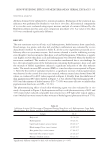
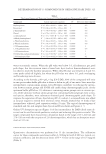
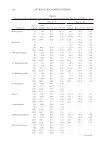
OIL-IN-WATER NANOEMULSIONS 335 from Spec-Chem Ind (Zhongshan, China). Butylated hydroxytoluene, xanthan gum, and beeswax were purchased from Fluka (St. Louis, USA). PEG-40 hydrogenated castor oil and phenonip were provided by Sime Darby Research Sdn. Bhd (Selangor, Malaysia). Deionized water was produced by using deionized water system (Milli-Q System Massachusetts, USA). Two surfactants used were polyoxyethylene sorbitan monooleate (Tween 80) and sorbitan monooleate (Span 80), purchased from Sigma Aldrich (St. Louis, USA). Compositions of formulation are shown in Table I. EMULSION PREPARATIONS Rotor–stator method. The samples were produced by emulsifi cation using hot–hot process. Emulsions were prepared where both oil and aqueous phases were separately warmed up to 70 ± 5°C. Xanthan gum was dispersed in deionized water at 0.8% w/w. Preparation of oil phase was performed by homogenizing 5% w/w of mixed Tween 80 and Span 80 (4:1) into oil phase of mixture with a Polytron homogenizer (Kinematica GmbH, Lucerne, Switzerland) rotor–stator. An emulsion sample of 100-ml total volume was prepared by pouring the oil phase into the aqueous phase and homogenizing at 6000 rpm for 5 min. The temperature was lowered to 40°C when the active ingredients and preservative were added. The emulsions were then subjected to mixing using stirrer (Ika-Werke, Staufen, Germany) at 200 rpm until reaching room temperature (25 ± 2°C) for 4 h. Ultrasonic cavitation method. As a comparison, emulsions were also prepared using UP400S Hielscher Sonifi er (Teltow, Germany) of 400 W nominal power and a fre- quency of 24 kHz equipped with a 22-mm sonotrode tip. This was placed in a custom- built cooling jacket. Chilled water at 3°C was continuously passed through this jacket. Emulsions were prepared where both oil and aqueous phases were separately warmed up to 70 ± 5°C. Xanthan gum was dispersed in deionized water at 0.8% w/w. An emul- sion sample of 100-ml total volume was prepared and prehomogenized at 6000 rpm for 5 min with a Polytron homogenizer (Kinematica GmbH) rotor–stator. The tempera- ture was lowered to 40°C. At 40°C, the active ingredients and preservative were added. Table I Chemical Compositions of Formulation Prepared By Rotor–Stator Homogenizer and Ultrasonic Cavitation Ingredients wt% Function External water phase (75°C ± 5°C) Water, deionized 63.70 Diluent/solvent Xanthan gum 0.80 Thickener, emulsion stabilizer Internal oil phase (75°C ± 5°C) Palm oil esters 15.80 Skin conditioning, emulsifi er PEG-40 hydrogenated castor oil 10.00 Surfactant/emulsifi er Beeswax 0.50 Skin conditioner Polyoxyethylene sorbitan monooleate 4.00 Surfactant/emulsifi er Sorbitan monooleate 1.00 Surfactant/emulsifi er Active ingredients phase (40°C ± 5°C) Butylated hydroxytoluene 0.10 Lipophilic antioxidant Tocotrienol 2.90 Vitamin E derivative—antioxidant Magnesium ascorbyl phosphate 0.50 Vitamin C derivative—antioxidant Phenonip 0.70 Preservatives
Purchased for the exclusive use of nofirst nolast (unknown)
From: SCC Media Library & Resource Center (library.scconline.org)