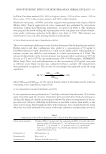
JOURNAL OF COSMETIC SCIENCE 336 The emulsions were further homogenized using ultrasonic cavitation for 5 min. The sonifi er tip horn was adjusted to 2 cm below the surface of a 100-ml sample. Sonication was performed at amplitude of 30 μm and 0.5 cycles. PHYSICAL MEASUREMENTS A Nanophox (Sympatec GmbH Instruments, Clausthal-Zellerfeld, Germany) was used to analyze the particle size distribution (PSD) of the fi ner emulsions formed. This device performs size measurements by photon cross-correlation spectroscopy, which measures the Brownian motion of colloidal particles, thus allowing the determination of their PSD. Samples were diluted with double-distilled water at one part of sample to two parts of water. The average drop size, expressed as the Sauter mean diameter (d32 = Σ nid3i/Σ nid2i, representing a surface average value), and the drop size distribution were obtained by means of a laser diffractometer according to the Mie theory. The Mie theory is a rigorous solution for the scattering intensity from a spherical, homogeneous, isotropic, and non- magnetic particle of any diameter in a nonabsorbing medium. A refractive index of 1.460 was used for palm oil esters in Mie theory calculations. Emulsion particle size results are an average of six measurements of freshly prepared emulsions. Zeta potential was measured using a Zetasizer Nano (Malvern Instruments, Worcester- shire, UK). The samples were diluted (1:200) with distilled water and added into the equipment chamber. To obtain stable nanoemulsions (no fl occulation and coalescence of the nanodroplets), zeta potential should usually reach a value of ±30 mV. The zeta poten- tial results were obtained by applying the Henry equation: 2H]f 3K E ka U (1) where UE is the electrophoretic mobility, ε is the dielectric constant, ζ is the zeta poten- tial, η is the viscosity of the continuous phase, and f(ka) is the Henry’s function (13). The rheology of O/W emulsions was characterized by using Kinexus Rotational Rheom- eter (Malvern Instruments, Worcestershire, UK). Two different rheological measure- ments were made to characterize the emulsions. First, viscosity versus shear stress, viscosity versus shear rate, and viscosity versus time plot at elevated temperature were applied to the emulsion samples. Second, oscillatory rheological measurements were made in the linear viscoelastic region, using 4°/40 mm cone and plate geometry and gap of 0.100 mm. All measurements were carried out at room temperature of 25.0 ± 0.5°C. RESULTS AND DISCUSSION SIZE DISTRIBUTION STUDIES The size of an emulsion droplet formed by homogenization is controlled by the interplay between droplet breakup and droplet coalescence (14). Droplet breakup is controlled by the type and amount of shear applied to droplets, and the droplet resistance to deforma- tion is determined by the surfactant. Droplet coalescence is determined by the ability of the surfactant to rapidly adsorb into the surface of newly formed droplets (14). In the present study, Tween 80 and Span 80 were used as the mixed surfactants and the effect of PSD for emulsions prepared by rotor–stator emulsifi cation and ultrasonic

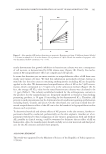
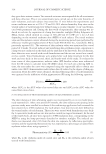
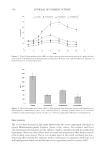
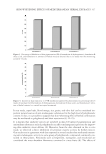
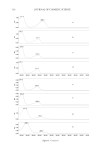
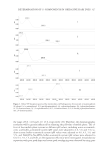
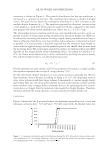
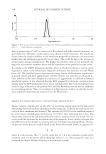
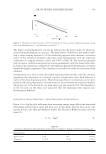
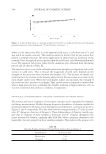
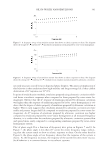
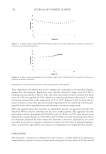
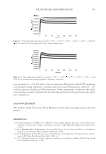
OIL-IN-WATER NANOEMULSIONS 337 cavitation is shown in Figure 1. The particle distribution for the two emulsions is expressed as a cumulative function. The resulting plots appear as double S-shaped curves. The particle size where the cumulative distribution is 50% is known as the median droplet diameter (dv,0.5). The emulsion prepared by ultrasonic cavitation has a very small dv,0.5 with 50% of the particles under 62.99 nm, compared to the emul- sion prepared by rotor–stator emulsifi cation, where the dv,0.5 is 126.17 nm. The relationship between emulsion particle size and emulsifi cation systems can be ex- plained in terms of energy input during emulsifi cation. Emulsion droplet size (EDS) can be reduced by increasing the amount of energy supply during emulsifi cation as long as there is suffi cient emulsifi er to cover new interface and recoalescence is prevented as much as possible (7). Conventionally, it would be expected that the amount of shear would in- crease with the applied energy and the emulsion particle size should then decrease with the increasing shear. The energy input required to produce an emulsion with a given EDS depends on the energy density of the emulsifying device. According to Canselier et al. (15), the Sauter mean diameter (d32) can be calculated by involving the power density (PV) and the residence time (tres) in the emulsifi cation zone: d32 = PV-b1 tres-b2 (2) If both exponents are quite similar, and if two parameters are treated as a single variable, this equation represents the concept of “energy density” (16). On the other hand, droplet disruption in rotor–stator systems is generally less effi cient than ultrasonic devices because, according to Stang et al. (17), the dispersing zones of rotor–stator systems usually have larger volumes. Consequently, at constant energy density and volume fl ow rate, the mean power density in rotor–stator systems is lower and the mean residence time is longer than in ultrasonic devices. So, operating forces in a rotor– stator device act longer than the minimum time needed for droplet breakup. Therefore, emulsions prepared by using ultrasonic cavitation produced smaller droplet size. ζ-POTENTIAL Figure 2 shows that the ζ-potential values of emulsions prepared by rotor–stator and ultrasonic cavitation were -33.5 mV and -37.8 mV, respectively. An absolute value, less Figure 1. A comparison of emulsion particle distributions obtained for 30% w/w palm oil esters-in-water emul- sions stabilized by 5% w/w mixed surfactants, Tween 80 and Span 80, which were prepared using rotor– stator homogenizer ( ) and ultrasonic cavitation ( ).
Purchased for the exclusive use of nofirst nolast (unknown)
From: SCC Media Library & Resource Center (library.scconline.org)