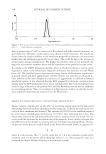
JOURNAL OF COSMETIC SCIENCE 304 in part by a third factor, namely nutrition (3). Unfortunately, nonpathological conditions such as the development of wrinkles and pigmentation have rarely been documented from a nutritional point of view. This point is important since n–3 fatty acids are anti- infl ammatory mainly as a result of competition with arachidonic acid (AA) metabolism (4). Furthermore, administration of n–3 fatty acids has been shown to ameliorate symp- toms of mood disorders (5–7), while antistress effects of fi sh oils have also been investi- gated (8,9). Owing to recent IT revolutions, it is now possible to digitally determine skin conditions (10). In the present study, we determined the relationships among facial skin conditions, mood, and blood fatty acid composition. MATERIALS AND METHODS STUDY PROTOCOL One hundred and thirty-two healthy Japanese women aged between 20 and 60 years were recruited from three local hospitals in Toyama-city (n = 35 in their 20s, n = 30 in their 30s, n = 36 in their 40s, and n = 31 in their 50s or aged 60). All underwent routine medical checkups within 6 months before the recruitment and were free from any serious diseases. Sun exposure of all participants was rather limited, as they all worked inside hospitals. None of the volunteers were using pills at the time of the present study. Study participants were asked to come to their hospital at 8 a.m. when they were off from work. They were asked to wash their face with soap, and 15 min later their facial skin condition was analyzed with a Robo Skin Analyzer (MM&Niic Co., Ltd., Tokyo, Japan). The ana- lyzer is able to take digital pictures of the face from three angles (left, front, and right) while calculating the degree of pigmentation, presence of wrinkles (total length and area of crow’s feet), and texture and brightness of the facial skin. More details were reported by Kawada et al. (10). In the present study, scores of texture and brightness did not have any marked correlations with mood or fatty acid levels. For this reason, we focused on pigmentation and wrinkles. The degree of pigmentation on various parts of the face was calculated as pixel counts with the help of Image J software (11). We also found that the forehead, defi ned as the area between the hair and the eyebrows, observed from the front angle was the only important area of the face in regression analysis of pigmentation and mood. The face was, therefore, divided into two parts: the forehead and others. The study protocol was approved by the ethics committee of One K Corporation (Tokyo, Japan), and written informed consent was obtained from each participant. FATTY ACID ANALYSIS Blood samples were taken before skin analysis. Red blood cells (RBCs) were separated from ethylenediaminetetraacetic acid–anticoagulated blood samples, washed twice with saline and then frozen at -80°C until analysis. The fatty acid composition of the total phospho- lipid (PL) fraction was analyzed as previously described (12) with slight modifi cations. QUESTIONNAIRES Two psychological tests, the Arousal Checklist (SACL) (13) and Profi le of Mood States (POMS) (14), were administered on the day of skin analysis when the participants were

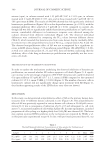
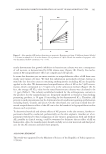
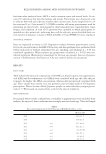
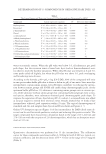
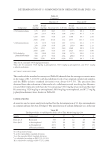
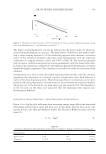
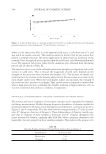
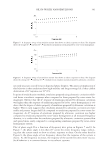
RELATIONSHIPS AMONG SKIN CONDITION IN WOMEN 305 free from other analytical tests. SACL is used to measure stress and arousal levels. It con- sists of 25 adjectives that describe feelings and moods. Participants use a four-point scale to indicate how well each adjective matches their current state. Scores range from 0 to 14 for stress and 0 to 11 for arousal (13). POMS is another self-rating questionnaire used for measuring six mood states: tension-anxiety, depression-dejection, anger-hostility, vigor, fatigue, and confusion. A total of 65 questions were included to which participants re- sponded on a fi ve-point scale, indicating how well the adjective given described their cur- rent mood (14). Japanese versions of SACL (J-SACL) (15) and POMS (16) were employed. STATISTICAL ANALYSIS Data are expressed as means ± S.D. Regression analysis between questionnaire scores, fatty acid concentrations in the RBC PL fraction, and skin problems were performed with (where indicated) or without adjustment for age, smoking, and drinking p 0.05 was considered signifi cant. When separate age groups were calculated, p 0.0125 was con- sidered signifi cant (Bonferroni’s adjustment for the four age groups). Statview ( Japanese version 5 SAS Institute, San Francisco, CA) was used for statistical calculations. RESULTS FATTY ACIDS Table I shows the fatty acid composition of the RBCs in all participants. Eicosapentaenoic acid (EPA) and docosahexaenoic acid (DHA) were correlated with age the older the par- ticipants, the higher the DHA concentration, whereas AA was inversely correlated with age. These trends were exactly as in our previous cross-sectional study of 456 Japanese participants. This is because elderly Japanese people eat more fi sh than younger genera- tions (17). We focused on essential fatty acids for the sake of simplicity. SKIN CONDITIONS Four people whose results confused hair or wrinkles as pigmentation were excluded from analysis. As expected, skin conditions were strongly associated with age. The total length Table I Fatty Acid Composition of the PL Fraction of Red Blood Cells (n = 132) Mean ± S.D. 16:0 24.6 ± 1.5 18:0 13.6 ± 1.0 18:1 n–9 13.7 ± 0.9 18:2 n–6 10.2 ± 1.1 18:3 n–3 0.2 ± 0.05 20:4 n–6 11.1 ± 1.1 20:5 n–3 1.3 ± 0.5 22:6 n–3 6.4 ± 1.0
Purchased for the exclusive use of nofirst nolast (unknown)
From: SCC Media Library & Resource Center (library.scconline.org)