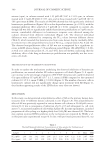
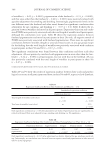
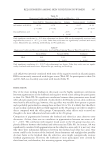
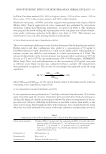
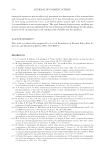
JOURNAL OF COSMETIC SCIENCE 306 of wrinkles (r = 0.65 p 0.0001), pigmentation of the forehead (r = 0.31 p = 0.0005), and that areas other than the forehead (r = 0.49 p 0.0001) were positively related with age after adjustment for smoking and drinking. Interestingly, pigmentation levels in the two different areas (the forehead and other areas) showed no signifi cant correlation after adjustment for age, smoking, and drinking (r = -0.07 p = 0.4). Table II shows the re- gression between wrinkles and mood in all participants. Depression-dejection and confu- sion (POMS) were positively associated with the total length of wrinkles in all participants, although the correlations were weak. Table III shows the regression analyses between forehead pigmentation and mood in participants in their 20s only all negative moods of POMS were positively associated with forehead pigmentation. There were no signifi cant correlations between wrinkles (length or area) and mood scores in any age group except for the fi nding that the total length of wrinkles was positively associated with confusion in participants in their 50s and 60 (r = 0.47 p = 0.01). Two signifi cant correlations were found between skin conditions and fatty acids after adjustment. AA was positively correlated with pigmentation in areas other than the fore- head (r = 0.24 p = 0.006) in all participants, but not with that in the forehead. AA was also positively correlated with the total length of wrinkles in participants in their 30s (r = 0.47 p = 0.006). CORRELATION BETWEEN FATTY ACIDS AND PSYCHOLOGICAL SCORES Tables IV and V show the results of regression analyses between fatty acids and psycho- logical test scores in all participants and those in their 50s and 60, respectively. α-Linolenic Table II Regression Coeffi cients Between Skin Conditions and Mood (n = 131) Standardized regression coeffi cient Depression-dejection Confusion Total length of wrinkles (crow’s feet) 0.14 0.19 p = 0.04 p = 0.004 Total area of wrinkles (crow’s feet) ns 0.16 p = 0.03 Only signifi cant correlations ( p 0.05 after adjustment) are shown. Pigmentation was not signifi cantly cor- related with mood. Data were adjusted for age, smoking, and drinking. ns: No signifi cance. Table III Regression Coeffi cients Between Skin Conditions and Mood Among Subjects in Their 20s (n = 34) Depression-dejection Anger-hostility Fatigue Tension-anxiety Confusion Forehead pigmentation 0.48 0.43 0.54 0.62 0.58 p = 0.005 p = 0.009 p = 0.0007 p 0.0001 p = 0.0006 Only signifi cant correlations ( p 0.0125 after adjustment) are shown. Adjusted for age, smoking, and drink- ing. Interestingly, no correlations were observed between negative mood and pigmentation in other areas of the face in any age groups.

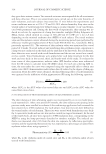
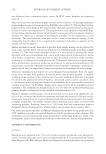
RELATIONSHIPS AMONG SKIN CONDITION IN WOMEN 307 acid (ALA) was inversely correlated with some of the negative moods in all participants DHA was inversely associated with fatigue scores (Table IV). In participants in their 50s and 60, ALA was favorably associated with moods (Table V). DISCUSSION One of the most striking fi ndings in this study was the highly signifi cant correlations between pigmentation in the forehead and negative mood scores among the participants in their 20s (Table III). No signifi cant correlations between these parameters were found when all participants were combined. As described in the Results section, skin conditions were heavily affected by age however, this age effect was variable from person to person and is probably particularly so among those in their 30s to 50s. It is likely that the effects of age on skin conditions have not fully appeared in the 20s group or are still too small to detect compared with the older groups. Consequently, other effects such as mood are thought to be more infl uential and noticeable in the 20s group. Comparison of pigmentation between the forehead and other face areas deserves some discussion. At fi rst, there was no correlation in pigmentation between two areas at all (r = -0.07). The correlation with negative mood scores in the 20s group was also com- pletely different between the forehead and other areas (see Table III). In contrast, AA was signifi cantly correlated with pigmentation in the other face areas only. It is not very clear why there were substantial differences between the forehead and other face areas. One reason could be the location of the forehead. Stress hormones and sunlight that possibly do more harm to the forehead than the other face areas might synergistically increase forehead pigmentation. However, the foreheads of most participants were covered by their front hair, and therefore, this reasoning appears insignifi cant. Table IV Regression Coeffi cients Between Fatty Acids and Mood (n = 131) Stress (SACL) Depression-dejection Fatigue Tension-anxiety Confusion α-Linolenic acid (ALA) -0.24 -0.20 ns -0.17 -0.19 p = 0.007 p = 0.02 p = 0.048 p = 0.04 Docosahexaenoic acid ns ns -0.18 ns ns p = 0.046 Only signifi cant correlations ( p 0.05 after adjustment) are shown. ALA was also marginally associated with anger-hostility scores (r = -0.17, p = 0.06). Other fatty acids were not signifi cantly correlated with mood scores. Adjusted for age, smoking, and drinking. ns: No signifi cance. Table V Regression Coeffi cients Between α-Linolenic Acid and Mood Among Those in Their 50s and 60 (n = 31) Stress (SACL) Arousal (SACL) Confusion ALA -0.61 0.52 -0.55 p = 0.0002 p = 0.003 p = 0.002 Only signifi cant correlations ( p 0.0125 after adjustment) are shown. Other fatty acids were not signifi - cantly correlated with mood scores. Adjusted for age, smoking, and drinking.
Purchased for the exclusive use of nofirst nolast (unknown)
From: SCC Media Library & Resource Center (library.scconline.org)