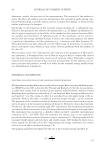
JOURNAL OF COSMETIC SCIENCE 112 As shown in Figure 8, Fucus extract increased collagen I in the ECM in a dose-dependent way. The increases were signifi cant at all concentrations tested (0.01% to 0.5%). At 0.01%, 0.05%, 0.1%, and 0.5%, Fucus extract enhanced collagen synthesis to 1.3-, 1.6-, 2.5-, and 3.7-fold of control, respectively. Vitamin C, the positive control increased col- lagen signifi cantly to 1.8-fold of control. At 0.1% and above, Fucus extract increased collagen more than vitamin C. Vitamin C at 50 μM, a commonly used bench mark in collagen I stimulation assays, was used as a positive control. CONCLUSION This study demonstrated that Fucus extract is a novel product with quadruple in vitro effi cacy. Fucus extract stimulates in vitro the production of HO-1 enzyme. In addition, Fucus extract was found to be an anti-infl ammatory, antioxidative, and collagen boosting ingredient. Ingredients with such properties are likely to aid in alleviating the appearance of dark circles around the eye area. Additional in vivo studies are necessary to confi rm our hypothesis that Fucus extract could aid in periorbital rejuvenation. REFERENCES (1) S. Eberlin, M. Del Carmen Velazquez Pereda, G. de Campos Dieamant, C. Nogueira, R. M. Werka, M. L.de Souza Queiroz, Effect of a Brazilian herbal compound as a cosmetic eyecare for periorbital hy- perchromia (“Dark circles”), J. Cosmet. Dermatol., 8, 127–135 (2009). (2) S. M. Sadrzadeh, E. Graf, S. S. Panter, P. E. Hallaway, J. W. Eaton, Hemoglobin. A biologic fenton re- agent, J. Biol. Chem., 259, 14354–14356 (1984). (3) A. Pamplona, A. Ferreira, J. Balla, V. Jeney, G. Balla, S. Epiphanio, A. Chora, C. D. Rodrigues, I. P. Gre- goire, M. Cunha-Rodrigues, S. Portugal, M. P. Soares, and M. M. Mota, Heme oxygenase-1 and carbon monoxide suppress the pathogenesis of experimental cerebral malaria, Nat. Med., 13, 703–710 (2007). (4) S. W. Ryter A. M. K. Choi, Heme oxygenase-1/Carbon Monoxide: From metabolism to molecular therapy, Am. J. Respir. Cell Mol. Biol., 41, 251–260 (2009). (5) R. Stocker, Y. Yamamoto, A. F. McDonagh, A. N. Glazer, B. N. Ames, Bilirubin is an antioxidant of possible physiological importance, Science, 235, 1043–1046 (1987). (6) D. E. Baranano, M. Rao, C.D. Ferris, S. H. Snyder, Biliverdin reductase: A major physiologic cytopro- tectant, Proc. Natl. Acad. Sci. U.S.A., 99, 16093–16098 (2002). Figure 8. Fucus extract increase the collagen I on fi broblast cells. Mean ± SD on 3 assays in triplicate – Student’s t test - *: p 0.05 - ***: p 0.001.

FUCUS EXTRACT: COSMETIC TREATMENT FOR UNDER-EYE DARK CIRCLES 113 (7) M. D. Manes, The heme oxygenase system: A regulator of second messenger gases, Annu. Rev. Pharmacol. Toxicol., 37, 517–554 (1997). (8) M.D. Manes, The heme oxygenase system and its functions in the brain. Cell Mol. Biol., 46, 573–585 (2000). (9) W. W. Hancock, R. Buelow, M.H. Sayegh, L. A. Turka, Antibody-induced transplant arteriosclerosis is prevented by graft expression of anti-oxidant and anti-apoptotic genes, Nat. Med., 4, 1392–1396 (1998). (10) F. Tamion, V. Richared, G. Bonmarchand, J. Leroy, J. P. Lebreton, C. Thuillez, Induction of heme- oxygenase-1 prevents the systemic responses to hemorrhagic shock, Am. J. Respir. Crit. Care Med., 164, 1933–1938 (2001). (11) S. G. Tullius, M. Nieminen-Kelhä, U. Bachmann, A. Reutzel-Selke, S. Jonas, J. Pratschke, W. O. Bechstein, P. Reinke, R. Buelow, P. Neuhaus, H. Volk, Induction of heme-oxygenase-1 prevents isch- emica/reperfusion injury and improves long-term graft outcome in rat renal allografts,. Transplant Proc., 33, 1286–1287 (2001). (12) I. Petrache, L. E. Otterbein, J. Alam J, G. W. Wiegand, A. M. Choi, Heme oxygenase-1 inhibits TNF-α induced apoptosis in cultured fi broblasts, Am. J. Physiol. Lung Cell Mol. Physiol., 278, L312–L319 (2000). (13) A. Grochot-Przeczek, R. Lach, J. Mis, K. Skrzypek, M. Gozdecka, P. Sroczynska, M. Dubiel, A. Rutkowski, M. Kozakowska, A. Zagorska, J. Walczynski, H. Was, J. Kotlinowski, J. Drukala, K. Kurowski, C. Kieda, Y. Herault, J. Dulak, A. Jozkowicz A, Heme oxygenase-1 accelerates cutaneous wound healing in mice, PLoS ONE, 4, e5803 (2009). (14) L. E. Otterbein, F. H. Bach, J. Alam, M. Soares, H. Tao Lu, M. Wysk, R. J. Davis, R. A. Flavell, A. M. Choi, Carbon monoxide has anti-infl ammatory effects involving the mitogen-activated protein kinase pathway, Nat. Med., 6, 422–428 (2000). (15) R. Song, W. Ning, F. Liu, B. T. Ameredes, W. J. Calhoun, L. E. Otterbein, A. M. Choi, Regulation of IL-1beta-induced GM-CSF production in human airway smooth muscle cells by carbon monoxide, Am. J. Physiol. Lung Cell Mol. Physiol., 284, L50–L56 (2003). (16) F. M. Torti FM and S. V. Torti SV, Regulation of ferritin genes and proteins, Blood, 99, 3505–3516 (2002). (17) G. F. Vile, R. M. Tyrrell, Oxidative stress resulting from ultraviolet A irradiation of human skin fi bro- blasts leads to a heme oxygenase-dependent increase in ferritin, J. Biol. Chem., 86, 14678–14681 (1996). (18) P. N. Hopkins, L. L. Wu, S. C. Hunt SC, B. C. James, G. M. Vincent, R. R. Williams, Higher serum bilirubin is associated with decreased risk for early familial coronary artery disease, Arterioscler. Thromb. Vasc. Biol., 16, 250–255 (1996). (19) P. Fratzl P, Collagen: Structure and Mechanics, (Springer, New York, 2008). (20) S. S. Johl and R. A. Burgett, Dermal fi ller agents: A practical review, Curr. Opin. Ophthalmol., 17, 471– 479 (2006). (21) S. Briganti, M. Picardo, Antioxidant activity, lipid peroxidation and skin diseases. What’s new, J. Eur. Acad. Dermatol. Venereol.,17, 663–669 (2003).
Purchased for the exclusive use of nofirst nolast (unknown)
From: SCC Media Library & Resource Center (library.scconline.org)