JOURNAL OF COSMETIC SCIENCE 140 in the steam were condensed in the condenser. The insoluble fraction of the orange oil remained on the surface of the water. The obtained water–oil mixture was then placed in a freezer, and after a few hours, the layer of essential oil was poured from above the ice layer. The essential oil obtained in this way constituted on average 1.06% by mass of the orange peels used (about 10.6 g of oil) and contained 95% of limonene, which was deter- mined on the basis of gas chromatography (GC) analysis. ISOMERIZATION OF NATURAL LI MONENE OVER TI-SBA-15 CATALYST Isomerization of the natura l limonene was carried over the Ti-SBA-15 catalyst. This catalyst belongs to the group of mesoporous materials. Their unquestionable advantages include high hydrothermal stability and neutrality toward living organisms. In the structure of this cata- lyst, hexagonally arranged cylindrical pores are present. In addition, the structure of this cata- lyst is stabilized by micropores, which connect the cylindrical mesopores. The isomerization of limonene was performed in a round-bottom fl ask with a capacity of 25 cm3. For isomeriza- tion, 5 g of the natural limonene and 0.75 g of the catalyst (content in the reaction mixture 15 wt%) were mixed up. The reaction was carried out at a temperature of 150°C for 24 h. The weight of the postreaction mixture amounted to 4.20 g. Before the microbiological tests, the catalyst was separated from the postreaction mixture by centrifugation. The composition of the postreaction mixture was determined by using the external standard method and GC method. For the GC analyses, a Thermo FOCUS chromatograph (Anchem, Warszawa, Poland) was used, which was equipped with a fl ame ionization detector and a Quadrex 007-5 capillary column (30 m × 250 μm × 0.25 μm). The chromatograph was also equipped with an autosampler. The parameters of the chromatographic analyses were as follows: helium pres- sure, 60 kPa sample chamber temperature, 240°C detector temperature, 250°C and ther- mostat temperature, changed according to the program: isothermally 60°C for 2 min, temperature increase 10°C/min, isothermally 240°C for 4 min, and cooling to 60°C. As standards for GC analyses, the follo wing were used: limonene (93%, Sigma-Aldrich, Poznań, Poland), γ-terpinene (97%, Sigma-Aldrich), α-terpinene (85%, Sigma-Aldrich), terpinolene ( 85%, Sigma-Aldrich), and p-cymene (99%, Sigma-Aldrich). Also, the same compounds were used in the microbial tests described in the following paragraph. The results of the analyses of the composit ion of the postreaction mixture (the mixture obtained after the isomerization of limonene) using the GC method showed that the postmixture contained 11.12 wt% (0.43 g) of limonene, 9.02 wt% (0.38 g) of γ-terpinene, 18.17 wt% (0.76 g) of α-terpinene, 13.44 wt% (0.56 g) of terpinolene, and 31.11 wt% (1.31 g) of p-cymene. The conversion of limonene (calculated as the amount of moles of limonene that was converted to isomerization products divided by the initial number of moles of limonene) after 24 h of the reaction amounted to 88.80 mol%, and the selectivities of the obtained products were as follows: 10.6 mol% of γ-terpinene, 21.36 mol% of α-terpinene, 15.80 mol% of terpinolene, and 37.12 mol% of p-cymene. MICROBIOLOGICAL TESTS The antimicrobial propert ies of natural and syn thetic limonene and products of the isom- erization of natural limonene were tested against the Gram-negative bacteria E. coli K12

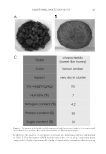
ANTIMICROBIAL PROPERTIES OF NATURAL LIMONENE 141 (ACCT 25922) and Gram-positive bacteria S. epidermidis (ACCT 49461), yeast C. albicans, and fungi T. rubrum, A. niger, P. commune, Alternaria alternata, T. viride, and C. cladosporioides. The fungi were obtained from the collection of the Department of Biotechnology, Insti- tute of Inorganic Chemical Technology and Environmental Engineering (IIChTEE), West Pomeranian University of Technology in Szczecin. The microorganisms were iso- lated from air of habitable buildings by the sedimentation method and identifi ed by morphology and biochemical tests. Twenty-four–hour bacterial cultures on plate control agar (BioMaxima, Lublin, Poland) for E. coli and brain heart infusion (BioMaxima) for S. epidermidis were used. Solutions of fungal spores were prepared from 7-d cultures carried out at 37°C (yeast) and 25°C (fungi) on agar slants. Sabouraud agar (BioMaxima) for yeast and dermatophytic fungi T. rubrum and malt extract agar (Merck, Darmstadt, Germany) for fi lamentous fungi were used in the tests. The concentration of the microorganism was determined by the spectrophotometric method at wavelength λ = 550 nm for fungi and λ = 600 nm for bacteria. A fungal suspension at a concentration of 1.76 × 10⁷ CFU (colony-forming units) × cm-3 and a bacterial suspension at 1.4 × 10⁸ (approximately 0.5 according to McFarland standard) in 0.85% NaCl solution were prepared. Diffusion disk method was used for the assessment of microbial growth inhibition. Sterile paper disks (Whatman No. 1, diameter 5 mm) impregnated with tested compounds (10 μL/disk) were placed at different locations on the surface of agar plates. Incubation of microorgan- isms was carried out under the following conditions: bacteria and yeasts at the tempera- ture of 37°C for 24 h and fungi at 25°C for 72 h. After incubation, the growth inhibition zones (mm) around the paper disks were measured. METHOD OF PREPARATION OF THERAPEUTIC CREAMS To prepare the therapeutic cream, an oil phase consisting of 12.5 g saffl ower oil and 3 g of beeswax was weighed. Next, the water phase with the following composition was weighed: 3.5 g of urea (pure, Chempur, Pikary Śląskie, Poland), 0.5 g of allantoin (pure, Chempur), and 21.25 g of water. In the next stage to the aqueous phase, terpinolene was added in an amount of 0.2 or 0.83 g [concentration of terpinolene 0.5 wt% (cream named KRT1) and 2 wt% (cream named KRT2), respectively]. The beakers with the water phase and the oil phase were placed in a water bath at the temperature of 80°C. After dissolving the oil phase ingredients, the beakers were taken out of the bath and the oil phase was added to the water, with intense mixing. The whole mixture was stirred until a slightly yellow cream with a homogeneous consistency was obtained (Figure 2). RESULTS AND DISCUSSION Natural limonene, the postreaction mix ture of compounds obtai ned after the isomeriza- tion of natural limonene (limonene, α-terpinene, γ-terpinene, terpinolene, and p-cymene), and each of the products of isomerization of limonene separately were tested for their antimicrobial properties (Table I). The pure compounds (standards) showed the highest antimicrobial activity. The growth inhibition zones around the paper disks impregnated with limonene and terpinolene were signifi cantly larger for all tested microorganisms (Table I). The mean inhibition zone for
Purchased for the exclusive use of nofirst nolast (unknown)
From: SCC Media Library & Resource Center (library.scconline.org)