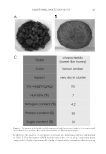
JOURNAL OF COSMETIC SCIENCE 120 For image quantifi cation, three images per condition were analyzed. Photoshop Elements 11 software (Adobe, San Jose, CA) allows users to convert each picture into an inverted image, using an intensity threshold to eliminate the background noise. These inverted images were then analyzed with Volocity image analysis software (Improvision), which generated the sum of red pixel intensities. The sum obtained was normalized by taking into account the total number of cells. IMMUNOFLUORESCENCE STAINING OF COLLAGEN I Sections were deparaffi nized and rehydrated with several successive xylene, alcohol, and water baths. Then, an unmasking protocol was performed that included both microwave exposure at 600 W in citrate buffer 0.01 M, pH 6 (Sigma, Saint Louis, MO) until boiling and 0.05% trypsin (Zymed, Invitrogen, Frederick, MD) digestion for 15 min at 37°C. The saturation of unspecifi c sites was performed with a solution of 5% bovine serum al- bumin (BSA) (Sigma) for 30 min. Depending on the experiment, the primary antibody used corresponded to polyclonal anti-collagen I (Rockland at 1:100 dilution in 1X PBS). After rinsing the slides with PBS, the secondary antibody was applied in the dark and under agitation at room temperature in a damp room. Finally, the sections were mounted in Fluoromount-G (Electron Microscopy Sciences, Hatfi eld, PA). Detection was managed and examined using a Zeiss Axiovert 200M microscope with a ×20 objective. Photos were taken with a QImaging EXi blue camera coupled to Volocity acquisition software (Improvision). STATISTICAL ANALYSIS Statistical analyses were performed using JMP* 10 software (SAS, Carry, NC) and Stu- dent’s t test for independent samples with one-tailed direction of rejection. p 0.05 was considered as signifi cant, p 0.01 as very signifi cant and p 0.005 as highly signifi cant. RESULTS/DISCUSSION COMPOSITIONAL ANALYSIS OF BAOBAB SEEDCAKE The baobab seedcake was ground before raw material analysis to obtain a powder around 2,000 μm in diameter (Figure 2B). Then, the chemical composition of the baobab seed- cake was studied. Phytochemical analysis of the baobab seedcake revealed that the seed- cake was very rich in different classes of chemical molecules (Figure 2C). This confi rms its potential for use as a raw material on which to perform an aqueous extraction and obtain a biofunctional ingredient for use in the cosmetic fi eld. COMPOSITIONAL ANALYSIS OF BAOBAB SEEDCAKE EXTRACTS The composition of the baobab seedcake extracts was studied. The small RNA content in both the target extract and the placebo extract was determined by bioanalyzer analysis (Figure 3). A high amount of small RNAs was found in the extract obtained by the spe- cifi c patented process intended to enrich the extract in small RNAs, around 60 mg/l be- fore dilution. By contrast, the extract obtained without PSR technology process did not contain small RNAs at all.

PLANT SMALL RNA TECHNOLOGY 121 In addition, the quantity of each phytoconstituent was determined and was summarized in Table I. The dry matter of PSR baobab extract was 10–12 g/kg, comprising major compounds 3–4 g/kg of protein and 3–4 g/kg of sugar and also containing other interesting Figure 2. Observation of the baobab seedcake raw material and phytochemical analysis of the raw material. (A) Seedcake before grinding. (B) Seedcake after grinding. (C) Phytochemical analysis.
Purchased for the exclusive use of nofirst nolast (unknown)
From: SCC Media Library & Resource Center (library.scconline.org)