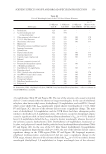
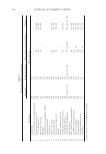
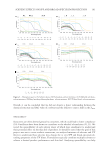
J. Cosmet. Sci., 71, 133–148 (May/June 2020) 133 Burkholderia Cepacia Complex in Personal Care Products: Molecular Epidemiology and Susceptibility to Preservatives XIA WEN, XIAOBAO XIE, SHUYAO ZHANG, TINGLI SUN, JINGXIA LIU, and WENRU LI , Guangdong Provincial Key Laboratory of Microbial Culture Collection and Application, State Key Laboratory of Applied Microbiology Southern China, Guangdong Institute of Microbiology, Guangdong Detection Center of Microbiology, Guangdong Academy of Sciences, Guangzhou, Guangdong 510070, People’s Republic of China (X.W., X.X., S.Z., T.S., J.L., W.L.) Accepted for publication February 24, 2020. Synopsis Many outbreaks of Burkholderia cepacia complex (Bcc) infections are associated with contaminations in personal care products (PCPs). This study aimed to analyze a collection of Bcc isolates in PCPs and assess the susceptibility of preservatives, including dimethoxy dimethyl hydantoin (DMDMH), methylisothiazolinone– chloromethylisothiazolinone (MIT/cMIT), and methyl 4-hydroxybenzoate (MH). The Bcc isolates collected during the 3-year (2015–2017) study period were further examined by biochemical identifi cation system, phylogenetic analysis based on recA nucleotide sequences, and multilocus sequence typing analysis. Preservatives susceptibility testing of Bcc bacteria were evaluated by minimum inhibitory concentration and minimum bactericidal concentration. A total of seven distinct sequence types (STs) were identifi ed, which belonged to four different Bcc species: Burkholderia cenocepacia (ST621, ST258, and novel ST), Burkholderia lata (ST339 and ST336), Burkholderia contaminans (ST482), Burkholderia cepacia (ST922). For DMDMH and MH, the maximum permitted concentrations according to the safety specifi cation of cosmetics (0.6% and 0.4%) were able to inhibit or kill all Bcc strains, but 40% of Bcc isolates could survive at higher than maximum permitted concentrations of MIT/cMIT (of a mixture in the ratio 3:1 of 5-chloro-2-methyl-4-isothiazolin-3-one and 2-methyl-4-isothiazolin-3-one). The PCPs contamination of Bcc strains should be given more attention by manufacturers because of its diversity in molecular epidemiology and its low susceptibility to preservatives such as MIT/cMIT. INTRODUCTION Although personal care products (PCPs) are an indispensable part of everyone’s daily grooming routine, the water and available nutrients they contain make them susceptible to microbial growth. Microbial contamination in PCPs, including toiletries and cosmet- ics, is very common and has been of great concern to the manufacturers of such products for many years. Most often, microorganisms are the cause of organoleptic alterations, such Address all correspondence to Xiaobao Xie at xiaobaoxie@126.com.
Purchased for the exclusive use of nofirst nolast (unknown)
From: SCC Media Library & Resource Center (library.scconline.org)