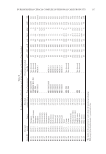
JOURNAL OF COSMETIC SCIENCE 134 as offensive odors and changes in viscosity and color. Moreover, contaminating microor- ganisms may be pathogenic, exposing users to possible skin irritation, allergic contact dermatitis, and infection, especially in the eyes, mouth, or open wounds (1–5). The Gram-negative species Burkholderia cepacia complex (Bcc) is emerging as one of the most intractable bacterial species to cause industrial contamination (6). Bcc organisms remain signifi cant pathogens in patients with cystic fi brosis (CF) (7,8). Many nosocomial infections originate from the use of PCPs contaminated with Bcc. Outbreaks of Burkholderia infections due to contaminated mouthwash have been reported in hospitalized individu- als (9–11). An outbreak of B. cepacia in an intensive care unit was caused by intrinsically contaminated moisturizing milk (12). An outbreak of B. cepacia complex was associated with contaminated liquid soap for hospital use (13). A hospital-wide outbreak of Burk- holderia contaminans was caused by moist prefabricated washcloths (14). Currently, the Bcc consists of at least 24 phenotypically similar but genotypically distinct Gram-negative bacteria (Table I) (15–30). According to a review of Food and Drug Administration (FDA) records, B. cepacia was the most common reason for recalls (34%), followed by Pseudomonas spp. (31). To explore the sources of potential contamination, it is fi rst and foremost necessary to understand the species distribution characteristics. Until now, few studies have investigated the molecular epidemiology of the Bcc in PCPs. Identifi cation of the Bcc at the species level in routine microbiology laboratories using manual and/or automated commercial systems is problematic because of the homogeneity of biochemical test results obtained from some species of Bcc, making them diffi cult to identify using phenotypic methods (32). Genetic methods such as 16S rRNA and recA gene sequence analysis have proven useful for Bcc species identifi cation, but 16S rRNA gene sequencing is not suffi ciently discriminatory to resolve all the species as the gene is 98% identical for members of the Bcc, and recA based species specifi c polymerase chain reaction (PCR) can identify most Bcc strains more accurately than 16S rRNA gene sequencing (7), although it cannot be used as a means to differentiate Bcc strains recovered from different sources, such as clinical infections versus those that occur in natural environments (33). Multilocus sequence typing (MLST) has been used for the molecular epidemiological study of Bcc since 2005 and improved in 2009 it is a globally accepted method that provides resolu- tion at a species level higher than other methods (34,35). To date, approximately 1,722 sequence types (STs) of the Bcc have been identifi ed worldwide, and the number of new cases identifi ed by MLST increases each year. The ability of MLST to differentiate the exist- ing Bcc species is greater than the analysis of the recA gene alone and also shows an excel- lent correlation to the multiple polyphasic taxonomic methods used to fully characterize these bacteria (7). Therefore, the recA gene and MLST are used in combination to more accurately identify species and molecular epidemiological types. Second, the sensitivity of different Bcc species to preservatives must be investigated because Bcc bacteria exhibit high levels of innate antimicrobial resistance to both antibiotics and biocides. Recently, research on the antimicrobial effi ciency of preservatives in cosmetic products has received much attention. A survey of Bcc bacteria demonstrated that susceptibility to chlorhexidine, cetylpyridinium chloride, triclosan, benzalkonium chloride, and povidone biocides varied across the complex, with species-dependent differences in susceptibility being identifi ed (36). Studies also indicated that the level of increased resistance is largely dependent on the dose, time of exposure, and bacterial species (37). In this study, we collected 25 Bcc strains from the fi nished product of PCPs and deter- mined strain diversity and species using MLST and recA gene sequence analysis. We also

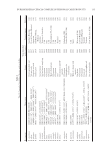
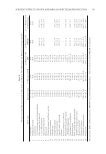
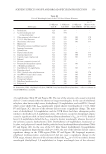
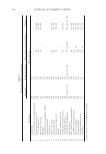
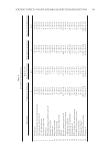
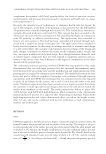
Table I The 24 Currently Established Species within the Bcc Bcc species Type strain Source Year identifi ed and/or named Country/region Reference B. catarinensis DSM 103188T (BR 10601T) Native grassland soil 2017 Southern Brazilian (14) B. alpine PO-04-17-38= T DSM 28031= T LMG 28138 T Volcanic soils 2017 Pico de Orizaba (Mexico) (15) B. puraquae CAMPA 1040 T (=LMG 29660= T DSM 103137 T ) Hospital and soils 2017 Argentina (16) B. paludis MSh1(=DSM T 100703T= MCCC1K01245 T ) Surface peat 2016 Southeast Pahang, Malaysia (17) B. stagnalis LMG28156T (=CCUG65686T ) Soil and water 2015 Australia (18) B. territorii LMG 28158T (=CCUG65687T ) Soil and water sampling 2015 Territory of Australia (18) B. pseudomultivorans LMG 26883T(=CCUG 62895 T ) CF sputum 2013 USA (19) B. latens FIRENZE 3 T = LMG 24064T= CCUG 54555T CF sputum 2008 Italy (20) B. diffusa AU1075 T = LMG 24065T5CCUG 54558 T CF sputum 2008 USA (20) B. arboris ES0263AT= LMG 24066 T = CCUG 54561 T Morris Arboretum 2008 Philadelphia (PA, USA) (20) B. seminalis AU0475 T = LMG 24067T= CCUG 54564 T CF sputum 2008 USA (20) B. metallica AU0553 T = LMG 24068T= CCUG 54567 T CF sputum 2008 USA (20) B. ubonensis LMG 20358T Soil 2008 Thailand (20) B. dolosa LMG 18943(=CCUG T 47727 T ) Environment and CF sputum 2004 USA (21) B. cenocepacia LMG 16656 (=NCTC 13227, ATCC BAA-245, CCM 4899) CF sputum 2003 Edinburgh (UK) (22) B. anthina LMG 20980 (=CCUG 46047) Rhizosphere of a house-plant 2002 Nashville (TN, USA) (23) B. pyrrocinia LMG 14095 Soil 2002 USA (23) B. contaminans J2956 T (=LMG 23361T= CCUG 55526T ) Milk of a sheep with mastitis 2001 Spain (24) B. ambifaria LMG 19182(=CCUG T 44356 T ) Pea plants 2001 Wisconsin (USA) (25) B. stabilis LMG 14294 CF sputum 2000 Leuven (Belgium) (26) B. multivorans LMG 13010 CF sputum 1997 Brussels (Belgium) (27) B. lata 383 T (=ATCC 17760 T = LMG 22485T= CCUG 55525T ) Forest soil 1966 Trinidad (24) B. vietnamiensis TVV75 (=LMG 10929) Rice rhizosphere soil 1995 Vietnam (28) B. cepacia Burkholder (=717-ICPB 25, =ATCC 25416, =NCTC 10743) Rot of onion bulbs 1950 New York State (USA) (29) BURKHOLDERIA CEPACIA COMPLEX IN PERSONAL CARE PRODUCTS 135
Purchased for the exclusive use of nofirst nolast (unknown)
From: SCC Media Library & Resource Center (library.scconline.org)