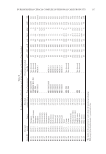
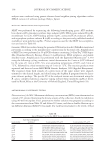
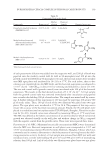
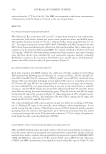
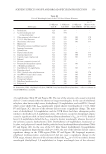
JOURNAL OF COSMETIC SCIENCE 136 carried out investigation of Bcc susceptibility to the common preservatives used in PCPs. The aim of this study was to reveal insights into the diversity of Bcc isolates from PCPs and the susceptibility to different preservatives commonly used. MATERIALS AND METHODS BACTERIAL STRAINS A total of 25 B. cepacia complex isolates were obtained from contaminated PCPs, includ- ing creams, shampoos, lotions, and conditioners, and stored for a period of 2 years (2015– 2017) (Table II). B. cepacia ATCC 25416 was used as a reference strain in the study. All strains were grown in Tryptone soya agar (TSA Oxoid™ Thermo Fisher Scientifi c, Waltham, MA) and incubated for 24–48 h at 37°C (±1°C). Strains were stored at -80°C (±1°C) with 20% glycerol until used. All Bcc samples were prepared in duplicate. ANTIMICR OBIALS 2-methyl-4-isothiazolin-3-one (MIT), consisting of a 3:1 (volume:volume) ratio of 5-chloro-2-methyl-4-isothiazolin-3-one (cMIT) and MIT at a fi nal concentration of 14% (m/vol) total active ingredient, was obtained from Guangdong Demei Biology Technology Co., Ltd (Guangzhou, China). Dimethoxy dimethyl hydantoin (DMDMH 55%, m/vol) and methyl 4-hydroxybenzoate (MH) were purchased from Sigma-Aldrich (St. Louis, MO). ISOLATION AND IDENTIFICATION OF STRAINS One gram of recovered PCPs was introduced onto the lecithin tween-80 nutrient agar plates (Guagdong Huankai Microbial Sci. & Tech. Co., Ltd., Guangzhou, China), the samples were streaked using a sterile loop, and the plates incubated for 18–24 h at 37°C. Gram staining and microscopic observation were performed on all isolated strains. Strains were identifi ed by the API 20NE system (API-bioMérieux, La Balme les Grottes, France) according to the manufacturer’s directions. Genomic DNA was isolated using a genomic DNA extraction kit from TaKaRa (Tokyo, Japan) according to the manufacturer’s instructions for bacterial cells. PCR was performed using primer pairs for BCR1 (5′-TGACCGCCGAGAAGAGCAA-3′) and BCR2 (5′-CTCTTCTTCGTCCATCGCCTC-3′) in a Mastercycler® 5330 (Eppendorf AG, Hamburg, Germany) and run for 35 thermal cycles of 94°C (4 min), 58°C (30 s), and 72°C (30 s). A 10-min elongation step was included in the fi nal cycle (38). The reaction products were separated and detected on an ABI PRISM Genetic Analyzer 3100 (Applied Biosystems, Foster City, CA). Sequencing was performed by Huada Gene Technology Co. Ltd (Shenzhen, China). The resulting sequen ces were assessed for similarities among known sequences using the Basic Local Alignment Tool at the National Center for Biotechnology Information (NCBI, NIH, Bethesda, MD). Multiple nucleotide sequence alignments of the recA gene were constructed using CLUSTAL X (Dublin, Ireland). Phylogenetic and molecular evolutionary

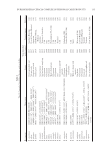
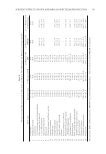
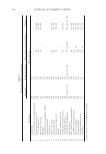
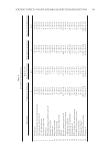
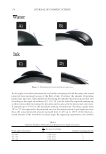
Table II Bcc Strain Isolation Details along with Allelic Profi les and Sequence Type Identifi ed Strain ID Year and month Source Microbial content (cfu g)-1 Type of preservative a Preservative residual (mg kg-1) atpD gltB gyrB recA lepA phaC trpB ST BC-01 2015.3 Shampoos 1.2 × 10 4 MIT/CMIT PH Not detected 15 11 481 14 11 6 147 621 BC-02 2015.3 Hair conditioners 2.0 × 10 6 DMDMH MH PH Not detected 15 11 481 14 11 6 147 621 BC-03 2015.7 Shampoos 1.3 × 10 5 MH PH Not detected 361 325 640 382 431 329 330 922 BC-04 2015.7 Shampoos 1.7 × 10 5 MIT/CMIT MIT:10.5 15 64 506 14 11 6 147 novel BC-05 2016.1 Raw materials 1.2 × 10 6 / / 361 325 640 382 431 329 330 922 BC-06 2016.1 Raw materials 3.6 × 10 4 / / 361 325 640 382 431 329 330 922 BC-07 2016.1 Raw materials 4.8 × 10 5 / / 361 325 640 382 431 329 330 922 BC-08 2016.1 Raw materials 2.5 × 10 5 / / 15 11 481 14 11 6 147 621 BC-09 2016.7 Shampoos 2.9 × 10 5 MIT/CMIT BP MIT:13.3 15 11 481 14 11 6 147 621 BC-10 2016.11 Body lotion 3.1 × 10 5 MIT/CMIT MIT:15.6 15 11 481 14 11 6 147 621 BC-11 2016.11 Body lotion 4.5 × 10 6 MIT/CMIT MIT:14.8 15 11 481 14 11 6 147 621 BC-12 2016.11 Shower gel 2.3 × 10 5 MIT/CMIT MIT:13.9 15 11 481 14 11 6 147 621 BC-13 2016.11 Shower gel 1.5 × 10 6 MIT/CMIT MIT:10.8 15 11 481 14 11 6 147 621 BC-14 2016.11 Shower gel 2.3 × 10 6 MIT/CMIT MIT:11.9 15 11 481 14 11 6 147 621 BC-15 2016.11 Shower gel 1.6 × 10 5 MIT/CMIT MIT:14.5 15 11 481 14 11 6 147 621 BC-16 2017.1 Toner 2.3 × 10 4 / / 184 224 301 200 219 53 210 339 BC-17 2017.1 Cream 1.5 × 10 5 MH PH Not detected 184 224 301 200 219 53 210 339 BC-18 2017.3 Cream 5.4 × 10 5 MH PH Not detected 15 11 481 14 11 6 147 621 BC-19 2017.3 Raw material 3.4 × 10 6 / / 15 11 481 14 11 6 147 621 BC-20 2017.3 Production water 3.8 × 10 5 / / 182 390 291 146 214 162 217 336 BC-21 2017.3 Production water 4.3 × 10 3 / / 182 390 291 146 214 162 217 336 BC-22 2017.3 Bubble water 2.6 × 10 4 MH Not detected 182 390 291 146 214 162 217 336 BC-23 2017.3 Bubble water 1.5 × 10 5 MH Not detected 182 390 291 146 214 162 217 336 BC-24 2017.5 Baby lotion 5.3 × 10 4 / / 151 192 254 152 158 173 151 482 BC-25 2017.5 Baby lotion 1.2 × 10 5 / / 15 11 236 14 11 6 79 258 a The name of the preservative comes from the product packaging. PH: propyl p /: preservative free. BURKHOLDERIA CEPACIA COMPLEX IN PERSONAL CARE PRODUCTS 137
Purchased for the exclusive use of nofirst nolast (unknown)
From: SCC Media Library & Resource Center (library.scconline.org)