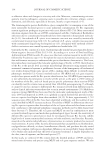
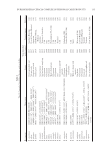
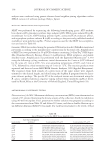
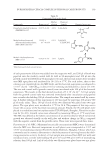
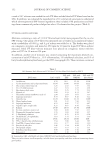
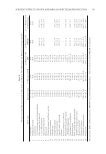
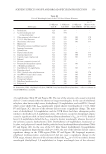
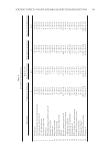
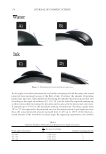
JOURNAL OF COSMETIC SCIENCE 154 IAG range: 6–10), and poor solvents (arbitrary IAG range: 10) for each UV fi lter. IAG ranged from 0 to 39 when looking at all 167 solvents in FFE for good solvency, the num- ber should be as low as possible. In the case of homosalate, ethylhexyl salicylate, and the UV fi lter blend, most solvents (i.e., 16 of 24) were excellent based on FFE predictions. As for butyl methoxydibenzoylmethane, most solvents (i.e., 16 of 24) were considered good. Four solvents were ranked poor for all UV fi lters and the UV fi lter blend: two silicones, including dimethicone and a blend of cyclotetrasiloxane and cyclopentasiloxane ethanol, a semipolar solvent and pentylene glycol, a polar solvent. Next in line was isododecane, which was ranked good for the UVB fi lters and the UV fi lter blend and poor for butyl methoxydibenzoylmethane. Butyl methoxydibenzoylmethane did not dissolve in any of the solvents ranked poor and fi ve good solvents (i.e., 5 of 16). We did not observe a trend in the IAG number and abil- ity of a good solvent to dissolve butyl methoxydibenzoylmethane. Some good solvents had higher numbers and worked, e.g., caprylic/capric triglyceride, whereas others did not work, although they had a lower number, e.g., Helianthus annuus (sunfl ower) seed oil. Three solvents were ranked excelle nt for all UV fi lters and the UV fi lter blend, including C12-15 alkyl benzoate, butyloctyl salicylate, and ethylhexyl methoxycrylene. IN VITRO SPF AND CRITICAL WAVELENG TH TESTING AND WAVELENGTH OF MAXIMUM ABSORBANCE Most solvents tested had in vitro SPF values close to 1 (Table II). Four solvents had in vitro SPF values above 2, including butyloctyl salicylate (SPF 19.5), diethylhexyl 2,6-naph- thalate (SPF 35.2), polyester-8 (SPF 50.3), and ethylhexyl methoxycrylene (SPF 330.2). The in vitro SPF of homosalate alone was 13.7 ± 2.8, and ethylhexyl salicylate 12.7 ± 1.9. Measuring the in vitro SPF of butyl methoxydibenzoylmethane alone was not possible because of its waxy nature. Butyl methoxydibenzoylmethane has to be dissolved to pro- vide sun protection. Solvents change their absorbance spectra therefore, calculating the SPF of butyl methoxydibenzoylmethane from any of the mixtures was not possible either. Measuring the in vitro SPF of each UVB fi lter alone helped understand the extent of SPF boost. Testing was not performed for mixtures in which avobenzone was insoluble this is indicated in the tables. A theoretical in vitro SPF was calcu lated for each UVB fi lter–solvent mixture by adding 10% of the UV fi lter’s SPF to 90% of the solvent’s SPF. Any measured number higher than the theoretical number was considered a boost. In any 1:9 mixture, homosalate was assumed to have an in vitro SPF of 1.4 and ethylhexyl salicylate 1.3. The theoretical SPF of the blend could not be calculated because of butyl methoxydibenzoylmethane’s un- known theoretical SPF. All UVB fi lter–solvent mixtures—exce pt for the isododecane mixture—had a higher in vitro SPF than the sum of the SPF of the UV fi lter and solvent would yield, indicating a synergistic and not just additive relationship. The four solvents with a high inherent SPF (diethylhexyl 2,6-naphthalate, butyloctyl salicylate, ethylhexyl methoxycrylene, and polyester-8) did not boost the SPF of the individual UVB fi lters. The SPF of these mix- tures was signifi cantly higher (p 0.05) in most cases than the rest of the mixtures, but the high SPF was a result of the solvents’ inherent SPF and not a synergism between the UV fi lter and solvent.

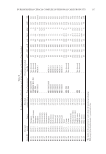
Table II Solvents Used and Mixtures Created in This Study and Their In Vitro SPF (Values Are Displayed as Average and SD) INCI name Ingredient alone 1:9 Mixture with H 1:9 Mixture with EHS 1:9 Mixture with BMDM 2.3:7.7 Mixture with UV fi lter blend 1 Homosalate 13.7 ± 2.8 N/A N/A N/A N/A 2 Ethylhexyl salicylate 12.7 ± 1.9 N/A N/A N/A N/A 3 Isododecane 1.0 ± 0.1 2.4 ± 0.1 2.8 ± 0.4 - - 4 Cyclotetrasiloxane and cyclopentasiloxane 1.0 ± 0.1 4.4 ± 0.4 4.7 ± 0.2 - - 5 Olea europaea (olive) fruit oil 1.0 ± 0.1 6.0 ± 2.0 6.7 ± 1.2 14.8 ± 5.2 22.1 ± 4.5 6 C12-15 alkyl benzoate 2.0 ± 0.2 6.0 ± 0.6 6.9 ± 0.9 15.4 ± 2.1 14.8 ± 1.8 7 Shea butter ethyl esters 1.5 ± 0.3 5.0 ± 0.6 6.9 ± 1.4 25.7 ± 5.5 18.5 ± 2.4 8 Mineral oil 1.0 ± 0.1 6.9 ± 0.7 6.7 ± 2.8 - - 9 Helianthus annuus (sunfl ower) seed oil 1.0 ± 0.1 6.4 ± 0.6 7.9 ± 0.7 - - 10 Isopropyl isostearate 1.0 ± 0.1 5.5 ± 0.7 5.1 ± 0.8 - - 11 Dimethicone 1.0 ± 0.1 5.6 ± 0.1 6.1 ± 0.2 - - 12 Heptyl undecylenate 1.0 ± 0.1 6.5 ± 1.2 6.2 ± 1.0 14.9 ± 2.9 24.1 ± 4.8 13 Isopropyl myristate 1.0 ± 0.1 6.7 ± 1.3 5.6 ± 0.7 41.3 ± 1.6 14.4 ± 0.5 14 Caprylic/capric triglyceride 1.0 ± 0.1 6.4 ± 0.6 5.7 ± 0.6 10.9 ± 2.3 14.5 ± 3.0 15 Ethanol 1.0 ± 0.1 6.1 ± 0.6 7.4 ± 0.5 - - 16 Ricinus communis (castor) oil 1.0 ± 0.1 7.7 ± 1.7 7.0 ± 1.4 - - 17 Propanediol dicaprylate/caprate 1.0 ± 0.1 6.8 ± 1.8 7.2 ± 0.4 11.7 ± 1.2 15.5 ± 3.8 18 2-Ethylhexyl palmitate 1.0 ± 0.1 6.1 ± 1.0 5.8 ± 1.5 - - 19 Diethylhexyl 2,6-naphthalate 35.2 ± 5.4 28.9 ± 1.8 26.0 ± 11.8 37.3 ± 1.9 30.9 ± 2.1 20 Pentylene glycol 1.0 ± 0.1 5.4 ± 0.6 4.3 ± 0.2 - - 21 PPG-3 benzyl ether ethylhexanoate 1.0 ± 0.1 6.0 ± 1.3 7.0 ± 0.6 32.2 ± 2.5 14.9 ± 2.8 22 Tris(PPG-3 benzyl ether) citrate 1.1 ± 0.1 8.4 ± 1.2 7.7 ± 0.7 23.3 ± 4.5 26.2 ± 3.0 23 Butyloctyl salicylate 19.5 ± 1.6 13.7 ± 5.3 9.3 ± 2.5 70.1 ± 3.4 18.0 ± 1.4 24 Diisopropyl adipate 1.0 ± 0.1 5.9 ± 1.0 5.9 ± 0.2 23.8 ± 4.5 19.0 ± 3.6 25 Ethylhexyl methoxycrylene 330.2 ± 74.9 397.2 ± 109.9 398.6 ± 101.3 225.5 ± 95.3 138.7 ± 20.6 26 Polyester-8 50.3 ± 1.9 90.5 ± 15.2 103.1 ± 22.0 466.2 ± 124.9 200.1 ± 88.7 H: homosalate, EHS: ethylhexyl salicylate, BMDM: butyl methoxydibenzoylmethane. - refers to solvents in which BMDM was insoluble. SOLVENT EFFECTS ON SPF AND BROAD-SPECTRUM PROTECTION 155
Purchased for the exclusive use of nofirst nolast (unknown)
From: SCC Media Library & Resource Center (library.scconline.org)