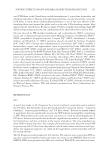
JOURNAL OF COSMETIC SCIENCE 156 The four solvents that had the highe st SPF alone shared common structural characteristics, including ester bonds, conjugated structure, and aromatic ring(s). Aromatic rings and a conjugated structure potentially allowed for many possible resonance structures to exist when excited with an electron. Stronger absorption at longer wavelengths equates to a higher SPF value. Aromatic rings have an utmost importance for the UV spectroscopic properties of molecules. Nothing proves its importance more than the fact that today all organic UV fi lters have aromatic moieties (22). In addition, ethylhexyl methoxycrylene and polyester-8 also had cyano (–CN) groups in their conjugated structure. CN groups have two pi (π) bonds, which allow for more electron delocalization compared with a double bond that has just one π bond. When counting the total number of π bonds pres- ent in each molecule, polyester-8 has 22, ethylhexyl methoxycrylene has 10, diethylhexyl 2,6-naphthalate has seven, and tris(PPG-3 benzyl ether) citrate has 12. However, it is also important to understand that the most stable molecules have their π bonds in a conju- gated structure. Thus, although tris(PPG-3 benzyl ether) citrate has 12 π bonds overall, only three are positioned in a conjugated manner. In comparison, diethylhexyl 2,6-naph- thalate only has seven π bonds overall however, all are in a conjugated structure together. This is why diethylhexyl 2,6-naphthalate had a higher SPF in every case. When looking at ethylhexyl methoxycrylene, it has all of its 10 π bonds in a conjugated structure, which explains its higher SPF. Although these structural characteristics ar e important, their presence did not guarantee a solvent to have a high SPF alone. For example, C12-15 alkyl benzoate, PPG-3 benzyl ether ethylhexanoate, and tris(PPG-3 benzyl ether) citrate had aromatic rings and conju- gated structure however, their in vitro SPF alone was around 1. Some solvents, such as Olea europaea (olive) oil, shea butter ethyl esters, heptyl undecylenate, and diisopropyl adipate contained ester bonds but did not possess aromatic moieties or a conjugated structure. The in vitro SPF of these solvents was also around 1. They all signifi cantly boosted the SPF when combined with UV fi lters ( 0.05), especially tris(PPG-3 benzyl ether) citrate, which achieved one of the highest SPF values for the UV fi lter blend, but they did not have a high SPF themselves. In addition to strictly looking at the chemi cal structure, the mechanism of action of the solvents also has to be considered. Some solvents tested in this study are sold as photosta- bilizers. When chemical UV fi lters absorb light, the energy from the UV photons convert them from the ground state to the excited state. After the energy is dissipated, electrons will return to the ground state, and the UV fi lter is ready to receive the next UV photon. Some UV fi lters, such as butyl methoxydibenzoylmethane, are photounstable, and their chemical structure changes in the excited state, which prevents them from absorbing the next UV photon. Photostabilizers are molecules that are able to reduce or avoid the pho- todegradation of UV fi lters. A common approach to photostabilization is to quench the excited state (either singlet or triplet state) of the UV fi lter and quickly return the UV fi lter to the ground state (23,24). Examples for this mechanism include triplet-state quenchers diethylhexyl 2,6-naphthalate and polyester-8 and singlet-state quencher eth- ylhexyl methoxycrylene. For a photostabilizer to be effective, it has to show a similar energy level to that of the photoexcited state of the photounstable molecule to absorb the excitation energy (7). This is the reason why photostabilizers are often also UV absorbers (25), as we also observed this phenomenon in this work. The photostabilizing mechanism of action of butyloctyl salicylate is different from the aforementioned solvents. Butyloctyl salicylate has a high dielectric constant, making it highly polar. Matching the polarity of

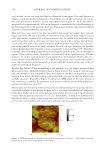
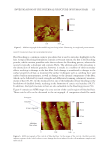
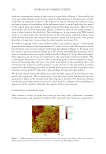
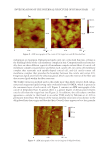
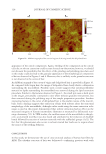
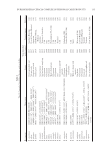
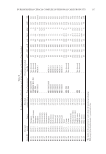
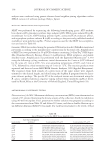
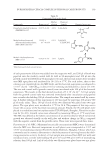
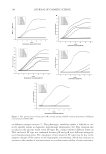
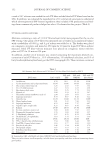
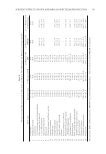
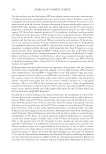
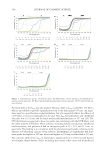
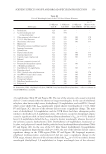
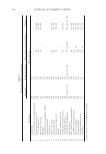
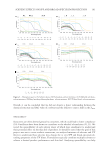
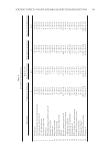
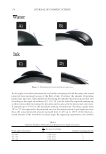
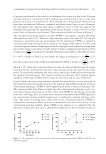
SOLVENT EFFECTS ON SPF AND BROAD-SPECTRUM PROTECTION 157 the solvent to that of the UV fi lter(s) has been shown to reduce UV fi lter degradation (26). The in vitro SPF of the homosalate–solvent mixtures ranged from 2.4 to 397.2 (Table II). The four highest SPFs were provided by diethylhexyl 2,6-naphthalate, butyloctyl salicy- late, ethylhexyl methoxycrylene, and polyester-8. The same four solvents resulted in the highest SPF for ethylhexyl salicylate as well in this case, the SPF ranged from 2.8 to 398.6. The butyl methoxydibenzoylmethane–solvent mixtures had higher SPF values than the UVB fi lter–solvent mixtures, except for ethylhexyl methoxycrylene. The in vitro SPF values ranged from 10.9 to 466.2 in this case. The in vitro SPF of the UV fi lter blend– solvent mixtures was higher in every case than the SPF of the individual UVB fi lter–solvent mixtures but lower than the butyl methoxydibenzoylmethane–solvent mixtures in many cases. The SPF ranged from 14.4 to 200.1. In the case of the UV fi lter blend–solvent mixtures, ethylhexyl methoxycrylene, polyester-8, diethylhexyl 2,6-naphthalate, and tris(PPG-3 benzyl ether) citrate resulted in the highest SPF values. Based on all the aforementioned observations, it can be concluded that structural ele- ments, including ester bonds, conjugated structure, aromatic rings, and –CN groups are important, but are not the only characteristics that can infl uence the SPF and SPF-boosting capability of a solvent. The photostabilizing effect of the solvents and polarity have also been shown to infl uence the λmax and molar absorptivity (19) of UV fi lters. Most solvents transmitted almost all light in the UV region, which is in correlation with the in vitro SPF results. Exceptions were C12-15 alkyl benzoate, diethylhexyl 2,6-naph- thalate, butyloctyl salicylate, ethylhexyl methoxycrylene, and polyester-8, which ab- sorbed light in both the UVB and UVA regions (Figure 1A). Ethylhexyl methoxycrylene barely had any transmittance in the UV region. Most mixtures of the UVB fi lters homo- salate and ethylhexyl salicylate covered effi ciently UVB and some of UVA-II but trans- mitted practically 100% of the radiation in the UVA-I region (Figures 1B and C). Exceptions were the mixtures with diethylhexyl 2,6-naphthalate, ethylhexyl methoxy- crylene, and polyester-8, which absorbed light even in the UVA-I region. It was noted that isododecane and a blend of cyclotetrasiloxane and cyclopentasiloxane when com- bined with ethylhexyl salicylate transmitted about 60% in the UVA range until 360 nm. Butyl methoxydibenzoylmethane transmitted about 5–10% in the UVB region and less than 5% in the UVA region (Figure 1D). This was an unusual fi nding considering that the literature classifi es butyl methoxydibenzoylmethane as a UVA fi lter therefore, no UVB protection was expected from it (7,27,28). The potential of butyl methoxydibenzo- ylmethane to absorb light in the UVB region is briefl y mentioned in one source (7). The UV fi lter blend was very similar to butyl methoxydibenzoylmethane, it transmitted about 5–10% in the UVB region and less than 10% in the UVA region (Figure 1E). We also determined which mixtures would pass the critical wavelength test. The UVB fi lters were not expected to pass the test however, in the case of both homosalate and ethylhexyl salicylate, the mixtures with ethylhexyl methoxycrylene had a critical wave- length 370 nm (387 and 386 nm, respectively Table III). The inherent UV-absorbing capacity was responsible for this unexpected result. Ethylhexyl methoxycrylene had a broad-spectrum protection as it can be seen in Figure 1. In the case of butyl methoxydiben- zoylmethane, all mixtures had a critical wavelength 370 nm, as it was expected given that butyl methoxydibenzoylmethane is a UVA fi lter. For the UV fi lter blend–solvent mixture, all mixtures had a critical wavelength 370 nm.
Purchased for the exclusive use of nofirst nolast (unknown)
From: SCC Media Library & Resource Center (library.scconline.org)