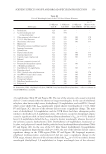
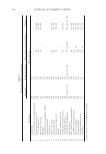
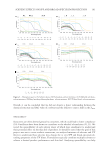
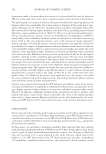
JOURNAL OF COSMETIC SCIENCE 168 also effi cient and effective economic advantages that can save material and time (2). The conventional printing method has grown as a leading technology in the 3D printing in- dustry, ranging from roll to roll, micro-dispensing deposition write, and inkjet. Further- more, it emphasized on standardization of materials and equipment, which are used in display printing (3). In addition to plastics, ceramics, metals, food, biomaterials, and medicines have been used and developed in various industries, including architecture, automobiles, dentistry, education, medicine, dietary life, drug delivery, and fashion (4–6). Furthermore, the specifi c fl exibility of 3D printing technology that can create unique, complex, and diverse shapes with the characteristics to be used in different materials depending on the user has gained popularity among scientists and technical workers because of its fl exibility and its unique characteristics (7). Wohlers Associates and the Journal of Science Policy & Governance predicted the growth of the global 3D printing market, which supports the emergence and rapid growth of several future industrial tech- nologies, which might increase to US$10.8 billion by 2021 (8). Because of the future direction of the automated industries, economic growth and the devel- opment of media through modernization affect the increase of people’s desire to express themselves freely and individually (9). In the beauty industry, along with the hair design and makeup sectors, the nail art industry has proliferated in recent years and has attracted attention by the fusion of material aesthetics with sophistication and smooth curves that give a smooth glossy surface from a material point of view (10). These positive changes in aesthetic perceptions are widely expressed beyond social class, genders, and ages. The nail art market, which has been developed mainly by women, is expected to expand to the area of tattoos with the development of 3D printing technology. In recent years, tattoos widely spread and became widespread among young people as a form of art (11). Therefore, the development of the nail art and tattoo industry can realize the recent rapid growth and changes in society through the convergence of art and engineering for per- sonal identity and the freedom of expression and aesthetic reasons. However, the nail art industry has recently received a red light in scalability as a challenge to solve the health problems caused by exposure to chemical toxic substances and UV process during gel nail formation. Nail art contains harmful chemicals such as acetone, ethyl acetic acid, toluene, and butyl acetic acid, and other various chemical dust that occur during the abrasion process, which is the essential task of smoothing nails. These can cause respiratory disor- ders to customers and operators (12). In California, a survey of 201 nail art workers in 74 different branches of nail shops found that 62% of workers complained of general health problems and 47% of them had skin irritation, respiratory disease, and paralysis related to the eyes and neck (13). The UV lamp rays that are used to cure acrylic gel in the nail polish process have similar properties to UV suntans that which most emit UV-A radia- tion (14). The UV exposure that accompanies the nail curing process has the potential of susceptible damage to the skin’s epidermis, which can be caused by UV rays. Thereby, the DNA cells called “P53” that inhibit the occurrence of apoptosis or mutation of DNA cells can lose their function. This means the possibility of causing skin cancer (15). UV exposure is known to be a severe risk factor for skin cancers such as cutaneous melanoma and nonmelanoma (16). The emotional conversation between the customer and the nail art practitioner was the impetus for the development of the nail art industry rather than technical advancement. If any error is found in the fi nal product in the fi eld, it can be immediately corrected, and it could lead to emotional satisfaction, which cannot be quantifi ed. It has evolved to

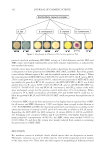
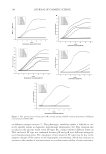
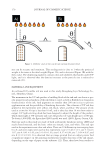
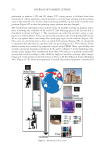
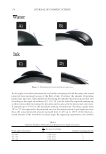
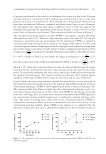
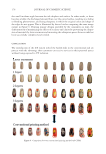
CONFORMAL PROJECTION PRINTING METHOD FOR 3D NAIL ART PRINTING 169 complement the operator’s skill level, reproducibility, low levels of precision, environ- mental hazards, and processes that are exposed to unsanitary and health risks in a long- term requirement (17). Recently, the introduction of technologies to eliminate health risks has begun. As one of the examples, in the fi eld of 3D printing, it was reported that the IoT-enabled 3D printers were controlled through web-cloud (18). This telemedicine system suc- cessfully delivered medicines with food (19). This concept has been extended to the 3D nail art area and with the convergence of IoT and AI technologies in conjunction with 3D printing or additive manufacturing. The applications have extended to beauty arts and cosmetics. The food has been controlled and printed through web- cloud with a single-line design technique (20). The applications have extended to beauty arts and cosmetics. In this study, an attempt was made to transmit a nail design to a web server where the customer could monitor the proceedings of the design and make changes. Customers can observe the results on the conformal surface of nails, and they can request modifi cation of the fi nal design. Even though hazardous chemicals, such as volatile organic compounds, have not been exposed to equipment operators and cus- tomers in the process, there were differences in the degree of completeness in the shape desired and the printed shape. The conformal projection printing method (CPPM) that was applied in this study demonstrated that not only high precision but also increased environmental safety level shortened the processing time and the modifi cation and supplementation of the printing process required by consumers in the worksite. The simulation between the laser beam and nail in different numbers of printings were performed through repeated experiments with the CPPM. The technique that was introduced at the time required to print 10 nail shapes on the system, and it took 10 min from the order to the fi nal result. Validation experiments have been carried out on a logistics system that allows the customer to order specialized nail designs directly on the web and to modify the results from anywhere in the world. The study presents the ability to print 300- 4,000 dots per inch (DPI) with high defi nition, which is superior to the conventional manual method of nail art. It is expected that 3D printing technology, which shows high sharpness results and a three-dimensional effect, can adjust the height to more than 2–5 μm, and can be combined with nail art technology to lead contemporary markets and technologies. ME THODS CP PM CP PM was applied in the fi eld of nail art. Figure 1 shows the angle of incidence (theta, θ) formed between the projected line and the surface of the nail tip. The weight of ink pro- jected perpendicular to the surface per unit area of the nail is called the ideal weight and is denoted as WI, whereas the weight of ink projected on the conformal surface per unit area of the nail is called the projected weight and is denoted by WP. Overall, based on the actual projected amount per unit area, the range of theta is Rb 0 90°, ° and the settling ratio is b1. 0 P I W W According to the formula sinR, P I W W the projected quantity per unit
Purchased for the exclusive use of nofirst nolast (unknown)
From: SCC Media Library & Resource Center (library.scconline.org)